Taiwan’s Foreign Minister, Lin Chia-lung, has warned European countries against becoming overly dependent on Chinese suppliers, arguing that such reliance could threaten the continent’s economic security, political freedom and sovereignty.
Lin made the remarks in a speech at the Warsaw Security Forum in Poland on Tuesday, October 13, ahead of a European Union summit in Brussels where trade relations with China are expected to feature prominently.
EU leaders are scheduled to discuss China as the first item on their agenda when the summit begins on Thursday. The bloc is seeking to reduce its trade deficit with Beijing and address concerns about excessive dependence on Chinese suppliers, particularly in sensitive economic sectors.
Speaking at the forum, Lin argued that Europe’s democratic values could be undermined if its supply chains became too heavily controlled by China.
“Because China’s authoritarian ideology is fundamentally incompatible with Europe’s democracy, dependence on China is not merely an economic risk, it’s a threat to European freedom and sovereignty itself,” he said.
He further warned that excessive reliance on Chinese supply chains could weaken Europe’s independence.
“A Europe controlled through its supply chains would be a Europe that had surrendered part of its liberty,” Lin added.
China’s Embassy in Warsaw had not immediately responded to a request for comment sent by email. Beijing routinely objects to overseas visits by Taiwanese officials and refuses to engage with Taiwan’s President, Lai Ching-te, whom it describes as a “separatist”.
Lin also encouraged Europe to strengthen its economic relationship with Taiwan, arguing that closer cooperation would benefit both sides because they share common democratic principles.
“Taiwan and Europe share the values that matter most — democracy, freedom, human rights and the rule of law,” the foreign minister said.
He added that Taiwan’s experience in supporting technological innovation could also help Europe expand its economic opportunities.
“The Taiwan model has helped power innovation and prosperity in Silicon Valley, and it can do the same for Europe too,” Lin stated.
Taiwanese foreign ministers have traditionally made only occasional visits to Europe because of objections from Beijing. However, Lin has travelled to the continent several times since assuming his current position more than two years ago, including visits to Poland.
Taiwan has been working to deepen its relations with European countries, particularly since Russia launched its full-scale invasion of Ukraine in 2022.
Europe also has disagreements with China over trade imbalances and Beijing’s position on the war in Ukraine, including what European governments view as Chinese support for Russia.
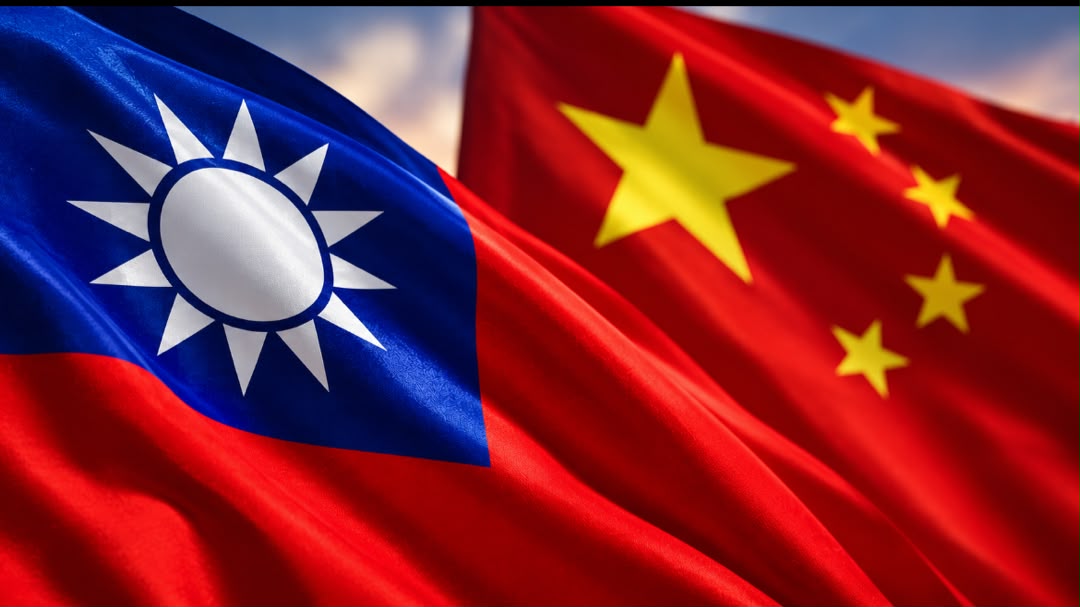
Poland, like most countries around the world, does not maintain formal diplomatic relations with Taiwan, which China claims as part of its territory.
However, Taiwan’s democratically elected government rejects Beijing’s sovereignty claims and maintains that the island has the right to engage with other countries on an equal footing.
Lin’s remarks come as European leaders prepare to discuss their economic relationship with China, with concerns over trade, supply-chain dependence and geopolitical tensions continuing to shape the bloc’s approach to Beijing.