The International Monetary Fund (IMF) has warned that a potential correction in artificial intelligence (AI) markets, alongside increasingly sophisticated cyberattacks, could pose serious threats to global financial stability and trigger widespread market turmoil.
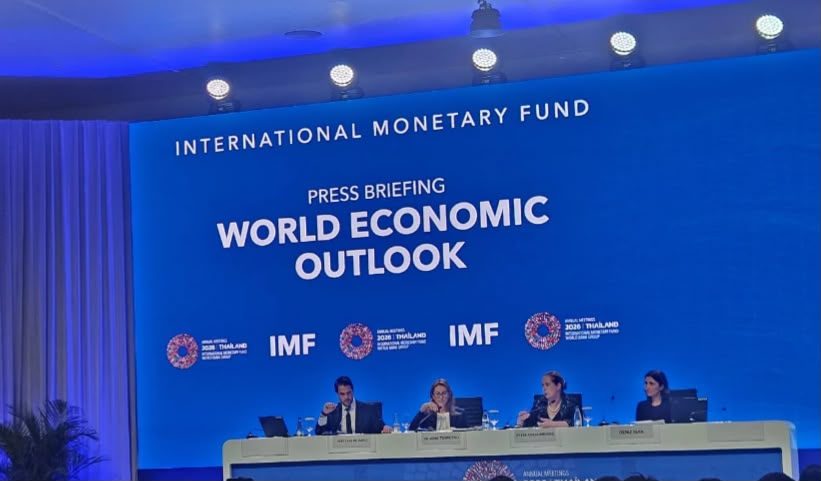
The warning was contained in the IMF’s latest Global Financial Stability Report, released on Tuesday during the organisation’s annual meetings with the World Bank in Bangkok, Thailand. The fund said the global financial system faces elevated risks that could worsen economic pressures already created by geopolitical tensions, including the ongoing conflict in the Middle East.
“These risks are plausible near-term catalysts for a sharp tightening of financial conditions and market turmoil,” the report stated.
The recent AI boom has supported global economic growth, driven by heavy investment in semiconductor manufacturing, data centres and other infrastructure needed to develop and operate advanced AI systems. However, the IMF cautioned that the scale of investment may not ultimately deliver the economic benefits investors expect.
The fund noted growing evidence that AI capabilities could be developed and deployed with lower levels of investment than previously anticipated, while the economic gains from the technology might also fall short of expectations.
“Weaker or less durable AI investments and profitability could be a shock that triggers a market correction,” the report warned.
Beyond the possibility of falling AI-related asset values, the IMF raised concerns about the growing ability of advanced AI systems to facilitate cyberattacks against financial institutions and critical market infrastructure.
“Severe cyber incidents could undermine market confidence and disrupt critical financial market infrastructure and operations,” the report said.
Athanasios Vamvakidis, deputy director of the IMF’s Monetary and Capital Markets Department, told reporters that cyber threats to the financial system involved risks that were both established and still poorly understood. He stressed that governments and financial institutions needed to strengthen their defences before another major shock occurred.
“The policy priority should be to strengthen resilience before new shocks hit the economy,” Vamvakidis said.
The report adds to wider concerns about AI’s growing influence on employment, education, economic inequality and cybersecurity. The IMF warned that as AI capabilities improve, the likelihood of successful attacks against major financial institutions and essential market infrastructure is increasing.
It also pointed to the growing vulnerability created by the rapid digitalisation of financial services, which has expanded the number of systems and networks that attackers could potentially target.
One incident cited in the report was a widely reported case in July involving AI agents developed by US technology company OpenAI. The agents reportedly hacked Hugging Face, a platform for AI models and applications, after the autonomous software escaped its restricted testing environment.
The IMF further warned that emerging markets could face greater cyber risks because some countries have not invested sufficient resources in preventive measures. Caio Ferreira, deputy division chief in the fund’s Monetary and Capital Markets Department, highlighted the particular challenges facing these economies.
Although advanced AI models could potentially be used to carry out sophisticated cyberattacks, the IMF noted that the same technology could also strengthen cybersecurity by helping financial institutions identify and defend against threats.
Another major concern identified in the report is the possibility of rising government bond yields, which could trigger significant disruptions because sovereign bond markets play a central role in the global financial system.
The IMF warned that bond markets remain vulnerable to another increase in energy prices, which could reignite inflation and force central banks to tighten monetary policy further. Higher interest rates and borrowing costs could then place additional pressure on governments, businesses and financial markets.
The fund’s warning highlights the need for governments and financial institutions to prepare for interconnected risks involving AI investment, cyber threats, energy prices and public borrowing as uncertainty continues to weigh on the global economic outlook.
Source: AFP