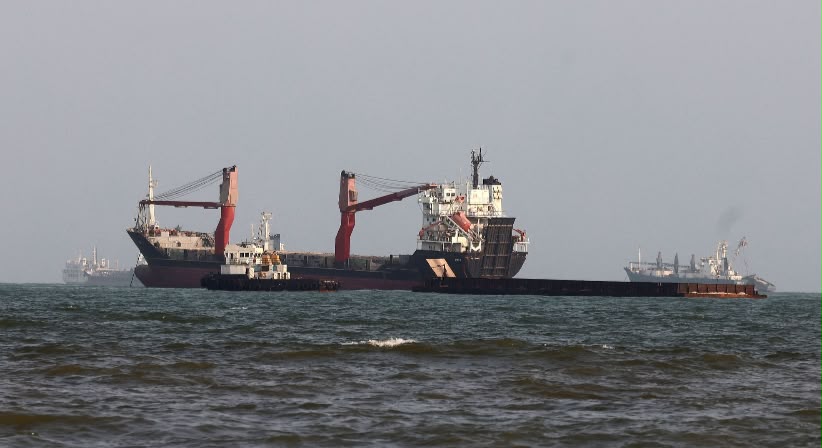
Iran has warned that it will soon shut down what it describes as “illegal routes” in the strategically important Strait of Hormuz, as tensions continue to affect oil shipments through the waterway.
Mohammadreza Naqdi, an adviser to the commander of Iran’s Islamic Revolutionary Guard Corps (IRGC), made the announcement on Wednesday in comments to the semi-official Fars News Agency.
Naqdi was referring to several routes along the southern side of the strait near Oman. He claimed the passages were created by blasting through rocky sections of the waterway and are being used by small boats to move smuggled oil into tankers.
He said closing the routes would challenge claims that oil exports through the Gulf have returned to normal levels following the conflict.
“The Strait of Hormuz is closed, and the armed forces of the Islamic Republic of Iran have full control over it. This situation will continue until Iran’s legitimate demands are met,” Naqdi said.
The Strait of Hormuz is one of the world’s most important energy corridors, connecting the Gulf with international shipping routes. Any sustained disruption could have wider consequences for global oil supplies.
However, available shipping data indicates that crude exports from the region have increased in recent weeks.
Provisional data showed that the seven-day average for crude exports from the region reached 18.3 million barrels per day on September 30. Export volumes were above pre-war levels on 14 days during September.
The reported shipments included oil transported through the Strait of Hormuz, the Red Sea, as well as cargoes moved through Gulf terminals and ship-to-ship transfers in the Gulf of Oman.
Iran’s Revolutionary Guards have repeatedly disputed claims that crude shipments through the strait are returning to pre-war levels because of assistance from the US Navy.
Another IRGC adviser, Majid Mirahmadi, previously said that an average of about 10 ships were passing through the waterway each day, compared with around 125 before the war began on February 28.
The conflict began after US and Israeli forces killed Iran’s Supreme Leader Ayatollah Ali Khamenei in an airstrike in Tehran, according to the report.
Despite the increase in oil movements recorded during September, attacks on tankers and continuing logistical difficulties have persisted.
Those disruptions have raised questions about whether the recent increase in crude flows can be maintained over the long term.
Iran’s latest warning therefore adds another layer of uncertainty to oil transportation through the Strait of Hormuz, with the country insisting that control of the waterway will remain in place until its demands are met.