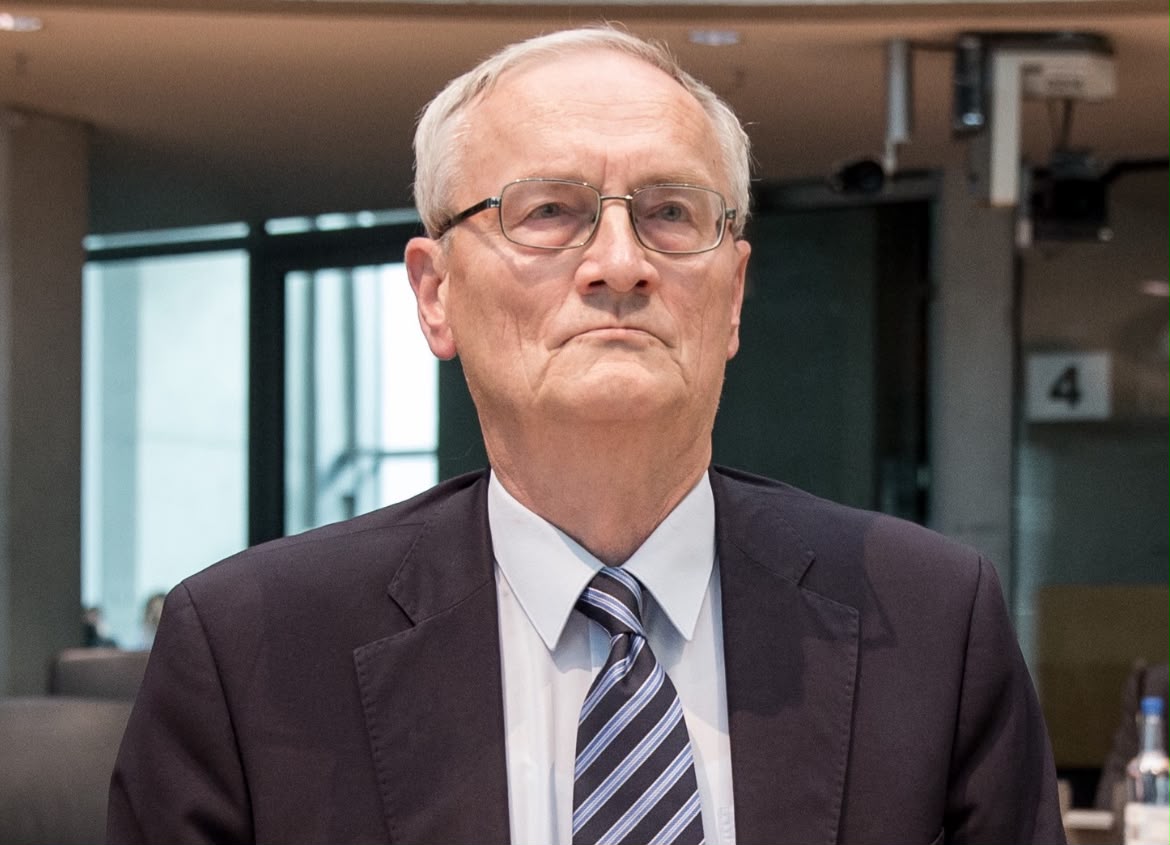
Former head of Germany’s foreign intelligence service, August Hanning, has been arrested over allegations of espionage, obtaining state secrets and attempted treason in a case described as one of the country’s most serious intelligence scandals since the Cold War.
Hanning, who previously led the Federal Intelligence Service (BND), was detained on Tuesday after prosecutors accused him of paying for confidential intelligence documents and using some of the material to prepare an analysis for a foreign intelligence service.
Authorities have not identified the foreign intelligence agency involved, and it remains unclear whether the analysis prepared by Hanning ever reached its intended recipient.
The federal prosecutor’s office said Hanning is “strongly suspected of treasonous espionage, obtaining state secrets, attempted treason and espionage.”
The arrest of a former head of Germany’s foreign intelligence service is unprecedented and could potentially affect the country’s intelligence relationships with allied nations.
A report by German magazine Der Spiegel said investigators were examining a possible link to Azerbaijan and that Hanning had been in contact with an agent from the country. Federal prosecutors declined to comment on the report.
Hanning himself did not respond to a request for comment, while the German chancellery also declined to comment.
How the Alleged Intelligence Transfer Happened
According to prosecutors, Hanning reached an agreement with a former BND office manager five years after ending his seven-year tenure as head of the intelligence service in 2005.
The agreement allegedly involved Hanning receiving confidential intelligence information in exchange for payment.
The former office manager, identified as Manfred D. in accordance with German privacy rules, was also arrested on Tuesday. Both men were expected to appear before a judge at the Federal Court of Justice.
Manfred D. had served as an office manager to successive BND presidents until March 2026, a position that potentially gave him access to highly sensitive and current intelligence.
Prosecutors allege that he supplied Hanning with approximately 2,000 documents over a period of years.
The material reportedly included classified documents intended only for internal BND use, as well as high-level intelligence briefings prepared for the chancellery.
Some of the documents reportedly dealt with Iran’s nuclear programme and the Russian military, while other material was classified as secret by intelligence agencies in countries allied with Germany.
Prosecutors said Hanning used classified information supplied by Manfred D. to prepare an analysis for an officer of a foreign intelligence service. They also allege that he shared political information with a representative of the agency over several years.
Information reported by Süddeutsche Zeitung indicated that the case does not involve Russia.
BND Launches Internal Investigation
The allegations have raised concerns about the potential impact on Germany’s relationships with allied intelligence services.
Conservative security expert Roderich Kiesewetter told Handelsblatt that espionage cases of this nature could undermine confidence between intelligence partners and damage Germany’s reputation.
BND President Martin Jaeger said the agency began extensive internal investigations as soon as suspicions emerged.
“There can be no compromises on internal security,” Jaeger said.
The case has emerged at a sensitive time for Germany’s intelligence community, with the country already facing growing security concerns and heightened scrutiny over the protection of classified information.
Latest in Germany’s History of Spy Scandals
Hanning’s arrest adds to a long history of major espionage cases in Germany.
In 1974, West German Chancellor Willy Brandt resigned after it was discovered that an East German spy had worked as one of his close aides for almost two years.
Another major case emerged in 1990 when senior West German counter-intelligence official Klaus Kuron was exposed as a Stasi spy and later convicted of treason.
More recently, former domestic intelligence chief Hans-Georg Maassen said in 2024 that the security agency he once led was monitoring him over alleged right-wing political extremism. Maassen denied the allegations.
The latest case is now under investigation, with prosecutors continuing to examine how classified information was obtained, used and potentially shared with foreign intelligence contacts.