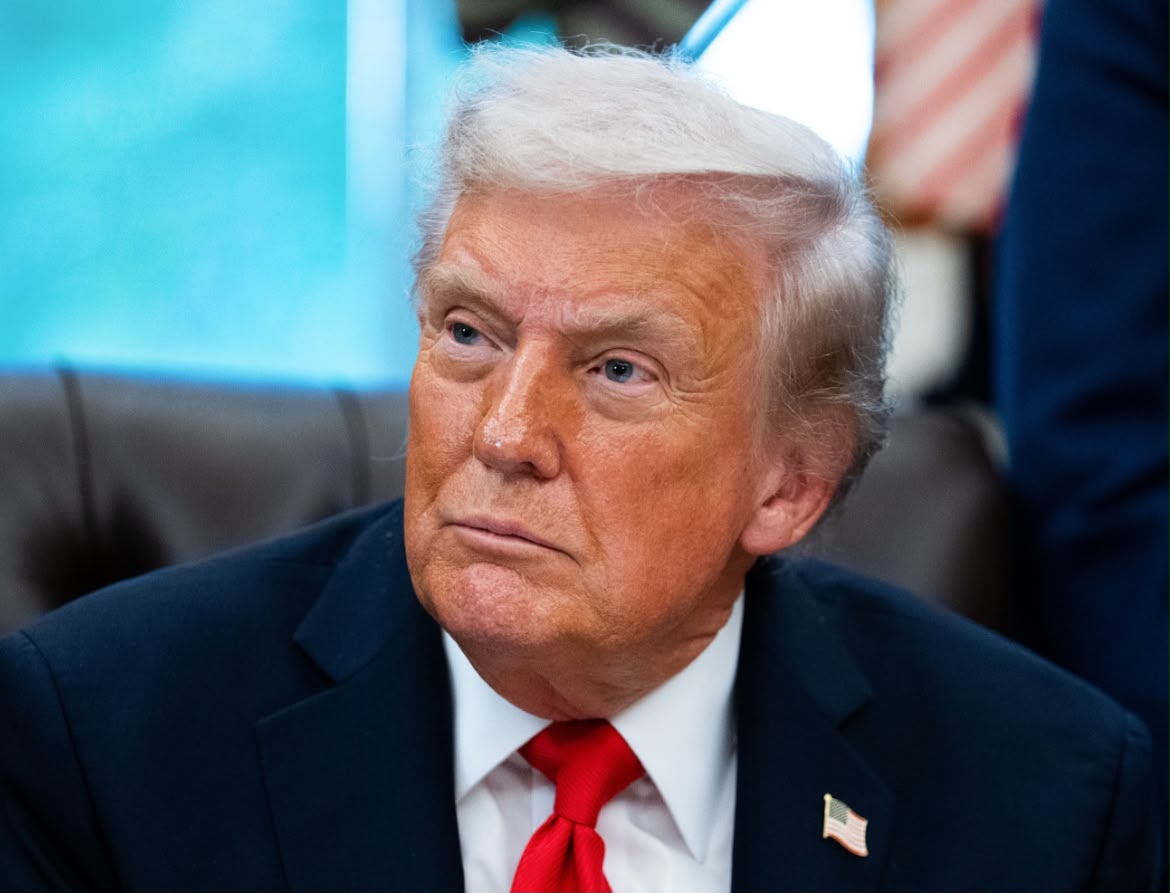
US President Donald Trump has defended his announcement that South Korea would invest in a major Alaska liquefied natural gas (LNG) project, despite Seoul indicating that the investment has not yet been finally agreed.
Trump had announced plans for South Korea to invest about $200 billion in US projects, including a proposed $54 billion pipeline linked to the long-planned Alaska LNG project.
South Korean officials, however, quickly clarified that the LNG investment was still subject to commercial and legal reviews and that no final decision had been made on whether to invest or how much would be committed.
Asked on Friday whether he had announced the investment before the details were finalised, Trump rejected the suggestion.
“I didn’t jump the gun. I mean, they were there and they were represented,” Trump told reporters at the White House.
He added that he was prepared to impose additional costs on South Korea if the country eventually decided not to proceed with the project.
“And let’s see, if they don’t want to do it, that’s okay with me. I’ll just charge them more,” he said.
Trump also claimed that the US-South Korea trade agreement included $8.4 billion for a project aimed at increasing crude oil production from an ageing oilfield.
The claim reportedly surprised an official at South Korea’s industry ministry, who said the agreement was limited to the commitments contained in a joint fact sheet released by Seoul and Washington in November 2025.
The proposed Alaska LNG project has been discussed for years but has struggled to secure firm investment commitments because of its enormous cost and questions over its commercial viability.
The project would involve building a pipeline stretching more than 800 miles, or about 1,300 kilometres, from Alaska’s North Slope to a liquefaction facility at Nikiski on the state’s southern coast.
If completed, the project would allow natural gas from Alaska to be processed into LNG and exported to Asian markets. The project is designed to transport about 3.9 billion cubic feet of natural gas per day and produce up to 20 million metric tons of LNG annually.
The proposed development is also expected to cost more than twice as much as comparable LNG facilities on the US Gulf Coast, adding to questions over its economic viability.
Trump’s announcement forms part of a broader $350 billion strategic investment package agreed between the United States and South Korea under a trade agreement.
The package includes $150 billion for shipbuilding and another $200 billion for strategic investments in the United States.
Trump said the $200 billion component would cover several major projects, including eight large nuclear power plants, a natural gas pipeline and a 6-gigawatt power generation facility in Texas.
South Korean officials have indicated that some of the projects are moving forward, but have maintained that major investments must undergo commercial and legal assessments before final commitments are made.
The Alaska LNG project has already attracted preliminary interest from Asian energy buyers, but additional commitments are still needed before a final investment decision can be reached.
The disagreement over the status of the Alaska project has therefore created uncertainty over how quickly the broader US-South Korea investment package will translate into binding projects.