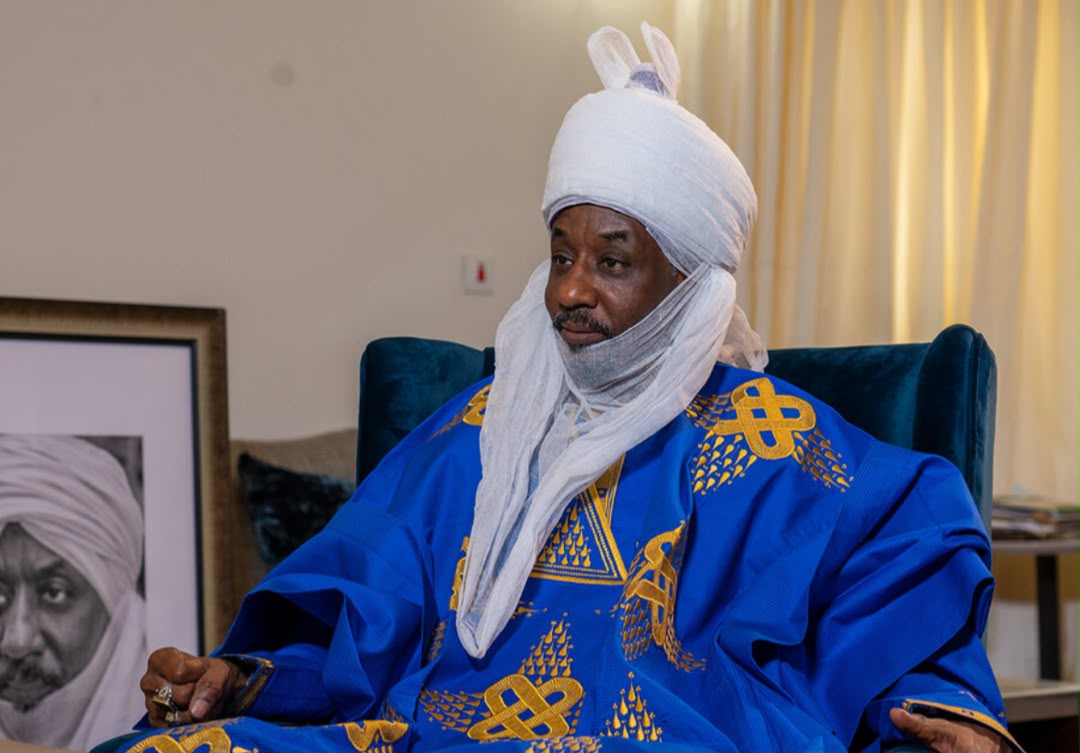
The Emir of Kano, Muhammadu Sanusi II, has raised concerns about the role of political influence in Nigeria’s fight against corruption, saying people can sometimes escape accountability when they have the right connections.
Sanusi spoke in Lagos during the public presentation of Unexplained Wealth: A Trilogy of Nigerian Financial Law, a three-volume book written by anti-corruption lawyer Wahab Shittu, SAN.
The former Central Bank governor said reviewing Nigeria’s existing laws to address unexplained wealth was important, but argued that stronger enforcement was equally necessary.
Sanusi said Nigeria already has laws, institutions and courts responsible for investigating and prosecuting corruption cases. However, he questioned whether those mechanisms are always applied consistently.
“I think what Dr. Shittu has done is to look at the laws… identify weaknesses and make proposals for what needs to be done to identify unexplained wealth and to also ensure that it is used as part of the war against corruption,” he said.
According to Sanusi, the challenge goes beyond creating new laws because existing legislation must also be properly implemented by the relevant institutions.
He alleged that political considerations can sometimes influence how corruption cases are handled, claiming that some people facing allegations have had their cases dropped because of their political connections or support.
“We have seen in this country people who are facing corruption charges who basically just get those charges dropped because they belong to the right political environment or have the right political support,” Sanusi said.
He cited the ongoing legal case involving former Kaduna State Governor Nasir El-Rufai as an example of the questions that can arise around the use of legal processes.
Sanusi said the situation could lead members of the public to question whether some corruption cases are being pursued strictly for accountability or whether political considerations are also involved.
“So people begin to wonder, is this really a fight against corruption or is it a political battle?” he asked.
El-Rufai is facing corruption-related charges and has denied the allegations. His bail applications have also been considered by the courts, with different rulings issued in the ongoing proceedings.
Sanusi stressed that politicians, public officials and members of the judiciary all have a role to play in ensuring that laws are applied for the purposes for which they were created.
“Now until the politicians and those who control political office and the judiciary decide that they are going to use these laws for the purpose for which they are set up, we’re not going to get anywhere,” he said.
He maintained that while examining weaknesses in Nigeria’s laws is necessary, equal attention should be given to the institutions responsible for enforcing them.
Sanusi concluded by warning that without stronger institutions and consistent enforcement, political connections could continue to shield some individuals from accountability.
“Otherwise anyone knows that you can get away with anything if you have the right political connections,” he said.