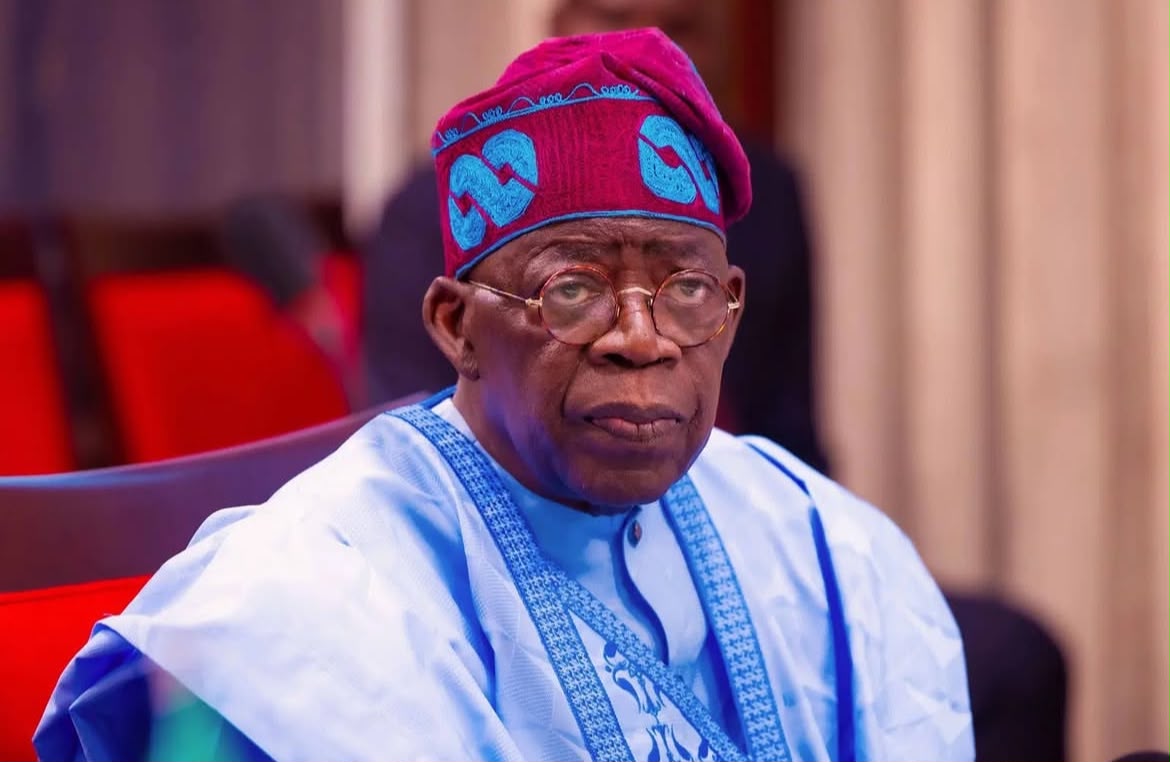
President Bola Tinubu has reaffirmed Nigeria’s commitment to maintaining and strengthening its leadership role in Africa and the West African subregion.
Tinubu made the position known on Saturday through the Speaker of the House of Representatives, Tajudeen Abbas, during the passing-out ceremony for cadets of the 73rd Regular Course and Short Service Course 49 of the Nigerian Defence Academy (NDA) in Kaduna.
The president said Nigeria would continue to support democracy, regional stability, security cooperation and economic integration across Africa, particularly as security threats increasingly cross national borders.
“Nigeria will continue to enhance our commitments to democracy and stability in our region and indeed globally.”
Tinubu acknowledged the difficulties affecting cooperation within the West African subregion, particularly in the Sahel, but said Nigeria would continue to engage countries in the region through ECOWAS and other regional organisations.
“Despite the setbacks in cooperation within the subregion, especially in the Sahel, Nigeria under my leadership, through the auspices of ECOWAS and other regional bodies, will continue to pursue inclusive diplomacy, security cooperation, and economic integration.”
He also said the military’s support for democratic governance would remain important to Nigeria’s regional leadership.
“Consequently, with the military’s unalloyed support for democratic governance, Nigeria’s continental and regional leadership role will continue to be upheld and intensified.”
The president maintained Nigeria’s opposition to unconstitutional changes of government but said the country would not abandon its relationship with Mali, Niger and Burkina Faso, despite the political changes in those countries.
“We remain opposed to unconstitutional changes of government; however, we will not abandon our brothers and sisters in Mali, Niger, or Burkina Faso.”
Tinubu also stressed the importance of preserving the achievements of ECOWAS, particularly the gains made in free movement, trade and regional coordination.
“Preserving five decades of ECOWAS achievements, covering free movement, trade, and regional coordination, is essential to our collective security and prosperity.”
On Nigeria’s domestic security situation, Tinubu said his administration remained committed to building a safer and more prosperous country despite the challenges facing the nation.
“Despite the challenges we face as a nation, we have remained steadfast, focused, and committed to building a secure, stable, and prosperous Nigeria.”
He said the government had continued to deploy different elements of national power, including the military, to improve the country’s response to insecurity.
“Through the continuous and surgical application of all elements of national power, including, and most importantly, the military, we have continued to stabilise the situation, improving our responses and expanding as well as modifying our interventions, which thankfully are yielding desired outcomes.”
However, Tinubu acknowledged that military action alone cannot completely resolve insecurity, pointing to poverty, unemployment, inadequate education and social disintegration as factors that can contribute to conflict.
He said the government was therefore combining its security efforts with programmes focused on employment, economic stability, human capital development and social protection under the Renewed Hope Agenda.
The president also praised the Nigerian Defence Academy for its contribution to the country since its establishment in 1964.
According to him, the institution has adapted its training programmes to meet changing security demands by combining military education with academic development and character building.
Tinubu said the NDA had also strengthened its counter-terrorism and counterinsurgency training while incorporating modern technology into its training and research programmes.
He expressed particular satisfaction with the academy’s growing international recognition, noting that its cadets had been invited to participate in major military competitions in the United States, Brazil and, most recently, China.
“Such invitations are earned through demonstrated excellence. They attest to the remarkable improvements in the academy’s training standards, professionalism, and global standing, while affirming that Nigeria is producing officers capable of competing and excelling alongside the very best military institutions in the world.”
Tinubu further highlighted the NDA’s role beyond Nigeria, noting that the academy has become an important centre for military education in Africa.
Cadets from countries including Burkina Faso, Cameroon, Congo-Brazzaville, The Gambia, Guinea, Liberia, Niger, Sierra Leone and Uganda have received training at the institution.