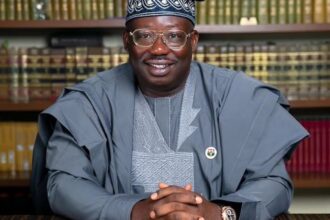
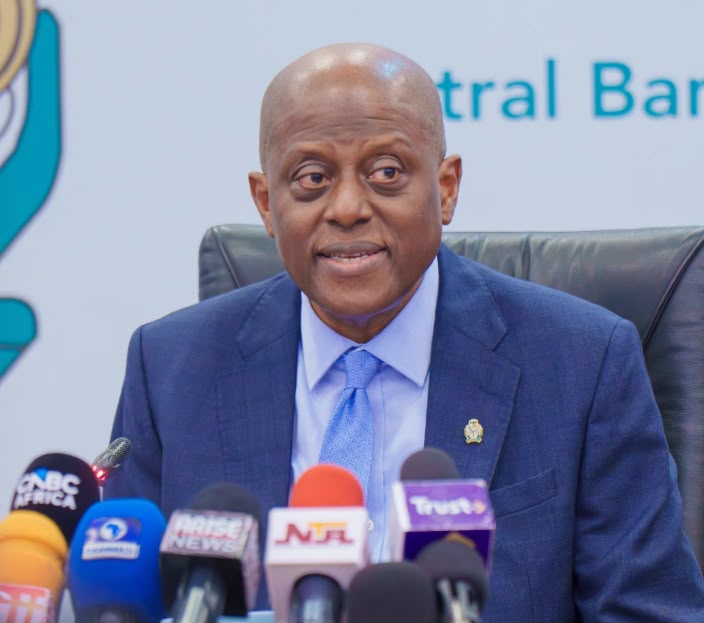
The Federal Government and the Central Bank of Nigeria (CBN) have signed a Memorandum of Understanding (MoU) to formalise coordination between fiscal and monetary authorities in managing the Nigerian economy.
The agreement, signed in Abuja on Friday, is aimed at improving policy coordination, strengthening information and data sharing, and promoting greater consistency in economic management.
Speaking at the signing ceremony, the Minister of Finance and Coordinating Minister of the Economy, Taiwo Oyedele, said the framework would strengthen cooperation between the Ministry of Finance and the CBN while preserving the central bank’s independence.
“Good economic management requires independent institutions, but independence does not mean isolation. Fiscal and monetary authorities have distinct mandates, but we serve the same economy.
“Our mandates are distinct, but our outcomes are interconnected. That is the philosophy behind this MoU. We are institutionalising coordination,” he said.
Oyedele said the new framework would create a more structured system for regular engagement between both institutions, building on existing interactions through the Economic Management Team and the National Economic Council.
He also highlighted the importance of accurate and timely economic data, particularly as the CBN moves towards an inflation-targeting framework.
Under the agreement, the Ministry of Finance and the CBN are expected to strengthen the exchange of fiscal and monetary information, including government cash receipts, financing plans, credit flows and foreign exchange flows.
Oyedele added that the government was working with the National Bureau of Statistics (NBS) to expand the economic data available to policymakers. This includes the Producer Price Index alongside the Consumer Price Index, as well as employment and productivity statistics.
He said the additional information would help policymakers better understand the causes of price pressures and identify inflationary trends before they significantly affect consumers.
Oyedele also disclosed that Nigeria recorded a balance of payments surplus of more than $5 billion in 2025, while external reserves had recently risen above $74 billion.
He further said non-oil exports exceeded oil exports in the third quarter of 2026 for the first time, while imports of refined petroleum products declined as domestic refining capacity increased.
The CBN Governor, Olayemi Cardoso, described the signing as an important step towards strengthening macroeconomic management, economic stability and sustainable growth.
Cardoso said the MoU would provide a formal structure for regular consultations, information exchange and policy coordination between the fiscal and monetary authorities.
He said areas covered by the framework would include government cash management, debt issuance planning, liquidity forecasting, macroeconomic analysis and periodic policy consultations.
“It transforms a relationship built on practice into one anchored by clear processes and enduring institutional commitment,” Cardoso said.
The move builds on previous efforts by the fiscal and monetary authorities to improve coordination, including the CBN’s Fiscal and Monetary Policy Coordination Framework.
Source: Federal Ministry of Finance/CBN