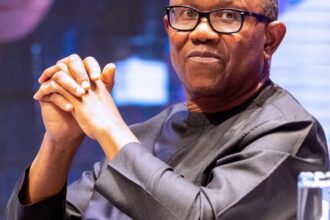

The Nigerian Midstream and Downstream Petroleum Regulatory Authority (NMDPRA) is targeting up to $10 billion in new gas investments through its Midstream and Downstream Gas Infrastructure Fund (MDGIF), which has so far deployed about $300 million to reduce project risks and attract private-sector funding.
The Chief Executive of NMDPRA, Mallam Rabiu Abdullahi Umar, disclosed this on Wednesday during a panel session at the 2026 Gastech Conference in Bangkok, Thailand.
Umar explained that the MDGIF provides seed funding and equity financing for gas projects, with the aim of making investments more attractive to private investors.
“We have a fund which is called the Midstream and Downstream Gas Infrastructure Fund, and that fund is designed to de-risk projects. So we put in equity,” Umar said.
He said the success of the fund would largely be measured by the amount of additional private investment its initial funding is able to generate.
“The $10 billion is the target to say, can we reach a point where we unlock investment in that space of up to $10 billion? That is the kind of trajectory that we’re looking at in terms of deepening investment in gas,” he said.
According to Umar, the fund is supporting projects across several areas of the gas value chain, including liquefied natural gas (LNG), floating LNG, liquefied petroleum gas (LPG) and compressed natural gas (CNG).
He added that Nigeria currently has almost $20 billion worth of energy investments at different stages of development, including projects that have reached final investment decisions and others already under construction.
The NMDPRA chief said Nigeria’s energy strategy was focused on ensuring adequate gas supply, affordability and the development of the infrastructure required to move the resource to consumers.
He noted that Nigeria has more than 210 trillion cubic feet of proven gas reserves and argued that the country needed to maximise the resource available to it.
According to him, developments in the global energy market have further highlighted the importance of energy security and the need for countries to make effective use of their domestic resources.
“For us, really, what comes first is making sure the molecules are there,” he said.
Umar described natural gas as Nigeria’s transition fuel, explaining that the country was looking to reduce its dependence on oil while limiting the use of coal.
He said developing countries face different circumstances from advanced economies when transitioning to cleaner energy, particularly because of differences in energy affordability and the cost of renewable infrastructure.
According to him, the cost of deploying renewable-energy projects such as solar and wind can be significantly higher in developing economies, making it difficult to apply one energy-transition model to every country.
Umar maintained that increasing gas infrastructure and power generation would remain important to meeting Africa’s growing energy requirements, especially as demand increases from industries, electricity generation and emerging technologies.
Regulation, infrastructure key to investment
Umar identified infrastructure development and regulatory certainty as important factors in attracting capital and increasing gas supply across Nigeria and the wider African market.
He cited the Ajaokuta-Kaduna-Kano (AKK) gas pipeline as an important infrastructure project designed to move gas from southern Nigeria towards the northern part of the country.
He also highlighted the proposed Trans-Saharan Gas Pipeline, which is expected to connect Nigeria with Algeria and potentially provide a route for Nigerian gas exports to Europe.
Umar said stronger regulatory cooperation between countries would be required for cross-border gas infrastructure to function effectively. He pointed to the importance of common standards covering gas measurement, custody transfer and transportation.
He said NMDPRA was working towards a more open-market system that would give investors greater certainty when making long-term decisions.
“Investments don’t go where you are not certain about the regulatory framework,” Umar said.
He added that governments could sometimes be required to intervene to create the conditions needed for large infrastructure projects to become viable.
Other participants at the panel also stressed the importance of consistent regulation, energy security and affordability as countries work through the energy transition.
The Director of the Association of Mediterranean Energy Regulators (MEDREG), Hassan Ozkoc, said greater regulatory cooperation and common minimum standards were necessary to improve the integration and interoperability of energy systems across countries.
He also said the energy transition should take into account the different roles played by coal, oil and gas, arguing that natural gas remains relevant to energy security.
Kavita Ahluwalia of Uniper said Europe was increasingly balancing decarbonisation efforts with concerns about energy affordability and industrial competitiveness.
She said Europe needed to recognise the continued role of gas within its energy system and cautioned against imposing a single approach to the energy transition on countries with different economic and energy circumstances.
Ahluwalia also called for international cooperation in addressing energy challenges, arguing that Europe should not dictate how other regions manage their own energy transitions.
Source: NMDPRA