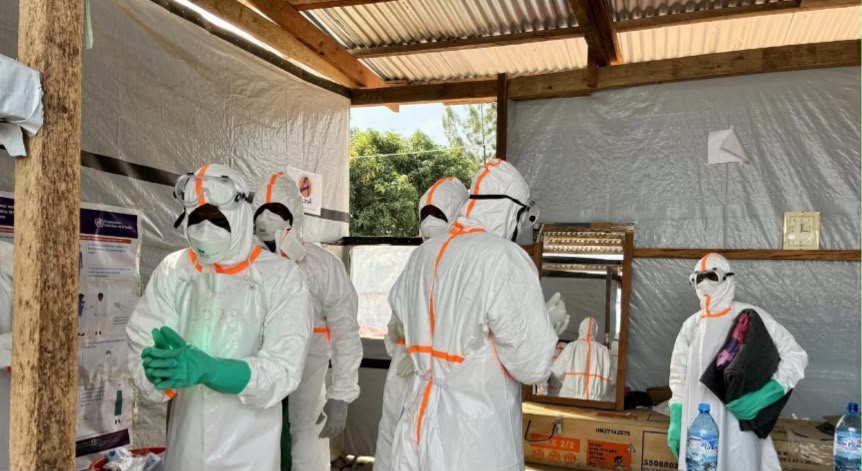
More than 7,000 cases of Ebola have now been recorded in the Democratic Republic of Congo (DRC), marking the country’s worst outbreak of the deadly disease, according to figures released by Congolese authorities.
The latest outbreak, which was believed to have been spreading unnoticed for several weeks, was officially detected in mid-May. It has so far claimed nearly 3,400 lives, making it the 17th Ebola epidemic recorded in the country.
The outbreak began in Ituri Province in northeastern DRC before spreading to other remote areas in the east and north, many of which have been affected by years of conflict. The presence of government authorities remains limited in some of these areas, while healthcare infrastructure is also severely inadequate.
Earlier this week, health authorities confirmed that the virus had reached a seventh province, South-Ubangi, which shares borders with the Central African Republic and Congo-Brazzaville.
The latest figures from Congolese authorities show that 7,022 cases have been recorded since the outbreak began. Of that number, 3,398 people have died, while 1,671 others have recovered.
Ituri remains the worst-affected area, with Ebola being detected in schools following the return of pupils after the summer holiday. The development has heightened concerns among parents, teachers and health workers.
“We are very worried because we don’t know which child comes from which family or what the health status of the members of that family is,” Angele Magani, a mother of a schoolboy in Bunia, the provincial capital of Ituri, told AFP.
“We are so scared, even though the school authorities reassure us about the health measures that have been put in place,” she added.
School official Roger Mungimbo in Bunia said measures had been introduced to limit the spread of the virus among pupils.
“There is a mandatory hand-washing system with soap, and we have also done everything possible to have a maximum of 30 pupils per classroom,” he told AFP.
“We regularly make the children aware that they must not touch each other, must not greet each other and must wash their hands regularly,” he added.
Ebola is transmitted through contact with infected bodily fluids and can cause serious illness, including internal and external bleeding and organ failure. The disease has killed more than 15,000 people across Africa over the past five decades.
The current outbreak is being caused by the Bundibugyo strain of the Ebola virus. There is currently no approved vaccine or treatment specifically available for the strain, although several vaccines and treatments are undergoing testing.
Source: AFP