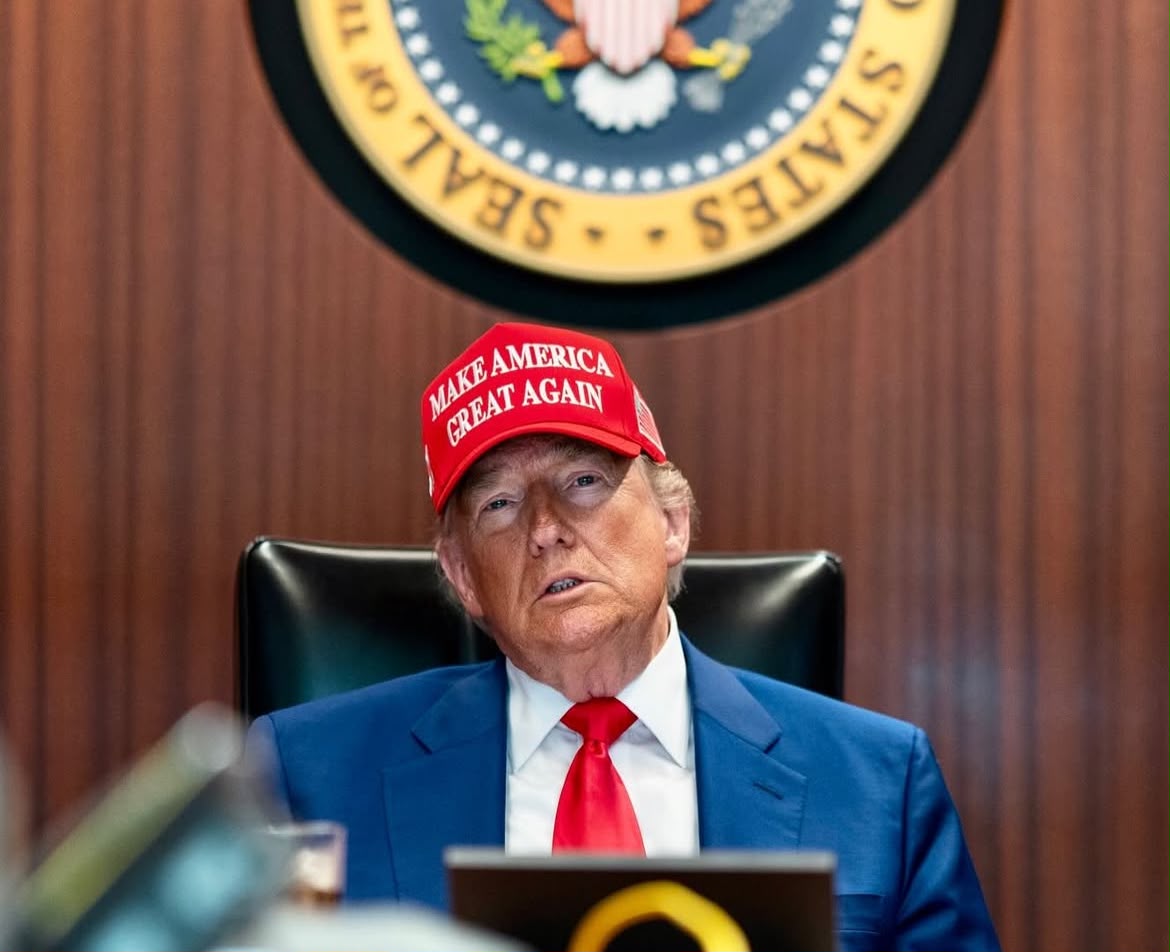
US President Donald Trump has announced an agreement for Russia to supply diesel to American and global markets as his administration temporarily eases sanctions on Russian fuel in a bid to bring down soaring energy prices.
Trump disclosed the deal on Friday, October 9, following what he described as a “highly successful” discussion with Russian President Vladimir Putin.
The agreement comes as diesel prices climb sharply in the United States, creating economic pressure ahead of the November 3 congressional elections, in which Trump’s Republican Party is fighting to maintain its narrow control of Congress.
However, the decision has sparked criticism from Ukraine and some American lawmakers, who argue that easing restrictions could provide Moscow with additional revenue to sustain its war against Ukraine.
Trump Announces Major Russian Diesel Supply
Trump said Russia would immediately supply more than 300,000 metric tonnes of diesel to the United States and international markets, equivalent to approximately 2.25 million barrels of fuel.
He also announced plans for additional deliveries, saying Russia would supply another 500,000 tonnes in November, followed by one million tonnes immediately afterwards.
According to Trump, further supplies would depend on the condition of Russian diesel refineries, some of which have been damaged by Ukrainian attacks.
The Russian government also signalled its willingness to continue supplying petroleum products to international markets.
Following the discussions, Kirill Dmitriev, an envoy for Putin, praised cooperation between Moscow and Washington in a post on X.
Sources familiar with the matter said Dmitriev had requested licences allowing major Russian oil companies to export diesel to the American market during a visit to Washington the previous month.
The US Treasury Department subsequently issued a licence permitting the importation of Russian diesel until April 7.
Why the US Is Easing Sanctions on Russian Fuel
The agreement marks a significant development in Washington’s approach to Russian energy exports.
In October 2025, the United States imposed sanctions on Russian oil companies over Moscow’s invasion of Ukraine, which began in 2022.
The restrictions were intended to limit Russia’s oil revenue and reduce the financial resources available to support its military campaign.
However, rising diesel prices have created a fresh challenge for the Trump administration.
Diesel is essential for agricultural machinery, heating homes and transporting goods by road. Higher prices can increase operating costs for farmers, businesses and transport companies, potentially pushing up the prices of everyday products.
The latest agreement could generate billions of dollars in additional revenue for Moscow if Russian fuel exports expand significantly.
Critics fear that such earnings could help Putin continue the war against Ukraine.
Zelensky Blasts Trump’s Decision
Ukrainian President Volodymyr Zelensky has criticised the agreement, describing it as a weak decision by Western partners.
His reaction came as a Ukrainian delegation was in the United States for discussions aimed at finding a possible resolution to the war.
“Gifts to Putin will not bring peace or any benefit to the civilized world. Russia will ‘repay’ the diesel with further terror and perfidy,” Zelensky wrote on X.
The Ukrainian leader’s criticism reflects concerns that easing sanctions could undermine efforts to pressure Moscow into ending the conflict.
American lawmakers have also questioned the decision, including Republican Representative Don Bacon, who argued that Washington should increase pressure on Russia rather than relax existing restrictions.
“Now is the time to use those sanctions to squeeze Putin’s war machine, not reward a dictator by putting more money in his hands while he continues targeting and killing Ukrainian civilians,” Bacon said.
Will the Russian Diesel Deal Reduce US Fuel Prices?
Although diesel prices fell following Trump’s announcement, market analysts warned that the agreement might not be enough to produce sustained reductions.
Rory Johnston, an oil market researcher and founder of CommodityContext.com, dismissed the deal as having little meaningful impact on the wider market.
He argued that Russia typically exports substantially more diesel when its refinery operations are not disrupted by attacks.
Jim Mitchell, an analyst at consultancy Wood Mackenzie, also expressed caution, describing the agreement as an additional source of supply rather than a complete solution to the market shortage.
Diesel prices have increased by approximately 70 per cent since the United States and Israel launched their war against Iran on February 28.
The conflict involving Iran, alongside the ongoing war in Ukraine, has contributed to severe disruptions in global fuel supplies.
According to the AAA motorist group, the average price of diesel in the United States reached $6.28 per gallon on Thursday.
Trump has already taken other steps to increase fuel availability, including pressuring allies to release emergency reserves and expanding access to tax-exempt red-dyed diesel, which is generally used in agricultural equipment.
Following the announcement of the Russian supply agreement, US diesel futures fell by almost five per cent to $4.64 per gallon.
Defending his approach, Trump reiterated his commitment to lowering costs for key sectors of the American economy.
“Lower prices for Americans, especially our Great Farmers, Ranchers, and Truckers, is my Greatest Priority,” he said.
Trump Considers Emergency Measures to Boost Domestic Fuel Production
Separately, three industry sources said Trump was expected to issue a directive in the coming days instructing certain US government departments to explore ways of controlling diesel prices.
The directive could take the form of a presidential memorandum and would reportedly encourage officials to identify ways to overcome local and state regulations restricting energy production.
It could also involve the use of the Cold War-era Defense Production Act to increase domestic oil and fuel output.
The legislation gives the president powers to support the expansion of critical manufacturing through government-backed loans and loan guarantees. It can also allow companies to be required to prioritise government contracts for essential goods.
The White House has been considering how the law could be used to expand refining capacity as the war involving Iran exposes vulnerabilities in American energy supplies.
During discussions last month, refining executives reportedly advised administration officials that government funding would be better spent improving existing refineries or expanding current facilities rather than financing entirely new plants.
They argued that constructing new refineries would be more expensive and take years to complete.
What Happens Next?
Trump’s agreement with Russia represents an attempt to increase diesel supplies as rising energy costs threaten to become a major political issue ahead of the US midterm elections.
However, the deal has created a difficult balance for Washington: reducing fuel prices for American consumers while maintaining economic pressure on Moscow over its war against Ukraine.
With analysts questioning whether the additional supplies will significantly ease the market shortage, the impact of the agreement remains uncertain.
Meanwhile, the possibility of further US measures to increase domestic fuel production suggests the administration is exploring multiple ways to address the energy crisis.