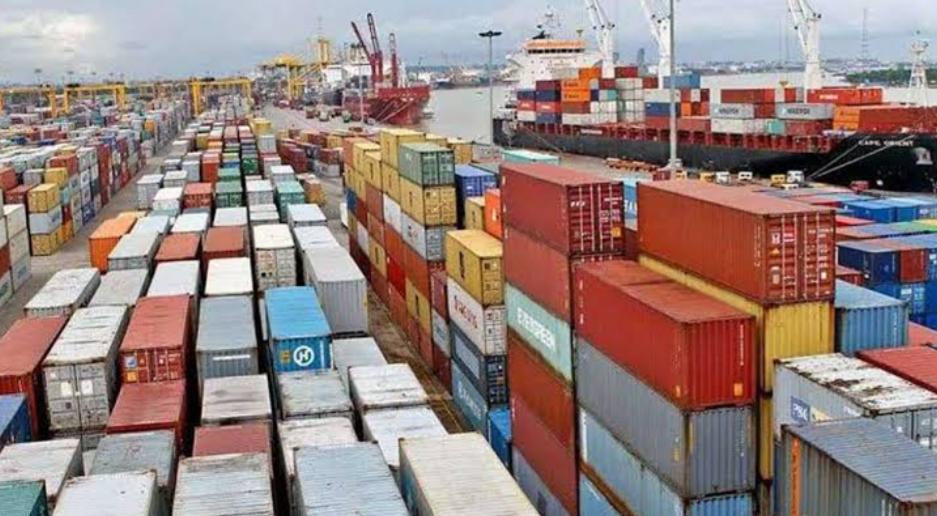
Importers and licensed customs agents have criticised the Federal Government’s growing revenue drive in the maritime sector, arguing that increased earnings are not being matched by corresponding improvements in Nigeria’s port infrastructure.
The concerns followed the disclosure by the Federal Government that agencies under the Ministry of Marine and Blue Economy generated N1.83 trillion in 2025.
The Minister of Marine and Blue Economy, Dr Adegboyega Oyetola, said the figure represented a 160 per cent increase from the N700.79 billion recorded in 2023.
Oyetola attributed the revenue growth to regulatory reforms, improved revenue assurance, digitisation and efforts to block financial leakages across the sector.
However, importers who spoke to Vanguard at the weekend expressed concern over what they described as increasing pressure on businesses as government continues to set higher revenue targets for the Nigeria Customs Service (NCS).
The South-West Chairman of the Importers Association of Nigeria (IMAN), Joseph Ajoku, warned that the government’s revenue drive should not result in additional costs for importers or make it more difficult to do business at Nigerian ports.
Ajoku alleged that higher revenue targets placed on customs officials were being passed on to importers through repeated cargo stoppages and unofficial payments.
“When they set targets, they will let go and devise a list of extorting money from the importers.”
He argued that importers ultimately bear much of the financial burden associated with cargo clearance and port operations, questioning the sources of the reported increase in maritime revenue.
“The money they are generating is at the detriment of the importers.”
Ajoku maintained that the government should ensure that efforts to increase revenue do not undermine businesses operating within the maritime sector.
Meanwhile, the National President of the National Council of Managing Directors of Licensed Customs Agents (NCMDLCA), Lucky Amiwero, questioned why the Federal Government would seek to borrow money for port development despite the substantial revenue generated by maritime agencies.
Amiwero said a significant portion of the N1.83 trillion generated from the sector should be reinvested into upgrading and modernising Nigeria’s ports.
He specifically questioned the decision to seek external financing for port rehabilitation.
“Why are you borrowing money if you have generated N1.83 trillion?”
According to Amiwero, the government should first account for how the revenue generated by maritime agencies has been spent, particularly on infrastructure.
He questioned whether the funds had been used to construct roads, improve transportation infrastructure or purchase new trains and other equipment needed to strengthen port operations.
The customs agents’ leader argued that the Nigerian Ports Authority (NPA) and other maritime agencies should have enough internally generated revenue to contribute significantly to port development rather than relying heavily on borrowed funds.
Amiwero also raised questions about the role of port concessionaires, noting that major Nigerian ports have been under concession since 2006.
He argued that revenue generated from port operations should contribute to the development and modernisation of the facilities.
The customs agents’ leader insisted that the reported increase in maritime revenue should result in visible improvements in port infrastructure and the wider trade system.
He called on the government to provide greater transparency on how the funds generated by maritime agencies have been utilised before seeking additional financing for port development.
Amiwero said the issue should not be reduced to political claims, stressing that the focus should instead be on ensuring that revenue generated from Nigeria’s maritime sector is properly reinvested.