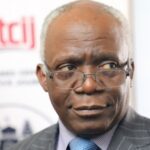

The Economic and Financial Crimes Commission (EFCC) has forfeited cash and assets worth more than $500 million to the Federal Government over the past three years, according to EFCC Chairman Ola Olukoyede.
Olukoyede disclosed this on Wednesday while delivering a lecture at the Cambridge International Symposium on Economic Crime in the United Kingdom.
He said the commission’s legal powers allow it to pursue the forfeiture of assets suspected to be proceeds of crime without necessarily waiting for a criminal conviction.
According to him, the process begins with an application to the High Court based on reasonable suspicion that an asset represents proceeds of crime.
EFCC Cites Major Asset Recoveries
Olukoyede highlighted several cases to demonstrate the commission’s use of non-conviction-based forfeiture.
He cited the recent forfeiture of an aircraft allegedly linked to an individual who reportedly received a $30 million bribe connected to a power project. According to the EFCC chairman, the aircraft was forfeited within about two months of the commission approaching the court and has since been added to the presidential air fleet.
He also disclosed that the EFCC secured the forfeiture of a property containing approximately 753 housing units from a former governor of the Central Bank of Nigeria, while criminal proceedings against the individual are ongoing in three courts.
Olukoyede further referenced the investigation involving former Attorney-General of the Federation and Minister of Justice Abubakar Malami, saying the commission traced 57 properties allegedly linked to him and had secured the forfeiture of 48.
Another case he mentioned involved a private university allegedly connected to a director in the Federal Ministry of Health. The official reportedly surrendered the property voluntarily following an EFCC investigation.
Judiciary, Intelligence Key to Asset Recovery
Olukoyede attributed the EFCC’s progress in non-conviction-based forfeiture to effective asset tracing, judicial cooperation and credible intelligence.
He said the commission has invested in training its investigators at institutions outside Nigeria, while stressing that an efficient judiciary remains essential to the recovery process.
The EFCC chairman also called for stronger protection and incentives for whistleblowers who provide information leading to the recovery of stolen Nigerian assets, particularly funds or properties moved abroad.
He said individuals whose information results in successful recovery could receive between 2.5 and 5 per cent of the recovered assets.
Olukoyede urged Nigerians with credible information about suspected stolen assets to come forward, saying public intelligence remains an important tool in the fight against financial crime and asset recovery.
Source: Economic and Financial Crimes Commission (EFCC).