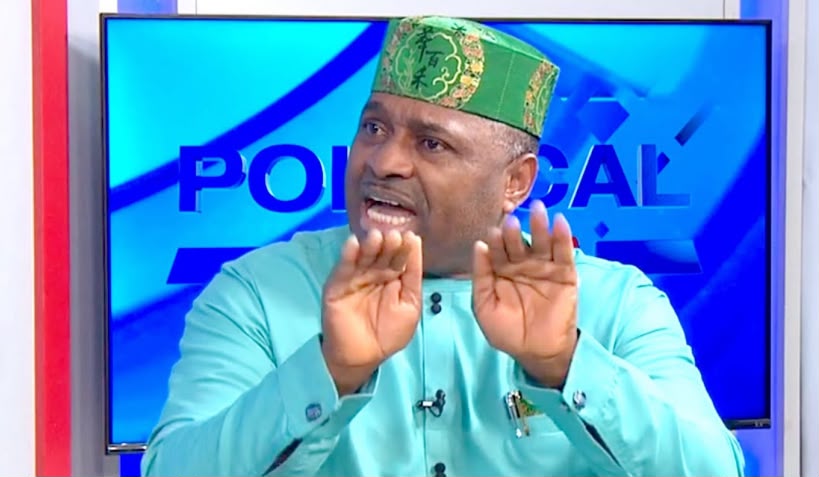
Kenneth Okonkwo, spokesperson for the 2027 presidential campaign of former Vice-President Atiku Abubakar, has defended Atiku’s proposal to restore petrol subsidy, saying the plan is aimed at making fuel affordable for Nigerians and does not seek to return to the subsidy system of the past.
Okonkwo made the clarification while appearing on Channels Television’s Sunday Politics, days after Atiku announced that he would restore petrol subsidy if elected president in 2027.
Atiku had also criticised the Tinubu administration over its handling of the funds saved from petrol subsidy removal. His position sparked criticism, with opponents pointing to his reported 2023 campaign promise to remove subsidy if elected.
President Bola Tinubu subsequently described Atiku’s proposal as evidence of “serious ignorance of governance and economy,” arguing that the country had struggled with salary and pension payments before his administration.
Okonkwo rejected Tinubu’s criticism, saying the President misunderstood what Atiku was proposing.
“The whole idea of the Atiku plan is affordability of fuel to the ordinary Nigerian.”
He argued that Atiku was not proposing a return to the old subsidy regime, which he described as a system dominated by fuel imports, inflated import figures and corruption.
According to Okonkwo, the previous system allowed importers to allegedly inflate the quantity and cost of imported fuel, leaving Nigerians to pay for products that were never actually imported.
“Atiku is not going back to that and cannot even go back to that.”
He said the return of local refining capacity had changed the circumstances and provided an opportunity to design a different approach. Okonkwo explained that Atiku’s proposed Atiku Fuel Affordability Plan (AFAP) would focus on ensuring that local refineries receive crude oil at fair prices so they can produce petrol at a lower and more affordable cost.
He argued that Nigeria would not have needed to rely so heavily on subsidy if successive governments had ensured sufficient fuel supply and prevented monopolies in the petroleum sector.
“He said, I will supply the needed crude to our local refineries at a price that will be fair enough for them to use to produce the fuel at a reduced and affordable price to Nigerians.”
Okonkwo also accused the Tinubu administration of failing to provide adequate crude oil to the Dangote Refinery, arguing that this had contributed to the refinery’s production costs.
He said the country’s current economic hardship was not primarily caused by demand-pull inflation but by high production costs.
“What we are suffering today is not demand-pull inflation. It’s cost-of-production-induced inflation.”
According to him, even if demand were zero, prices would remain high because the cost of producing goods and services was already elevated. He specifically argued that Dangote Refinery’s reliance on imported crude had contributed to the high cost of refined petroleum products.
Okonkwo also criticised Tinubu over what he described as the President’s lack of understanding of some government agencies, referencing the controversy surrounding the alleged Presidential Foreign Intervention Promotion Council (PFIPC).
He maintained that Atiku’s proposal should not be confused with the previous subsidy regime and said its central objective was to make petrol more affordable by strengthening domestic refining and ensuring access to reasonably priced crude.
Source: Channels Television / Kenneth Okonkwo.