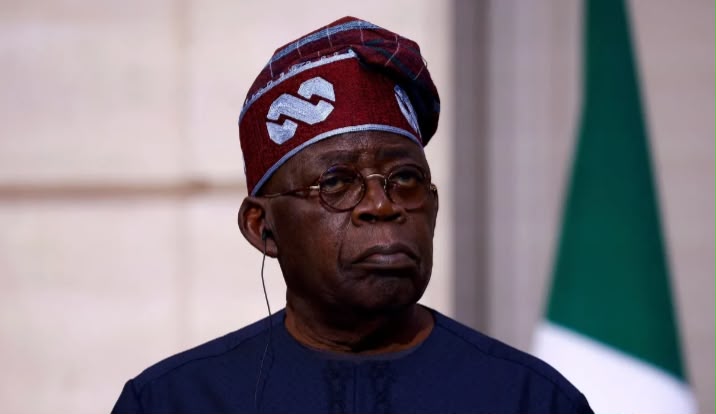
President Bola Tinubu has constituted a high-level committee with a 90-day mandate to produce a five-year strategic defence cooperation plan aimed at strengthening Nigeria’s security architecture, improving coordination among defence and intelligence institutions and enhancing the country’s ability to respond to emerging threats.
The Minister of Information and National Orientation, Mohammed Idris, disclosed this while briefing State House correspondents after the Federal Executive Council (FEC) meeting at the Presidential Villa in Abuja.
Idris said the initiative would focus on conducting national threat assessments and developing a framework for military cooperation.
He explained that the move followed what he described as recent successes by the military against terrorists and bandits.
Committee Members
According to the minister, the committee will include key officials from Nigeria’s security and defence architecture.
Members include representatives of the Office of the National Security Adviser (NSA), the two Ministers of Defence, the Chief of Defence Staff and all Service Chiefs.
The Directors-General of the Department of State Services (DSS) and the National Intelligence Agency (NIA), as well as the Special Adviser to the President on Homeland Security, will also serve on the committee.
The Special Adviser on Homeland Security will provide the committee’s secretariat.
The committee is expected to submit its strategic defence plan to President Tinubu within 90 days.
Idris said the plan formed part of the administration’s wider efforts to protect lives and property while consolidating recent gains made by the military and other security agencies against terrorism, banditry and other forms of criminality.
He also highlighted measures already approved by Tinubu to improve the operational capacity and welfare of military personnel.
These include an increase in the remuneration of military personnel, the expansion of the military’s divisions from eight to 12, and the provision of additional accommodation for servicemen.
“President Bola Ahmed Tinubu’s administration is determined to further deepen that, so that once and for all we can take out this issue of insecurity from our land,” Idris said.
Government Approves 600 Housing Units for Military Personnel
Also briefing journalists, the Minister of Housing and Urban Development, Muttaqha Rabe, disclosed that FEC had approved the direct purchase of 600 four-bedroom terrace duplexes at Bristow City Development, Life Camp, Abuja, for members of the Armed Forces.
Rabe said the approval was part of Tinubu’s commitment to improving the welfare and living conditions of military personnel.
He described housing as an important part of military welfare and noted that the latest approval followed an earlier FEC decision to provide 2,056 housing units for members of the Armed Forces.
With the latest approval, the total number of housing units approved for the Armed Forces has risen to 2,656, out of the 10,000 units targeted by the Federal Government.
Rabe said the housing initiative reflected the administration’s wider commitment to meeting its housing obligations to Nigerians while paying particular attention to the needs of members of the Armed Forces.
He explained that some housing estates built for military personnel had effectively become barracks because of the facilities incorporated into them.
“Some of these housing estates are converted into barracks,” he said.
According to Rabe, some military estates in places such as Sokoto and other locations contain military offices and guard rooms, making them functionally similar to barracks.
FG Targets 10,000 Housing Units
Rabe also disclosed that the Federal Government has an existing five-year policy to construct 10,000 housing units, with the Federal Ministry of Housing and Urban Development responsible for delivering the programme.|
He said the housing approvals presented to FEC formed part of the ministry’s efforts to fulfil that mandate.
“Before now, there was a policy of the Federal Government … that Federal Government over a five-year time will build 10,000 units of housing,” he said.
Rabe added that the government was providing substantial subsidies on some of its housing projects to reduce the impact of rising construction costs and make homeownership more affordable.
He said the rising cost of building materials had significantly increased the cost of constructing houses, citing the price of nine-inch blocks as an example.
According to the minister, a two-bedroom house could require at least 1,000 blocks, with the cost of one block in Abuja, Lagos, Port Harcourt and Kano reaching about ₦1,000.
He said while the Federal Government could spend about ₦18 million to construct a house, it could sell the property for as low as ₦12 million, depending on the location, because of the subsidy provided by government.
In some locations, he added, government houses are being sold for between ₦8 million and ₦9 million.
“We are providing cheap and affordable houses to Nigerians, and it is all over Nigeria,” Rabe said.
He said the ultimate objective was to ensure that Nigerians have access to decent, affordable and quality housing across the country.
Source: State House / Federal Executive Council briefing