Iran has laid out a series of conditions for reopening the Strait of Hormuz, raising fresh uncertainty over when normal shipping activity can resume through the vital waterway.
Iranian Foreign Minister Abbas Araghchi said discussions with Oman on the management and transit arrangements for the strait were nearing completion, but stressed that reopening the waterway would depend on additional demands, including compensation for damages linked to the conflict.
The development comes after months of heightened tensions and repeated attacks on vessels passing through the strategic waterway, which is crucial to global energy supplies.
Iranian security chief Mohammad Bagher Zolghadr reportedly listed several conditions for reopening the strait, including an end to what he described as the war and aggression against Iran and its allies in Lebanon, Palestine, Yemen and Iraq.
He also demanded an end to the US naval blockade, the lifting of sanctions, the release of frozen Iranian assets and compensation for damage caused during the war, according to Tasnim.
Iran’s Revolutionary Guards also insisted that the reopening of Hormuz was separate from the ongoing discussions between Iran and Oman.
The Guards said the “enemy is forced to accept Iran’s conditions for the opening of the strait.”
Tensions Rise Over Attacks on Ships
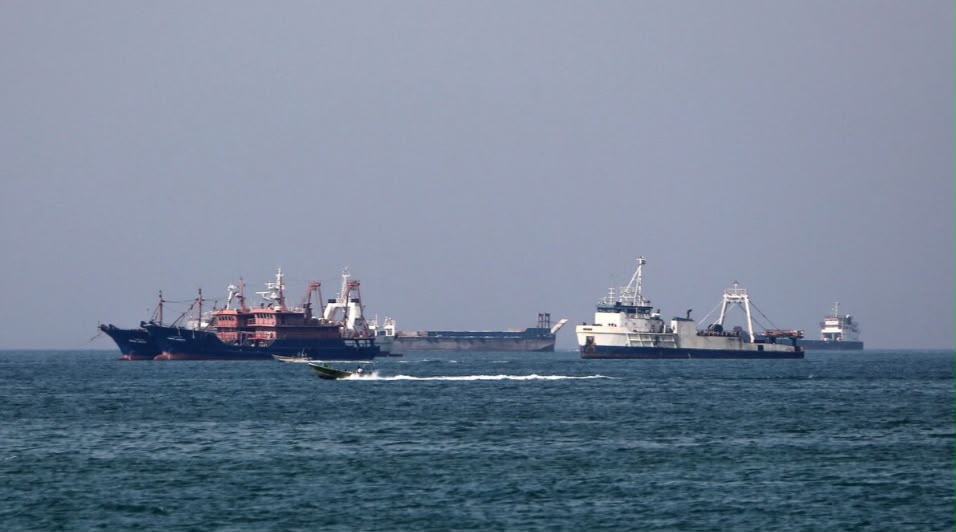
Transit through the Strait of Hormuz has reportedly dropped significantly as Iran continues to target vessels it accuses of attempting to avoid its preferred route through Iranian waters.
The United Arab Emirates on Saturday condemned what it described as an Iranian attack on a tanker belonging to Abu Dhabi National Oil Company (ADNOC).
The UAE said the vessel was struck by a missile while travelling through the Strait of Hormuz, although no casualties were reported.
The United Kingdom Maritime Trade Operations (UKMTO) later reported that a ship had been hit by a projectile off Oman in the Strait of Hormuz, causing a fire that was eventually brought under control. It was not immediately clear whether the incident involved the same vessel reported by the UAE.
ADNOC said on Friday that 15 of its vessels had come under attack since the beginning of the conflict, including three within the same week.
Oman also condemned what it called repeated attacks on ships using the waterway, without directly naming Iran.
At the same time, Oman said negotiations over future navigation arrangements in the Strait of Hormuz were progressing positively and urged all sides to avoid actions that could undermine the talks.
Dispute Over Tolls and International Law
Iran has also indicated that it wants to impose charges on vessels using the strait, while accusing some ships of deliberately bypassing routes it considers acceptable.
The issue has raised questions over the legal basis for such charges, as the previous Iran-US understanding reportedly stated that Iran and Oman would negotiate future arrangements for the waterway with other Gulf countries in accordance with applicable international law.
International maritime law generally restricts the imposition of tolls on ships exercising transit passage through international straits.
Turkey Seeks Wider Regional Defence Cooperation
Meanwhile, Turkey’s Foreign Minister Hakan Fidan said Egypt could eventually join a new defence arrangement involving Turkey, Saudi Arabia and Pakistan.
Fidan described Egypt as a natural partner and said he expected the country to become part of the alliance at a later stage.
The agreement is designed to strengthen regional security and collective deterrence. Pakistan’s foreign ministry said an attack against one member would be treated as an attack against all.
Fidan stressed that the arrangement was not directed against any particular country.
The development comes amid wider regional tensions following the outbreak of the Iran war and a drone attack on US assets at an Egyptian Mediterranean port last month.
With negotiations over the Strait of Hormuz still ongoing and attacks on vessels continuing, uncertainty remains over when the crucial shipping route will return to normal operations.
Source: AFP.