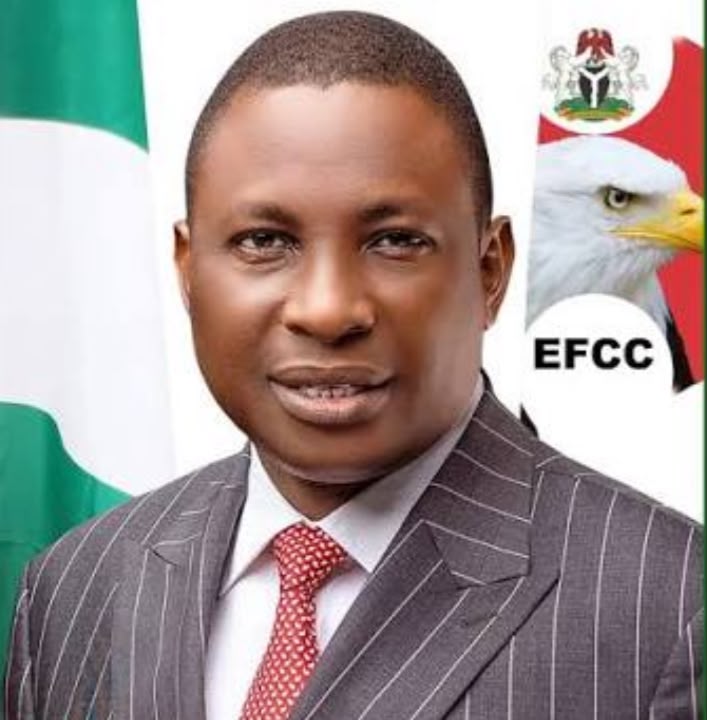
Reactions have continued to trail President Bola Ahmed Tinubu’s directive ordering the Economic and Financial Crimes Commission (EFCC) to return to court and vacate the order freezing the Osun State Government’s statutory allocation account, with political parties and stakeholders expressing differing views on the President’s intervention.
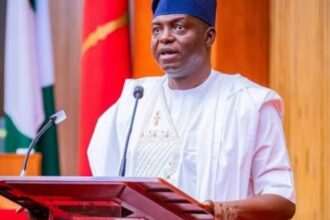
While former Vice President Atiku Abubakar and the African Democratic Congress (ADC) questioned the directive, arguing that it raises concerns about the independence of Nigeria’s anti-corruption agencies, the All Progressives Congress (APC), Peoples Democratic Party (PDP), Accord Party, and the Democracy Leadership Alliance (DLA) welcomed the President’s decision, describing it as necessary to protect the credibility of the upcoming Osun governorship election.
The controversy began after the EFCC froze the Osun State Government’s Federal Statutory Allocation Account over an alleged ₦11 billion fraud, just nine days before the state’s governorship election scheduled for August 15.
Governor Ademola Adeleke and several opposition parties immediately criticised the action, arguing that its timing created the impression of political interference.
The EFCC, however, defended its decision, explaining that it acted within its legal powers after detecting suspicious financial transactions linked to the account.
According to the Commission’s Director of Public Affairs, Wilson Uwujaren, the temporary restriction was part of an ongoing investigation.
Tinubu Orders EFCC to Vacate Court Order
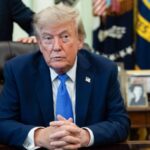
Reacting to the controversy, President Tinubu directed the EFCC to immediately return to court, vacate the order freezing the account and discontinue all related legal proceedings.
The President explained that although he respects the EFCC’s constitutional responsibility to investigate corruption, the timing of the action could undermine public confidence in the credibility of the forthcoming governorship election.
In a personally signed statement, Tinubu said he was concerned about the public perception the development could create.
“It has come to my notice that the Economic and Financial Crimes Commission (EFCC) obtained a court order on August 5, 2026, freezing the account of the Osun State Government. I must state that I feel deeply embarrassed, not by the EFCC’s exercise of its mandate backed by a court order, but by the timing of the agency’s action,” the President said.
Tinubu added that although his administration has deliberately allowed anti-corruption agencies to operate independently, nothing should create the impression that federal institutions are being used to influence an electoral process.
“Based on the foregoing premise, I am duty-bound to issue a directive on this issue in consonance with the overriding public interest in preserving public confidence and the integrity, credibility and fairness of our democratic process,” he added.
Atiku Questions Tinubu’s Intervention
Former Vice President Atiku Abubakar criticised the President’s directive, arguing that it weakens repeated claims that anti-corruption agencies operate independently of the Presidency.
In a statement issued by his Senior Special Assistant on Public Communication, Phrank Shaibu, Atiku said Tinubu’s explanation raised more questions than answers.
“President Tinubu’s statement has raised more questions than it has answered. While the EFCC’s official statement painstakingly explained why it froze the Osun State Government’s account, it made no mention whatsoever of obtaining a court order. Yet the President’s intervention is predicated entirely on the existence of such a court order,” Atiku said.
The former Vice President also challenged Tinubu to direct the Independent Corrupt Practices and Other Related Offences Commission (ICPC) to release former Kaduna State Governor Nasir El-Rufai if he truly has authority over anti-graft agencies.
ADC Demands Clarification
The African Democratic Congress (ADC) also questioned the President’s explanation, saying it appeared to contradict the EFCC’s earlier position.
The party’s National Publicity Secretary, Mallam Bolaji Abdullahi, argued that the commission had consistently defended its action based on statutory powers without mentioning any court order.
“It is either the President was misinformed or he deliberately misrepresented the facts. Either possibility is deeply disturbing,” the party stated.
APC Defends Tinubu’s Decision
The Osun State chapter of the APC welcomed the President’s directive and asked Governor Adeleke and his supporters to apologise to Tinubu, former Governor Gboyega Oyetola, and the party over earlier allegations that they influenced the EFCC’s action.
The party’s Director of Media and Publicity, Mogaji Kola Olabisi, said Tinubu merely objected to the timing of the account freeze and not the investigation itself.
“What the President is frowning at is the timing of the EFCC action against the Osun State Government so that political meanings would not be read into it,” Olabisi said.
He described Tinubu’s intervention as evidence that the President remains “a true father of the nation.”
PDP Commends President
The Peoples Democratic Party (PDP) in Osun State also praised Tinubu for intervening in the matter.
The party’s state chairman, Hon. Sunday Bisi, said the directive demonstrated that the President was not involved in any alleged attempt to undermine the Adeleke administration.
Lawyers Criticise EFCC’s Action
Several legal practitioners also weighed in on the controversy, faulting the EFCC’s handling of the matter.
Senior Advocate of Nigeria Abdul Balogun (SAN) argued that the anti-graft agency should have exercised greater caution.
“In all our actions as individuals and institutions, we must allow the rule of law to prevail. If I may say, the EFCC acted irresponsibly. It ought to have obtained a court order before taking such action,” he said.
Constitutional lawyer Mathew O. Ari questioned why the account was frozen so close to the governorship election.
“You cannot blame Nigerians for reading political meaning into the action of the EFCC. The obvious question is: why now?” he asked.
Professor of Law Adewale Odu also argued that although the EFCC has powers to investigate financial crimes, the manner in which the matter was handled created avoidable public suspicion.
Osun Government Sues EFCC
Meanwhile, the Osun State Government has filed a ₦2 billion lawsuit against the EFCC over the freezing of its account.
The suit, marked FHC/ABJ/CS/1762/2026, was filed before the Federal High Court, Abuja, with the EFCC, its Chairman and First Bank Nigeria Limited listed as defendants.