
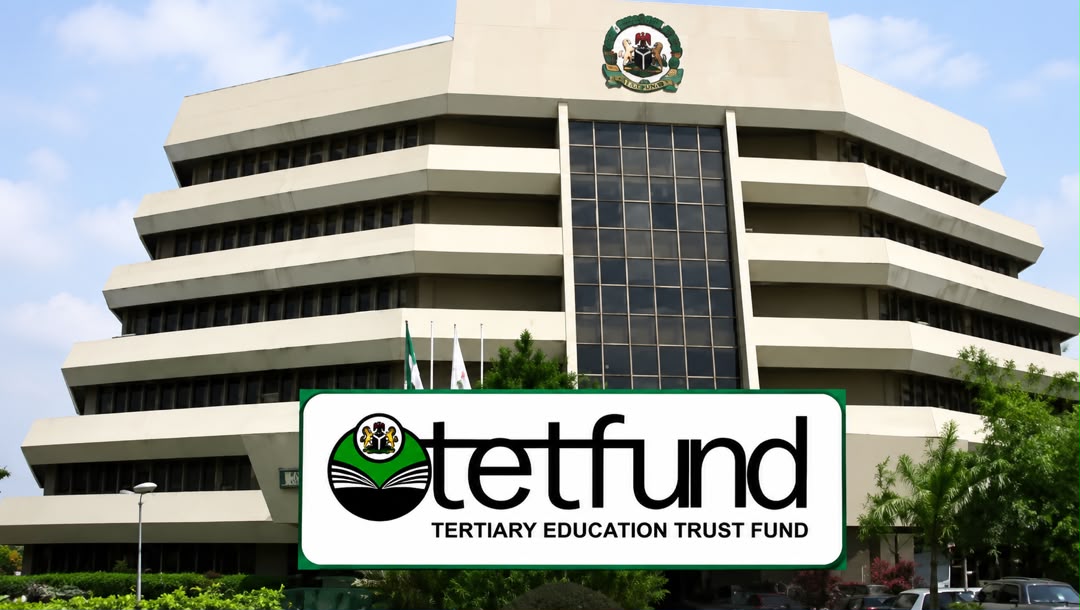
The Tertiary Education Trust Fund (TETFund) has announced tougher measures against beneficiary tertiary institutions that fail to complete intervention projects, warning that schools with abandoned or delayed projects will be denied approval for new projects under the 2027 intervention cycle.
The decision was approved by the Board of Trustees (BoT) as part of efforts to tackle persistent project delays, cost overruns and poor implementation that have affected several TETFund-funded projects across Nigeria.
The Fund’s Director of Public Affairs, Abdulmumin Oniyangi, disclosed the development in a statement issued on Thursday.
According to the statement, the Chairman of the Board, Aminu Bello Masari, said the era of allowing institutions to accumulate new projects while leaving existing ones unfinished had come to an end.
“The era of allowing institutions to pile up fresh projects while existing ones remain uncompleted is over,” Masari said.
He acknowledged that some projects were delayed due to the sharp increase in the cost of construction materials such as cement, reinforcement bars, sanitary fittings and electrical materials.
Masari recalled that the Board introduced a special intervention programme in 2023 to provide additional funding for affected projects, leading to the successful completion of many previously abandoned projects.
Despite the intervention, he noted that delays have continued in several institutions, blaming the situation largely on changes in institutional leadership, where new administrators often abandon projects started by their predecessors, as well as bureaucratic delays in contractor payments.
He warned that internal politics and administrative bottlenecks would no longer be allowed to hinder projects financed with public funds.
To address the problem, TETFund has directed every beneficiary institution to prepare a comprehensive list of all projects that have remained unfinished for more than six months after their scheduled completion dates.
The institutions are also expected to explain the reasons for the delays, prioritise the projects based on importance, and provide detailed estimates of the funds required to complete them.
In addition, schools must establish stronger project supervision systems involving their physical planning and maintenance departments to ensure projects are completed on time, within approved budgets and according to required standards.
The Board further directed that institutions with outstanding projects must use their annual, zonal and high-impact intervention allocations to complete those projects before seeking approval for new ones.
No institution with outstanding delayed projects will be considered for fresh project approvals under the 2027 intervention cycle, the Board stated.
To ensure compliance, TETFund said monitoring teams comprising Board members and technical officials will carry out nationwide inspections of affected projects between August and September 2026.
The inspections will assess the progress of the projects and review completion plans submitted by beneficiary institutions ahead of the Board’s statutory meeting in October 2026, where projects for the 2027 disbursement guidelines will be considered.
Source: Statement by the Tertiary Education Trust Fund (TETFund).