
The Federal Government has assured Nigerians that repentant terrorists accused of serious crimes will not escape justice despite participating in the country’s Disarmament, Demobilisation and Reintegration (DDR) programme.
The assurance was given on Monday during a national workshop in Abuja, where the government officially launched new Standard Operating Procedures (SOPs) to guide the implementation of the DDR programme for former terrorists.
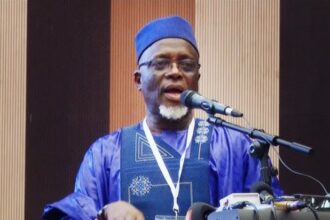
Speaking at the event, the National Coordinator of the National Counter Terrorism Centre (NCTC), Maj.-Gen. Adamu Laka, said the new guidelines were designed to improve transparency, accountability and coordination among agencies involved in rehabilitating and reintegrating repentant terrorists.
According to him, the SOPs were developed after extensive consultations and are based on Nigeria’s security realities as well as international best practices.
Laka explained that the framework clearly defines the responsibilities of government institutions, strengthens inter-agency collaboration and ensures that the programme complies with human rights standards and the rule of law.
He also described the DDR programme as a key part of Nigeria’s non-military strategy for tackling terrorism, stressing that military operations alone cannot guarantee lasting peace.
The workshop also validated state-level operating procedures for Kaduna, Katsina and Zamfara, the pilot states selected for the programme.
Also speaking at the event, the Director of Preventing and Countering Violent Extremism at the NCTC, Abimbola Wońosikou, said the programme provides eligible individuals with an opportunity to abandon violence and return to society.
However, she made it clear that anyone accused of serious criminal offences would still face prosecution through the appropriate legal process.
Wońosikou added that state DDR committees have already been established in Kaduna, Katsina and Zamfara, bringing together government officials, security agencies, traditional rulers, religious leaders, civil society groups and youth representatives to oversee implementation.
She said the new procedures also cover case management, information sharing, community engagement, human rights safeguards, monitoring and evaluation to ensure a coordinated and accountable process.
Representing the United Nations, Mario Nascimento commended Nigeria’s evolving approach to disarmament and reintegration, noting that successful rehabilitation depends not only on former fighters but also on the active involvement of communities, local authorities and civil society.
The Federal Government said the new framework is aimed at promoting lasting peace, preventing a return to violence and strengthening community resilience across affected states.