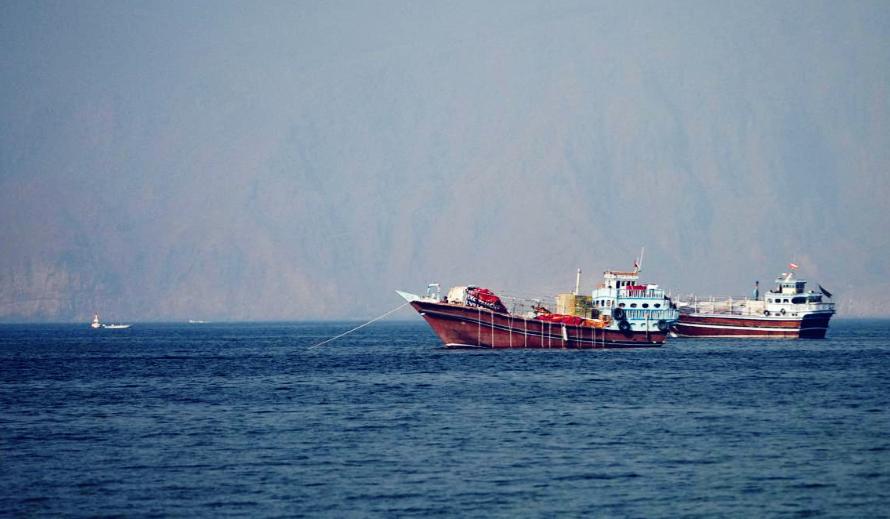
Iran has warned international shipping companies against using routes outside its approved corridor through the Strait of Hormuz, cautioning that any attempt to bypass its designated passage could escalate tensions in the Middle East.
The warning came as fresh military exchanges between Iran and the United States raised concerns about the fragile ceasefire brokered by Pakistan following months of conflict that disrupted global oil shipments.
Speaking on Sunday, Iranian Foreign Minister Abbas Araghchi said vessels should continue using the agreed maritime route, warning that any deviation could complicate efforts to fully reopen the strategic waterway.
“Any attempt to adopt arrangements different from those approved by Iran will only complicate the situation, delay the reopening of the Strait of Hormuz and increase regional tensions,” Araghchi said.
The renewed warning follows reports that several commercial vessels have recently sailed closer to the Omani coastline instead of passing through the corridor preferred by Iran.
Meanwhile, the United States Central Command (CENTCOM) said it carried out airstrikes on 10 Iranian military targets, accusing Tehran of continuing attacks against commercial shipping in the Gulf.
Iran responded by announcing retaliatory strikes targeting US military bases in Kuwait and Bahrain, although both countries condemned the attacks.
The Strait of Hormuz remains one of the world’s most important shipping lanes, with roughly 20 per cent of global oil and liquefied natural gas supplies passing through the narrow waterway under normal conditions.
Iran’s Revolutionary Guards also announced tighter control measures in the strait, warning that ships violating its directives could face stronger enforcement actions.
The latest developments have further tested the ceasefire agreement reached earlier this year between Washington and Tehran, with both sides accusing each other of violating the deal.
US President Donald Trump also warned that Iran would face severe consequences if hostilities resumed, saying the United States would respond decisively to any further aggression.
Beyond the Gulf, regional tensions also remained high after Israel carried out fresh strikes in Lebanon, drawing criticism from Iran, which described the attacks as a violation of ongoing truce efforts.
Security analysts say continued military exchanges and disputes over navigation through the Strait of Hormuz could prolong uncertainty in global energy markets and increase geopolitical risks across the Middle East.
Source: AFP