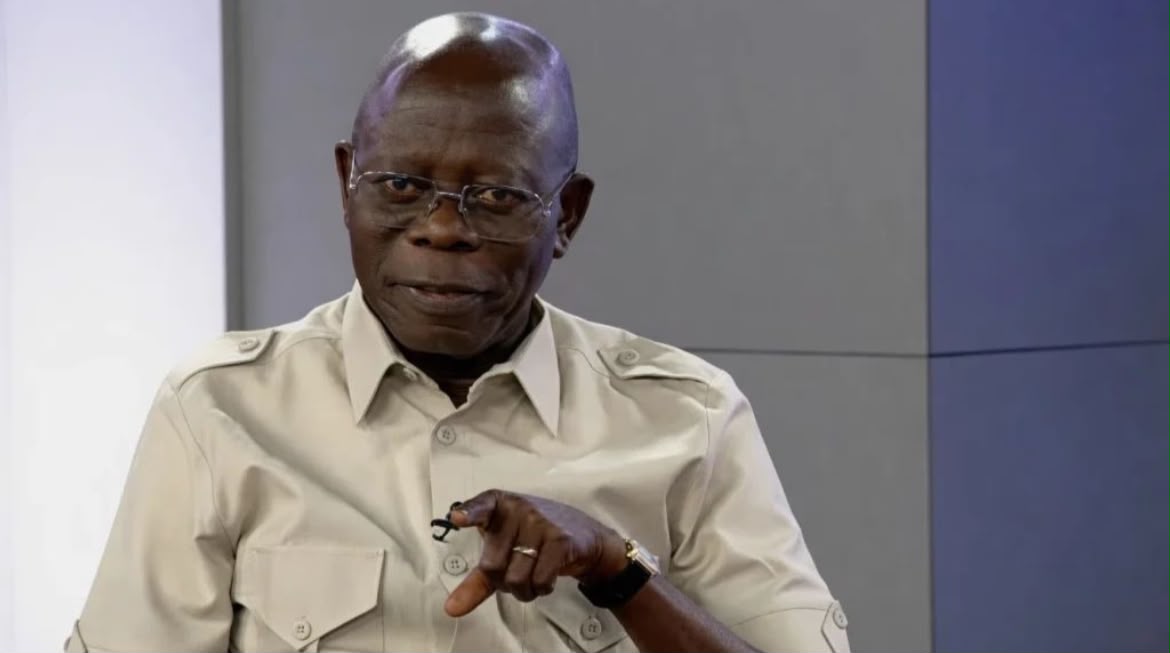
Senator Adams Oshiomhole has revealed that some lawmakers raised concerns over the authenticity of signatures attached to the committee report that recommended the suspension of Senator Natasha Akpoti-Uduaghan, describing the controversy as one of the most difficult moments faced by the 10th Senate.
The senator representing Edo North made the disclosure during an interview on AIT’s One-on-One programme while reflecting on major events that shaped the Senate’s activities over the past year.
According to Oshiomhole, the controversy surrounding Natasha’s suspension extended beyond the disciplinary action itself and centered on questions about how the committee report was prepared and endorsed.
Responding to comments reportedly made by Senate Leader Opeyemi Bamidele, who described Natasha’s suspension as one of the most controversial episodes in the current Senate, Oshiomhole agreed with the assessment.
In his words:
“If he said that, yes.”
The former Edo State governor disclosed that concerns emerged after some lawmakers allegedly challenged the appearance of their names on the report despite not supporting its conclusions.
According to him:
“There are even people who claimed that their signatures were forged on that document.”
Oshiomhole specifically referenced Senator Ireti Kingibe, claiming she informed him that she neither signed nor endorsed the committee report, despite her name appearing among those listed as supporting the recommendations.
He explained that Senate committees play a crucial role in investigations and oversight functions, with members expected to carefully review evidence, hear submissions, and collectively agree on recommendations before presenting reports to the Senate.
The lawmaker stressed that committee reports derive their legitimacy from the approval of members, which is usually demonstrated through their signatures.
He said:
“The members of the committee are expected to sign that report because it is the collective decision of the committee. To sign is to endorse.”
According to Oshiomhole, any member who disagrees with a report has the right to refuse to sign it or formally record a dissenting position.
He added:
“Where members do not accept the content, they can abstain from signing it.”
The senator also dismissed suggestions that attendance records could replace signatures on committee reports, insisting that being present at a meeting does not automatically mean a lawmaker agrees with the final recommendations.
According to him, the questions raised over the endorsement process played a major role in the controversy that followed Natasha Akpoti-Uduaghan’s suspension and contributed to the intense public debate surrounding the matter.
Oshiomhole maintained that strict compliance with parliamentary procedures remains critical to preserving the credibility of the National Assembly and ensuring public confidence in legislative decisions.
He emphasized that committee reports must accurately reflect the positions of members and comply fully with Senate rules to protect the integrity of the lawmaking process.
The remarks have once again reignited discussions about the circumstances surrounding Senator Natasha’s suspension and the procedures followed in reaching the Senate’s decision.
Source: AIT One-on-One Interview