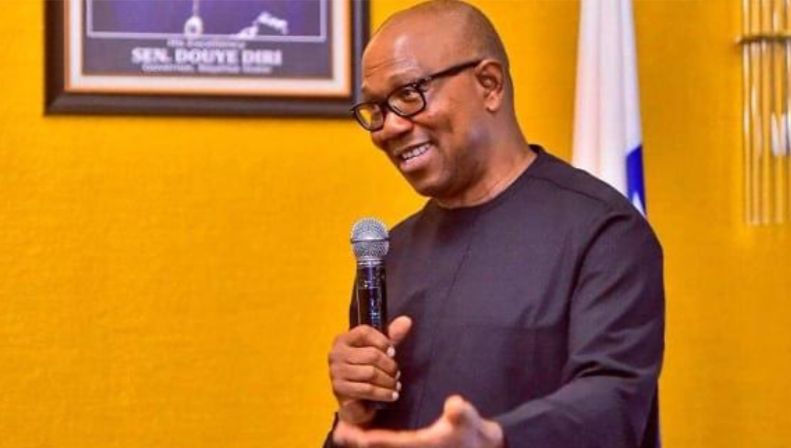
Former Labour Party presidential candidate Peter Obi has advised Nigerians to avoid going into debt just to fund weddings, birthdays, and other social celebrations, stressing that financial stability should take priority over impressing guests.
Speaking while reflecting on his personal life and marriage, Obi revealed that he and his wife intentionally kept their wedding simple more than three decades ago, choosing to invest their resources in building their future rather than spending heavily on a one-day event.
According to him, only a handful of people attended his wedding, yet the decision helped lay a stronger financial foundation for his family.
Obi noted that many people today spend beyond their means in a bid to organise extravagant ceremonies, only to face financial hardship shortly afterwards.
He warned that taking loans to finance weddings, birthday parties, and other celebrations often creates unnecessary pressure on families and can even contribute to problems in marriages.
The former Anambra State governor urged young couples and parents to focus more on long-term investments such as education, housing, and family welfare instead of seeking public approval through lavish events.
He also criticised the culture of celebrating every occasion without considering the financial implications, arguing that resources should be directed toward more important needs.
Using children’s education as an example, Obi advised parents to prioritise school fees and family responsibilities ahead of expensive parties and ceremonies.
Beyond family finances, Obi also touched on Nigeria’s long-standing electricity challenges, expressing frustration over the country’s inability to achieve significant progress despite its enormous potential.
He cited Egypt as an example of what can be accomplished through effective planning and leadership, noting that the North African nation dramatically increased its power generation capacity within a few years and now exports electricity.
According to Obi, he had visited power projects in both Nigeria and Egypt and was left questioning why similar progress had not been replicated locally.
He said experts he spoke with attributed the difference not to technology or resources but to systemic challenges within Nigeria.
The former presidential candidate maintained that with the right policies, discipline, and commitment, Nigeria could achieve far greater results in critical sectors such as power, infrastructure, and economic development.
His comments have since generated reactions online, with many Nigerians debating his views on personal finance, lifestyle choices, and the country’s development challenges.
Watch Here: