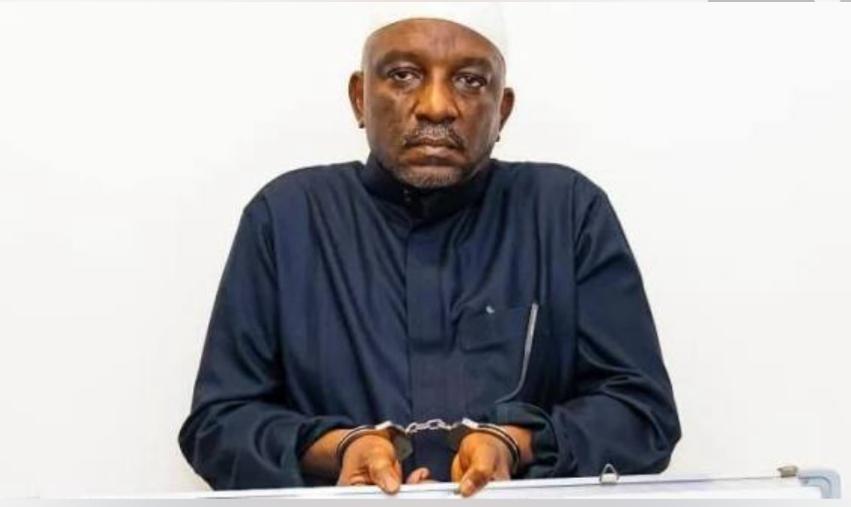
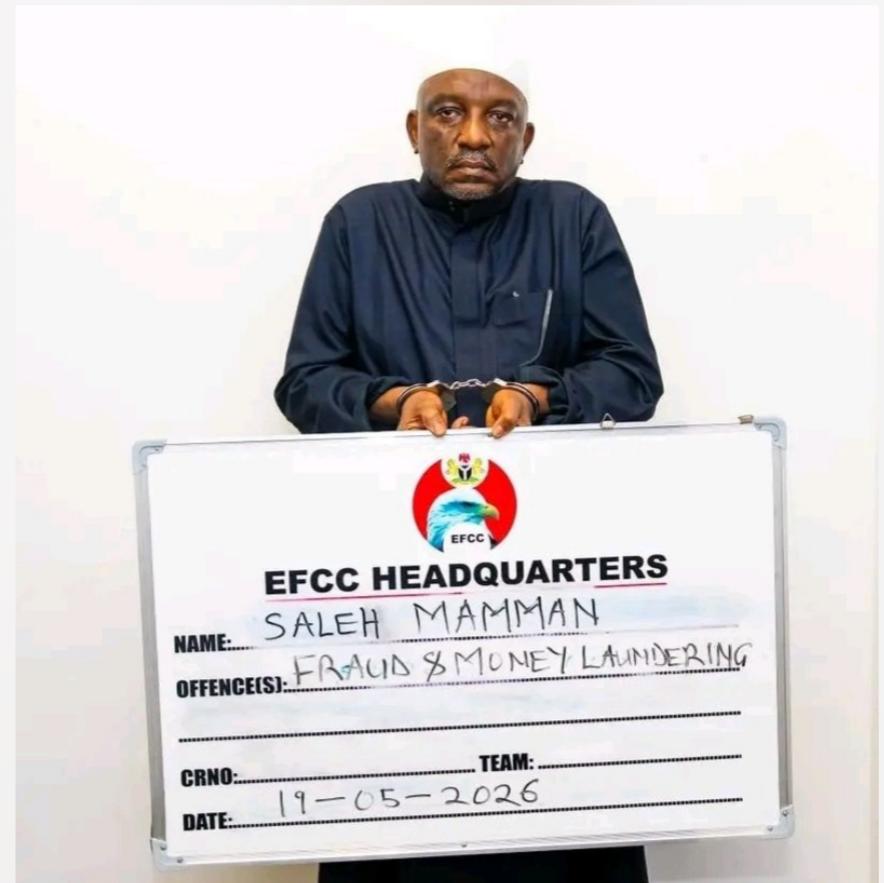
Former Minister of Power, Saleh Mamman, has been transferred to the Kuje Correctional Centre in Abuja after a Federal High Court ordered him to begin serving a 75-year prison sentence for money laundering.
The Economic and Financial Crimes Commission (EFCC) confirmed the development in a statement shared on its official X account on Tuesday.
According to the anti-graft agency, Justice James Omotosho of the Federal High Court in Maitama gave the directive after Mamman was presented before the court following his arrest.
The former minister was earlier convicted on all counts in an amended 16-count charge involving alleged money laundering worth over ₦33.8 billion.
The case was linked to the alleged diversion of funds connected to major power projects, including the Zungeru and Mambilla hydroelectric projects.
Mamman was sentenced in absentia on May 13 after reportedly failing to appear in court during the judgment.
Reports revealed that he later fled from Abuja to Kaduna before he was eventually arrested by EFCC operatives on May 19 in the Rigasa area of Kaduna State alongside one of his relatives.
During the latest court proceedings, a relative identified as Shamsudeen Mohammed told the court that the former minister had been ill and travelled to Kaduna by taxi after his conviction.
“He was sick and I was helping him with traditional medicine,” the relative told the court.
Justice Omotosho informed Mamman that his prison sentence officially began immediately after the court proceedings.
“The sentence starts to run from today,” the judge stated.
The judge also explained that Mamman had left Abuja for Kaduna after the judgment was delivered against him.
Meanwhile, the EFCC is seeking the forfeiture of five additional properties allegedly linked to the former minister.
The properties listed by the anti-corruption agency include luxury apartments and mansions located in Abuja and Kaduna.
The court adjourned hearing on the forfeiture application until June 8, 2026, to allow Mamman the opportunity to respond and engage legal representation.
The development has sparked widespread reactions online as Nigerians continue to discuss corruption cases involving former public officials.
Source: Economic and Financial Crimes Commission (EFCC) statement and Federal High Court proceedings.