
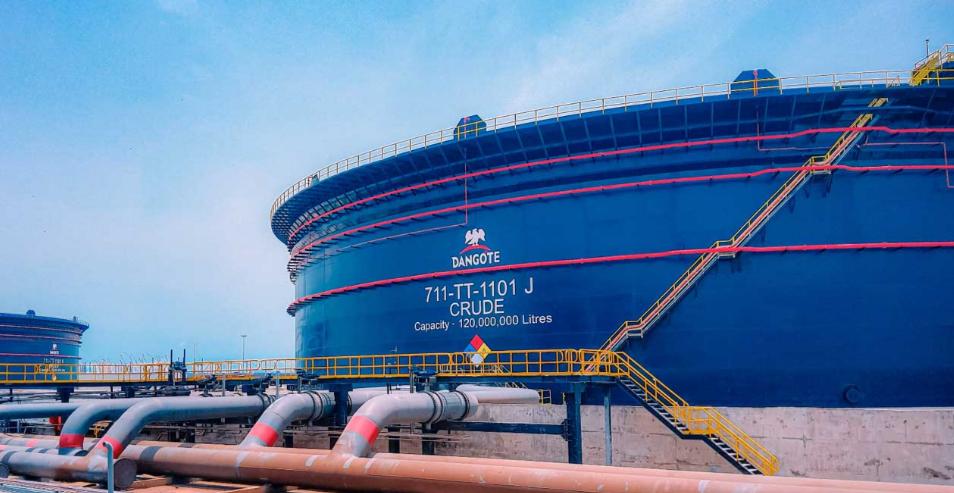
Dangote Petroleum Refinery has imported its first-ever crude oil cargoes from the United Arab Emirates (UAE) as the company moves to diversify its crude supply sources amid ongoing challenges in securing sufficient domestic crude.
According to a report by S&P Global Commodity Insights, the 700,000-barrels-per-day refinery purchased two cargoes from the UAE, marking the first time it has sourced crude from the Middle East since operations began.
The development follows the easing of tensions in the Middle East after an interim peace agreement between the United States and Iran, which restored confidence in shipping through the Strait of Hormuz and reopened export routes.
Although the refinery was originally designed to process Nigeria’s light sweet crude, it has increasingly expanded its feedstock options by sourcing crude from other regions, including the United States and now the Middle East.
The report noted that Dangote Refinery has continued to face domestic supply constraints despite its crude supply agreement with the Nigerian National Petroleum Company (NNPC), which guarantees between 13 and 15 cargoes of Nigerian crude monthly in naira.
However, inadequate crude availability and operational issues at some export terminals have reportedly made it necessary for the refinery to source additional crude from international markets.
Dangote Refinery’s Chief Executive Officer, David Bird, had earlier disclosed that the company plans to increase the share of heavier crude grades in its refining operations as part of its long-term expansion strategy.
According to him, the refinery also intends to venture into crude blending as it prepares to significantly increase production capacity.
The refinery is targeting an expansion from 700,000 barrels per day to 1.4 million barrels per day by the end of 2028, a move that could enable it to process nearly 80 per cent of Nigeria’s daily crude oil production.
S&P Global added that Dangote Refinery is steadily broadening the variety of crude grades it processes in line with its ambition to operate as a fully merchant refinery capable of sourcing crude from multiple global markets.
The report also revealed that in 2025, about 70 per cent of the refinery’s crude imports came from Nigeria, while approximately 24 per cent were sourced from the United States.
Source: (citing S&P Global Commodity Insights)