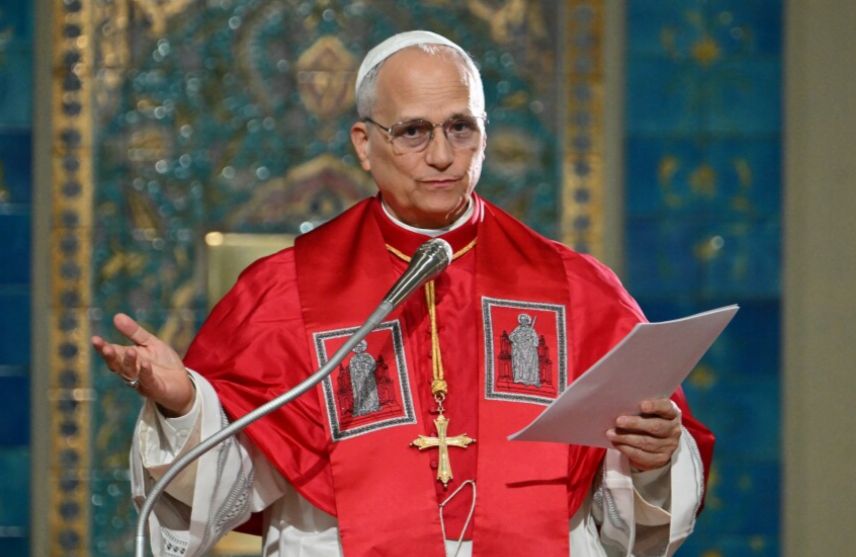
Pope Leo XIV has issued a historic apology for the Catholic Church’s past involvement in justifying slavery, admitting that the Vatican was slow to condemn the practice and describing the delay as “a wound in Christian memory.”
The apology was contained in a major document released on Monday titled Magnifica Humanitas (“Magnificent Humanity”), where the Pope reflected on slavery, human dignity and modern forms of exploitation.
In the strongly worded message, Pope Leo acknowledged that Church institutions owned slaves during parts of history and admitted that the Vatican once played a role in legitimising forms of human subjugation.
According to him, the Church responded to requests from rulers and governments during the early modern period by regulating and, in some cases, approving the enslavement of non-Christians referred to at the time as “infidels.”
“In the early modern period, the Apostolic See of Rome intervened several times to regulate and legitimize forms of subjugation,” the Pope stated.
He admitted that the Catholic Church only reached a clear and universal condemnation of slavery in the 19th century, long after millions of people had already suffered under the transatlantic slave trade and other forms of forced labour.
“For this, in the name of the Church, I sincerely ask for pardon,” Pope Leo wrote.
The statement marks one of the strongest acknowledgements yet of the Vatican’s historical connection to slavery and colonial-era oppression.
While previous Popes had apologised for the role played by Christians in the slave trade, Pope Leo’s comments went further by directly referencing the Vatican’s institutional involvement.
The Pope stressed that although historical events should not always be judged by today’s standards, it is impossible to ignore the Church’s delayed response in speaking against slavery.
“It is true that past events cannot be judged anachronistically,” he wrote.
“Yet neither can we deny or diminish the delay with which both society and the Church came to denounce the scourge of slavery.”
He described that delay as “a wound in Christian memory” that should never be forgotten.
Beyond reflecting on history, Pope Leo also warned about what he called “new forms of slavery” emerging in modern society, especially within the digital economy and exploitative labour systems around the world.
According to him, human trafficking, forced labour, online exploitation and modern economic systems that dehumanise workers remain serious threats to human dignity.
The latest apology has already sparked reactions globally, with many observers describing it as a significant moment in the Catholic Church’s ongoing efforts to confront painful aspects of its history.
Former Pope John Paul II had previously condemned slavery in 1992 and later issued a broad apology in 2000 for historical injustices committed by Christians.
Pope Francis also repeatedly spoke against modern slavery and human trafficking during his papacy.
However, analysts say Pope Leo’s direct acknowledgement of the Vatican’s role in legitimising slavery represents a new and more explicit step.
Source: AFP