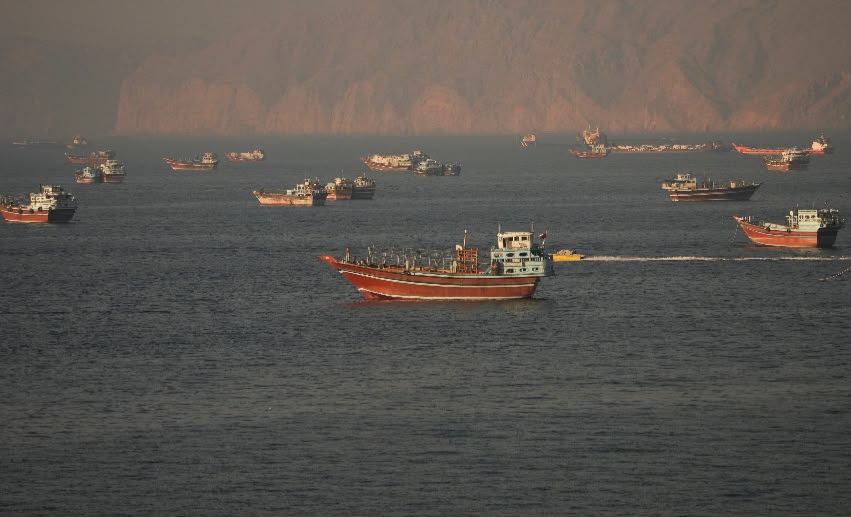
Attacks on commercial ships around the Strait of Hormuz have reached record levels in October, raising concerns about the safety of international shipping and the potential impact on global energy supplies as the conflict involving the United States, Israel and Iran continues.
Data compiled by the Washington Institute for Near East Policy shows that 28 confirmed and reported attacks occurred in the Strait of Hormuz and surrounding waterways during October. The total number of reported attacks since the US-Israeli war with Iran began on February 28 has reached 113.
“October has seen the highest number of ship attacks on record,” said Noam Raydan, a senior fellow at the Washington Institute for Near East Policy, who maintains the organisation’s interactive map tracking maritime security incidents.
The figures are broadly consistent with data from the International Maritime Organization (IMO), which has recorded 120 incidents involving vessels in the Strait of Hormuz and the wider Middle East since the conflict began.
More than 30 very large crude carriers (VLCCs), commonly known as oil supertankers, have reportedly been damaged in the attacks, according to a review of IMO records and vessel-tracking data from MarineTraffic. Eleven of the affected vessels were damaged in October alone.
Each of these supertankers can carry approximately two million barrels of crude oil. The vessels listed in the reports represent about 3.5 per cent of the world’s fleet of more than 900 VLCCs.
The increase in attacks comes as more shipowners continue to load oil cargoes from inside the Gulf, attracted by daily freight rates exceeding $1 million and larger discounts offered by regional producers against dated Brent crude prices.
Despite the financial incentives, operating in the region has become increasingly dangerous as attacks on commercial vessels continue.
Greece-based maritime consultancy Marisks described October as the most intense period for maritime attacks around the Strait of Hormuz since hostilities escalated in March.
The consultancy also reported that 12 ships came under attack between October 5 and October 11, making it the highest number of attacks recorded in a single week since the conflict began.
Raydan said Iran was intensifying attacks to slow the recovery of shipping activity and maintain pressure on global energy markets ahead of the November US midterm elections.
Earlier this month, Reuters reported that Tehran was adopting such tactics, citing two senior Iranian officials.
However, maritime security officials have warned that the actual number of attacks could be higher than reported because not all incidents are being documented.
The United Kingdom Maritime Trade Operations (UKMTO), a British maritime security service, said it was struggling to obtain a complete picture of the situation because shipping companies were not reporting every incident voluntarily.
As of October 16, UKMTO had recorded 135 incidents linked to the US-Iran conflict. Its data also showed a sharp increase in vessel damage caused by attacks during October.
The Strait of Hormuz is one of the world’s most important energy shipping routes, making continued attacks a major concern for oil exporters, shipping companies and countries that depend on imported fuel.
With attacks reaching unprecedented levels and some incidents potentially going unreported, uncertainty remains over the full scale of the damage and how the conflict could affect the movement of oil through the region.