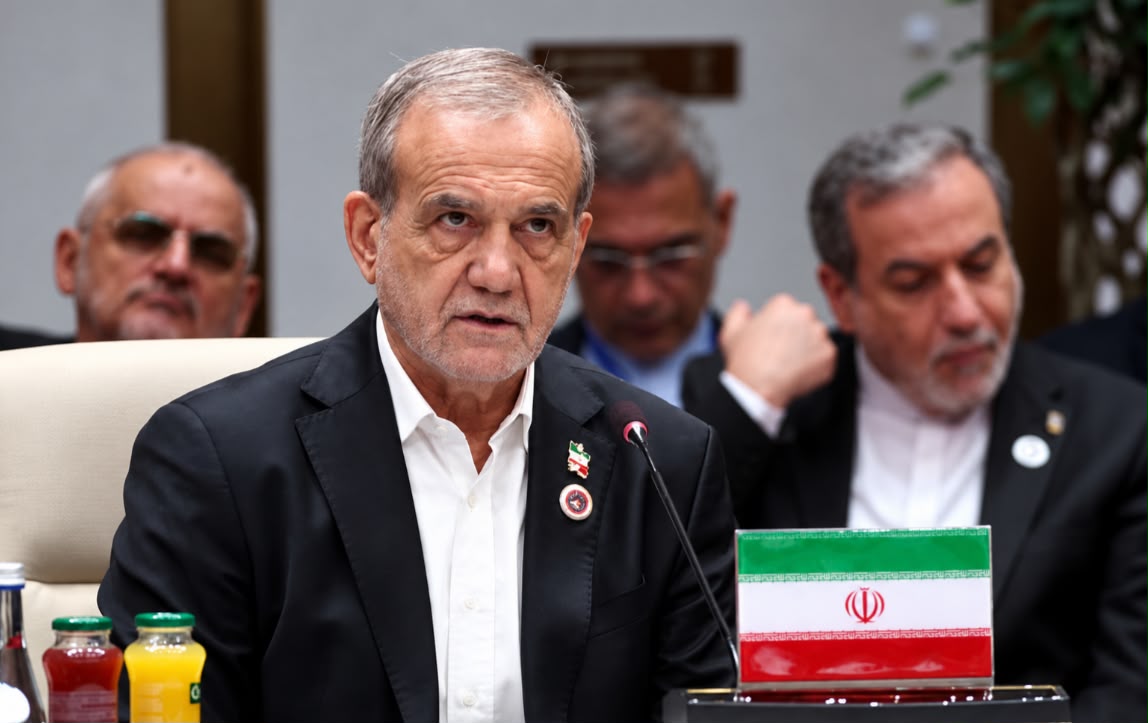
Iran has denied accusations that it encouraged Yemen’s Houthi rebels to intensify attacks against Saudi Arabia, insisting the group makes its own military decisions amid escalating tensions across the Middle East.
The denial came on Friday, a day after a Saudi foreign ministry official accused Tehran of encouraging the latest wave of Houthi attacks against the kingdom.
Iranian Foreign Ministry spokesperson Esmaeil Baqaei rejected the allegation, saying Tehran had no involvement in the group’s operations.
“The Islamic Republic of Iran rejects any claim that Iran has played a role in Yemeni (Houthi) operations,” Baqaei said in a statement.
He maintained that Yemen’s Houthi forces acted according to their own interests and assessments, adding that Iran did not believe further escalation would benefit any party.
Baqaei also reiterated Tehran’s willingness to help resolve the conflict, saying Iran had “always been ready to use its good offices to help end the hostilities”.
Saudi deputy minister for public diplomacy Dr Rayed Krimly had earlier accused Iran of encouraging the escalation. He also said the Houthis had rejected an offer to meet in Oman at the beginning of the latest round of hostilities.
Meanwhile, Saudi Arabia continued to face missile and drone attacks. A spokesperson for the Saudi-led military coalition said on Friday that its forces had intercepted and destroyed three drones in the kingdom’s southern region and Riyadh, alongside two cruise missiles over the Red Sea.
The spokesperson added that a ballistic missile had also been intercepted over Yanbu, a Red Sea coastal city that serves as the terminus of a major oil pipeline.
The latest attacks follow a September offensive by the Houthis, who seized strategic territory along Yemen’s Red Sea coast near a major international shipping chokepoint. The group has also targeted oil facilities, Red Sea tankers and Riyadh’s international airport. One attack last week reportedly killed 13 people.
Saudi Arabia, the world’s largest oil exporter, is facing growing security concerns as global energy markets remain unsettled by the wider Middle East conflict and Iran’s closure of the Strait of Hormuz in February.
Missiles Hit Aden Airport
The violence has also spread to areas controlled by Yemen’s internationally recognised government.
On Friday, security officials in Aden, the government’s interim capital, reported that two missiles landed within the airport perimeter. No deaths were reported, but officials said it was the second such incident in less than a week.
The Houthis said the attack targeted the Saudi forces’ command headquarters and a weapons depot.
Yemen’s Information Ministry said a Yemenia Airways flight travelling from Aden to Cairo narrowly avoided being hit while preparing for takeoff. The missiles reportedly landed about 500 metres from the aircraft and approximately 100 metres from the runway’s centre.
The ministry condemned the attack as a threat to passengers, flight crews and aviation safety, describing it as a violation of international laws and norms.
The airport incident came a day after a Houthi missile attack on the presidential palace in Aden killed five people and injured 16 others, according to Yemen’s health minister.
Prime Minister Shaya al-Zindani condemned the attack as “cowardly”, describing it as a continuation of what he called the Houthis’ criminal actions.
A Yemeni government minister, speaking anonymously, said the missiles had struck command centres used by Yemeni forces and the Saudi-led coalition within the palace complex.
Houthi-affiliated media also reported that the target was the military operations headquarters at Al-Maashiq Palace, which they said was led by Saudi officers.
Source: AFP