The International Monetary Fund (IMF) has warned that low-income developing countries hit by rising energy costs from the war involving the United States and Iran may have little choice but to reduce government spending or risk debt restructuring as economic pressures intensify.
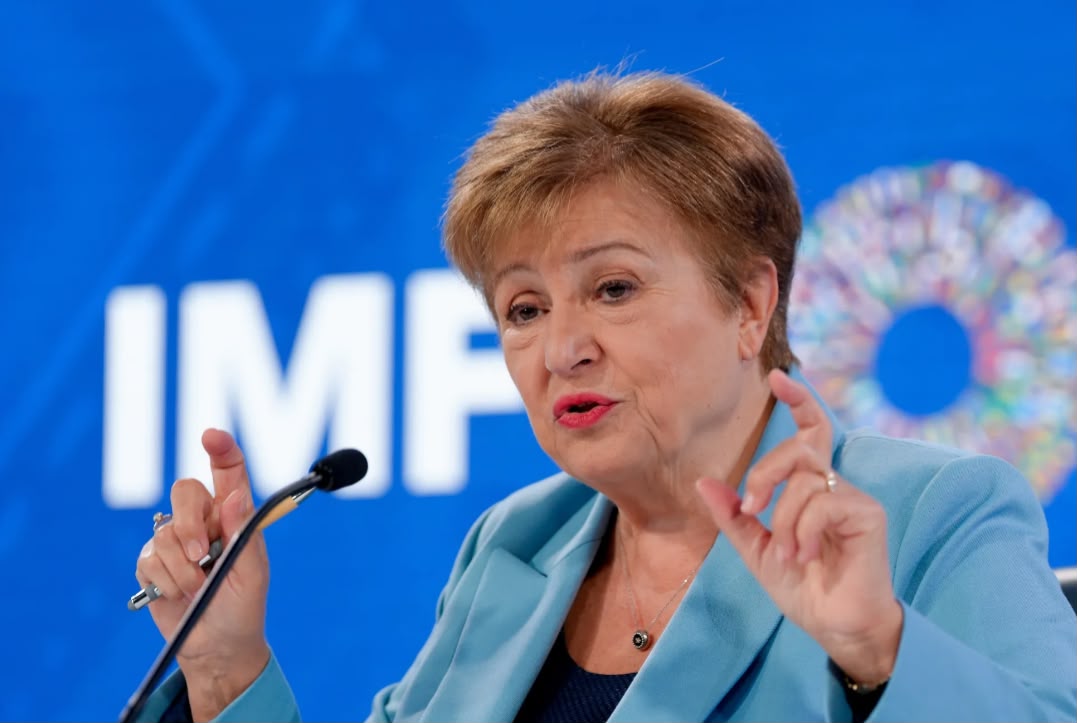
Speaking on Tuesday on the sidelines of the IMF and World Bank Annual Meetings in Bangkok, Thailand, the fund’s Deputy Director of Research, Petya Koeva Brooks, said heavily indebted countries that depend on imported oil were among those suffering the most from the energy shock.
She explained that many of these nations were struggling to protect their citizens from rising living costs after years of economic disruptions had increased public debt and made inflation more difficult to control.
“Unfortunately, after years of the global economy being hit (by) shock after shock, debt levels have increased quite a lot, and at the same time, inflation has become a problem,” Koeva Brooks said.
The conflict has disrupted energy supplies across the Middle East, sending global oil and gas prices higher. Iran’s retaliatory actions have targeted US allies in the Gulf, while restrictions on energy supplies have added to pressure on international markets. The effects have also spread beyond fuel, contributing to concerns about the prices and availability of essential goods, including fertilisers.
In response to the crisis, the IMF has advised governments to provide limited and targeted subsidies to help the most vulnerable households rather than introduce broad support measures that could worsen their financial positions. It has also urged countries to rebuild their financial reserves and address growing debt accumulated through successive economic shocks since the COVID-19 pandemic.
Koeva Brooks said the recommendations applied to countries across the world, but the decisions facing the poorest economies were particularly difficult because of their limited financial resources.
“Our messages indeed apply to most countries, but again, the trade-offs and the choices that have to be made are much more difficult for the most vulnerable countries,” she said.
The IMF’s World Economic Outlook, released on Tuesday, identified low-income developing countries that import more oil than they export and have limited involvement in the artificial intelligence investment boom as particularly exposed to the consequences of the Iran war.
According to Koeva Brooks, households in these countries spend a large share of their income on food and energy, leaving them especially vulnerable when prices rise.
“For those countries that are most vulnerable, this is where the consumption basket is heavily weighted towards energy and food, and so indeed it is much, much more difficult,” she said, adding, “But unfortunately there is no other choice.”
The IMF official also warned that many low-income countries were already experiencing debt distress or were close to reaching that point. She advised governments unable to manage their debt burdens to consider restructuring rather than delaying action.
“Where debt is not sustainable, then resolving that debt and having orderly and timely restructuring is always better than waiting, because then the cost of restructuring down the road is going to be much higher,” she said.
AI Investment and Uneven Global Growth
Despite the pressures created by the war, the IMF raised its forecast for global economic growth in 2026, largely because of stronger investment and economic activity linked to artificial intelligence in advanced economies.
However, the organisation noted that the benefits of growth were unevenly distributed. Countries with strong connections to AI supply chains were expected to perform differently from economies more exposed to the conflict and higher energy costs.
Advanced economies were projected to grow by 2.1 per cent in 2026, while economies involved in AI supply chains, including Taiwan and South Korea, were expected to record significantly stronger growth.
Koeva Brooks cautioned that a slowdown in AI-related investment could affect economic output far beyond the countries directly involved in the technology sector.
“If AI investment activity were to slow, the world economy ‘would see a negative impact on output, not only in advanced countries like the US but again through trade linkages also in Asia’,” she said.
Under the IMF’s worst-case scenario, in which AI fails to deliver the productivity improvements investors expect, global gross domestic product (GDP) projections for 2028 could fall by as much as 0.4 per cent.
Climate Risks Could Add to Price Pressures
Climate-related threats were another major concern highlighted in the IMF’s economic outlook. Koeva Brooks said the effects of a particularly strong El Niño event had already been factored into higher prices for certain food products.
El Niño is a natural climate phenomenon involving warmer-than-usual sea surface temperatures in the tropical Pacific Ocean. It can alter weather patterns, increasing the likelihood of droughts and floods in some regions while potentially worsening the effects of human-driven global warming.
The IMF official pointed to significant increases in the prices of beverages and rice, warning that the wider economic consequences could prove more severe than currently anticipated.
“We have a significant increase in beverage prices, in the prices of rice, and so on,” she said. “Of course, it could turn out that the domino effect is even bigger than what we currently have.”
Source: AFP