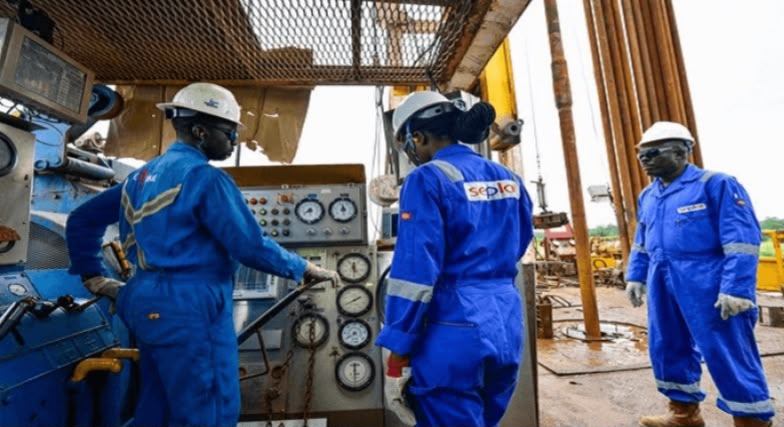
Seplat Energy Plc shares have climbed to a record high on the Nigerian Exchange Limited (NGX), closing at ₦14,907.80 on September 16 as disruptions in the global oil market continue to affect investor sentiment.
The latest price represents a 10 per cent increase from the ₦13,552.60 recorded on September 9. NGX data show that the stock has remained at ₦14,907.80 since September 10, when it gained 10 per cent in a single trading session.
Seplat’s recent rally has occurred in a series of sharp increases. The stock closed at ₦12,320.60 on September 2 before rising 10 per cent to ₦13,552.60 on September 3. It remained at that level for several trading sessions before another 10 per cent increase pushed it to ₦14,907.80 on September 10.
The company’s longer-term performance has also been significant. Seplat was trading at about ₦5,379 a year ago, meaning its share price has risen by roughly 177 per cent over the period. Since the beginning of 2026, the stock has gained about 165.9 per cent from ₦5,610.
The recent movement has come amid disruptions affecting shipping through the Strait of Hormuz, a major route for global oil supplies. Reuters data cited in reports showed that only three commercial vessels passed through the strait on September 16, compared with 12 the previous day and a 10-day average of 17.
The disruption has contributed to crude oil prices remaining above $100 per barrel, although prices eased slightly on September 17 as some concerns over supply disruptions moderated.
Seplat’s performance has also stood out against the mixed performance of other oil and gas companies listed on the NGX. While some energy stocks have experienced volatility, Seplat has continued to record strong gains.
The stock’s rise has extended beyond the immediate impact of the Hormuz disruption, with market data indicating that the company has undergone a broader revaluation by investors.
Seplat has also reported stronger operational and financial performance in 2026. For the six months ended June 2026, the company’s profit before tax increased by 74.1 per cent year-on-year to ₦790.4 billion, while revenue rose 15.5 per cent to ₦2.50 trillion. Production also increased to 139,509 barrels of oil equivalent per day.
The company’s performance has therefore been influenced by both developments in international oil markets and its own operational results.
Source: Nairametrics