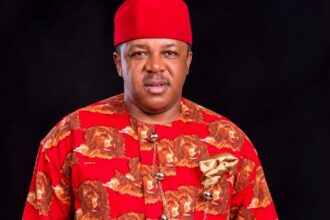
Veteran Nollywood actor Francis Duru has sparked debate over ethnic representation in Nigeria’s film industry, arguing that while Igbo entrepreneurs played a major role in building modern Nollywood, Yoruba filmmakers have become more dominant because of their ability to organise and promote their own.
Duru made the remarks during a recent interview on Gbam, aired on the Yan Content Factory YouTube channel on Friday.
The actor acknowledged the contributions of Yoruba pioneers such as Herbert Ogunde, who played a major role in the development of Nigerian theatre and performance arts from the 1950s.
However, he said the home-video industry that emerged in the 1990s and early 2000s was driven largely by Igbo entrepreneurs and traders, eventually developing into the Nollywood industry known internationally today.
Duru argued that Yoruba filmmakers had been more effective at creating opportunities for their community and promoting their culture.
“The Yorubas epitomise the saying, ‘Charity begins at home.’ We need to learn from them.”
He pointed to streaming platforms such as Netflix, saying Igbo stories and heritage were not receiving enough visibility compared with Yoruba productions.
“We created Nollywood, but if you go to Netflix today, you hardly see one movie that speaks of Igbo heritage.”
Duru attributed what he described as the decline in Igbo influence partly to an individualistic mindset, arguing that greater collective support was needed to preserve the community’s cultural presence in the industry.
He also criticised the portrayal of Igbo stories by filmmakers from outside the community, saying some productions failed to accurately represent Igbo identity and history.
Despite his comments, Duru stressed that he was not attacking Yoruba filmmakers, but encouraging Igbos to learn from how they support their own people and culture.
“Don’t get angry with them. These are people who saw their own and protected their own.”
The veteran actor also questioned why more films had not been made about prominent Igbo personalities and historical figures.
“When was the last time you saw the epic of one of these great men?”
His comments have sparked fresh discussions about ethnicity, cultural ownership, collective investment and representation within Nigeria’s entertainment industry.
Source: Yan Content Factory / Gbam interview.