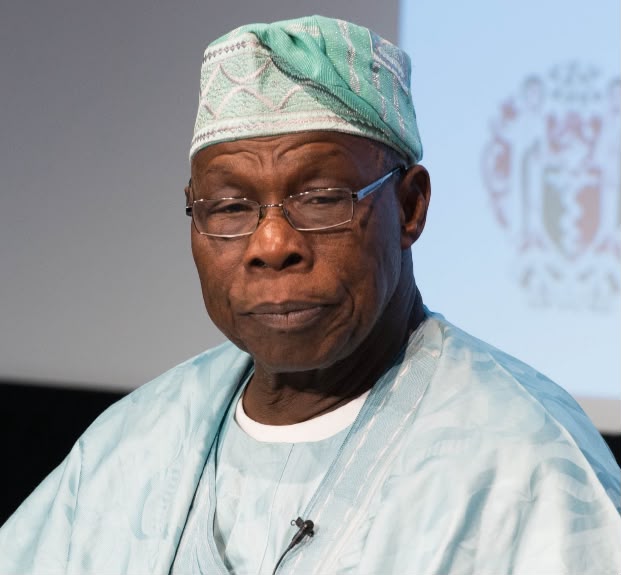
Former President Olusegun Obasanjo has expressed concern over the growing role of the judiciary in determining election outcomes in Nigeria, questioning whether democracy is truly being served when millions of votes can ultimately be overturned or decided by a handful of judges.
Obasanjo spoke at the 2026 Goodluck Jonathan Foundation Democracy Dialogue in Bauchi, where political leaders, scholars and democracy advocates gathered to discuss the future of democracy in Africa.
The former president questioned the democratic value of allowing a small number of judges to determine the outcome of elections after millions of citizens have cast their votes.
“If millions of people have voted and five people would form a decision either in favour or against the decision of millions of people, is that democracy?” he asked.
Obasanjo also questioned the independence of the judiciary and whether it was genuinely free from government influence.
He said democracy must go beyond elections and ultimately deliver good governance, welfare, equality, inclusion, security and protection of citizens’ rights.
“Democracy that works must deliver the dividends of democracy,” he said.
Jonathan Advocates Swiss-Style Presidency
Former President Goodluck Jonathan, in his contribution, called on African countries to review their democratic systems and adopt models that better reflect their history, culture and political realities.
Jonathan suggested that elements of the Swiss model of government could provide useful lessons for African countries, particularly in preventing excessive concentration of political power in one individual.
“At the top level of the presidency, perhaps the Swiss model, where you don’t have one powerful president, may be the best for some African countries,” he said.
He explained that Switzerland exercises executive authority collectively, making it more difficult for one individual to take major decisions without consultation.
Jonathan warned that excessive concentration of power could weaken democratic institutions and undermine effective governance.
He also argued that democracy should not be measured solely by elections, noting that elections are only one component of a functioning democratic system.
Citing the 2024 Afrobarometer survey of 39 African countries, Jonathan said more than 70 per cent of respondents expressed a preference for democracy, while satisfaction with the way democracy was being practised was considerably lower in many countries.
“This clearly shows that there is something fundamentally wrong with our democracy,” he said.
Jonathan called for an independent judiciary, stronger legislatures, protection of fundamental rights, credible elections and greater accountability from elected leaders.
He also stressed the importance of freedom of speech, religion, assembly and the press, warning that democracy cannot thrive when citizens are prevented from freely expressing their views.
Bala Mohammed: Democracy Must Go Beyond Elections
Bauchi State Governor Bala Mohammed, who hosted the dialogue, said democracy should not be reduced to the conduct of elections.
He identified strong institutions, accountable leadership, respect for the rule of law, independent democratic institutions, a vibrant media and inclusive political participation as essential components of democracy.
“Elections are essential, but democracy goes beyond the casting of ballots,” Bala said.
The governor identified insecurity, socioeconomic pressures, technological disruptions, institutional weaknesses and growing public dissatisfaction as some of the challenges facing democracy across Africa.
He said citizens expect governments to provide security, quality education and healthcare, infrastructure, employment and economic opportunities.
Bala assured that his administration would continue to promote inclusive governance, human capital development and programmes aimed at improving the lives of residents.