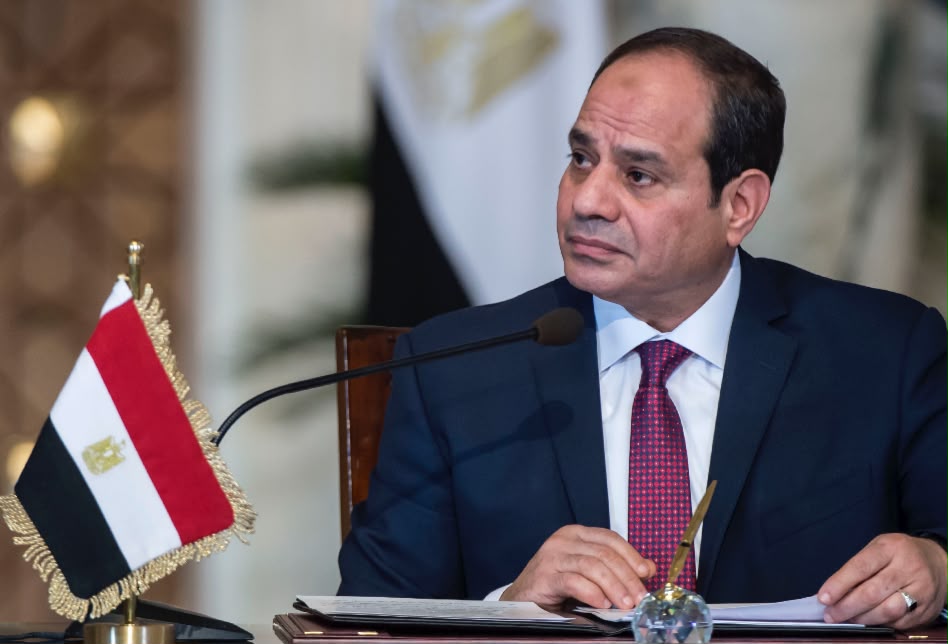
Egyptian President Abdel Fattah al-Sisi has ruled out extending his presidency beyond 2030, declaring that he will leave office when his current term expires, provided he is still alive.
The 71-year-old leader made the announcement on Saturday during a graduation ceremony at the Egyptian Military Academy in the New Administrative Capital, a major development project launched under his administration.
Addressing graduates and government officials, Sisi insisted that the country’s constitution would not be altered to allow him to remain in power beyond his current mandate.
“The period leading up to 2030 will be the end of my term as president of the state, if I am still alive. This is completely settled and there will be no discussion about it,” he said.
His statement comes amid speculation among critics and opposition figures that further constitutional amendments could be introduced to extend his stay in office.
How Egypt’s Constitution Allowed Sisi to Stay Until 2030
Sisi became president in 2014 after serving as defence minister and playing a central role in the military’s removal of former Islamist president Mohamed Morsi in 2013.
Egypt’s constitution, approved in 2014, originally restricted presidents to two four-year terms.
However, constitutional amendments approved in a 2019 referendum extended presidential terms from four years to six years. The changes also included transitional provisions that allowed Sisi to seek an additional term.
He won re-election in 2023, securing a six-year mandate scheduled to end in 2030.
Before entering the presidential race in 2014, Sisi had denied having political ambitions. He later resigned as defence minister to contest the election, which he won.
During Saturday’s ceremony, he said the period leading up to the end of his presidency would also be used to prepare a new generation of leaders.
According to Sisi, the Military Academy is training hundreds of prospective officials, ministers and presidential candidates in leadership and governance.
Sisi’s Presidency Faces Economic and Human Rights Criticism
During his 12 years in office, Sisi has overseen an extensive government-led development programme featuring major infrastructure projects, including the New Administrative Capital.
However, critics have questioned the cost of these projects, arguing that heavy borrowing has contributed to Egypt’s growing debt burden and economic difficulties.
His administration has also faced repeated criticism from international human rights organisations over restrictions on political opposition, civil society and freedom of expression.
The Egyptian government has rejected such criticism, maintaining that its policies are necessary to protect national stability and security.
Sisi’s latest declaration appears intended to put an end to speculation about his political future beyond 2030. Whether the country’s political landscape will change significantly before then remains to be seen.
Source: AFP