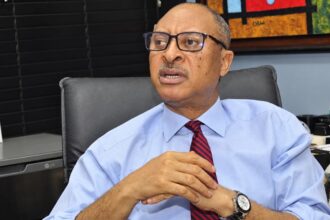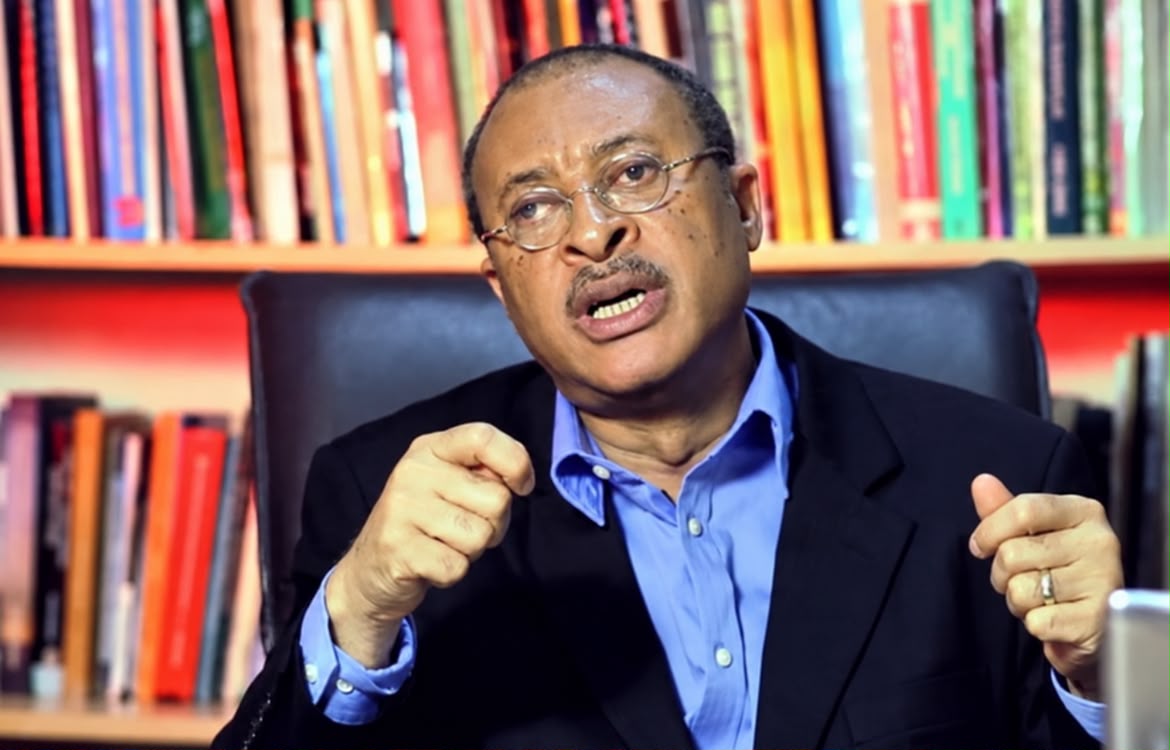
Professor Pat Utomi, a political economist, has criticised President Bola Tinubu over Nigeria’s rising cost of living, questioning how the government can justify high petrol prices while millions of citizens struggle to survive on low wages.
Utomi expressed his concerns in a statement shared on X on Friday, arguing that Nigerians earning less than ₦100,000 monthly are still struggling to afford basic necessities amid the country’s economic challenges.
His comments come amid growing pressure from opposition figures and labour organisations over rising petrol prices and the declining purchasing power of Nigerian workers.
On October 8, the Nigeria Labour Congress (NLC) gave the Federal Government a two-week ultimatum to reduce petrol prices and begin renegotiating the national minimum wage.
The labour union argued that the current minimum wage had lost much of its value because of the depreciation of the naira and the rising cost of living. It also called for petrol prices to be reduced to levels closer to those prevailing when the current minimum wage was signed into law in 2024.
Comparing Nigeria’s wages and petrol prices with those of other oil-producing countries, Utomi questioned why Nigerians were struggling despite the country’s substantial natural resources.
He cited Libya, where petrol reportedly costs about ₦32 per litre, while the monthly minimum wage is approximately ₦207,000 based on the figures cited in the report.
Utomi also referenced Saudi Arabia, where petrol reportedly sells for about ₦823 per litre, with an estimated monthly minimum wage of ₦1.4 million. He further pointed to Norway as an example of an oil-producing country whose citizens benefit from the wealth generated by its natural resources.
In contrast, he argued that Nigeria’s ₦70,000 minimum wage was inadequate given petrol prices ranging between ₦1,300 and ₦1,900 per litre.
“That minimum wage amounts to a mere $52, a young chap flipping burgers at McDonald’s in the US makes more than a Nigerian bank manager,” Utomi said.
He maintained that even Nigerians earning ₦100,000 monthly could find it difficult to meet their basic needs, highlighting the pressure inflation and high living costs have placed on households.
Utomi then questioned whether the President fully understood the hardship facing ordinary citizens.
“But does the President care? How does he even sleep at night, knowing that millions of Nigerians are struggling to survive in a country blessed with abundant natural resources?” he asked.
The professor is widely known as a supporter of Peter Obi, the presidential candidate of the Nigeria Democratic Congress (NDC), and has consistently backed Obi’s ambition to lead Nigeria.
Figures cited in the report also highlighted the difference in population sizes between Nigeria and Libya. World Bank data puts Libya’s population at approximately 7.46 million, while Nigeria has a population exceeding 200 million.
The debate over petrol prices and wages continues to raise questions about how Nigeria can balance economic reforms with the need to protect workers and vulnerable households from rising living costs.