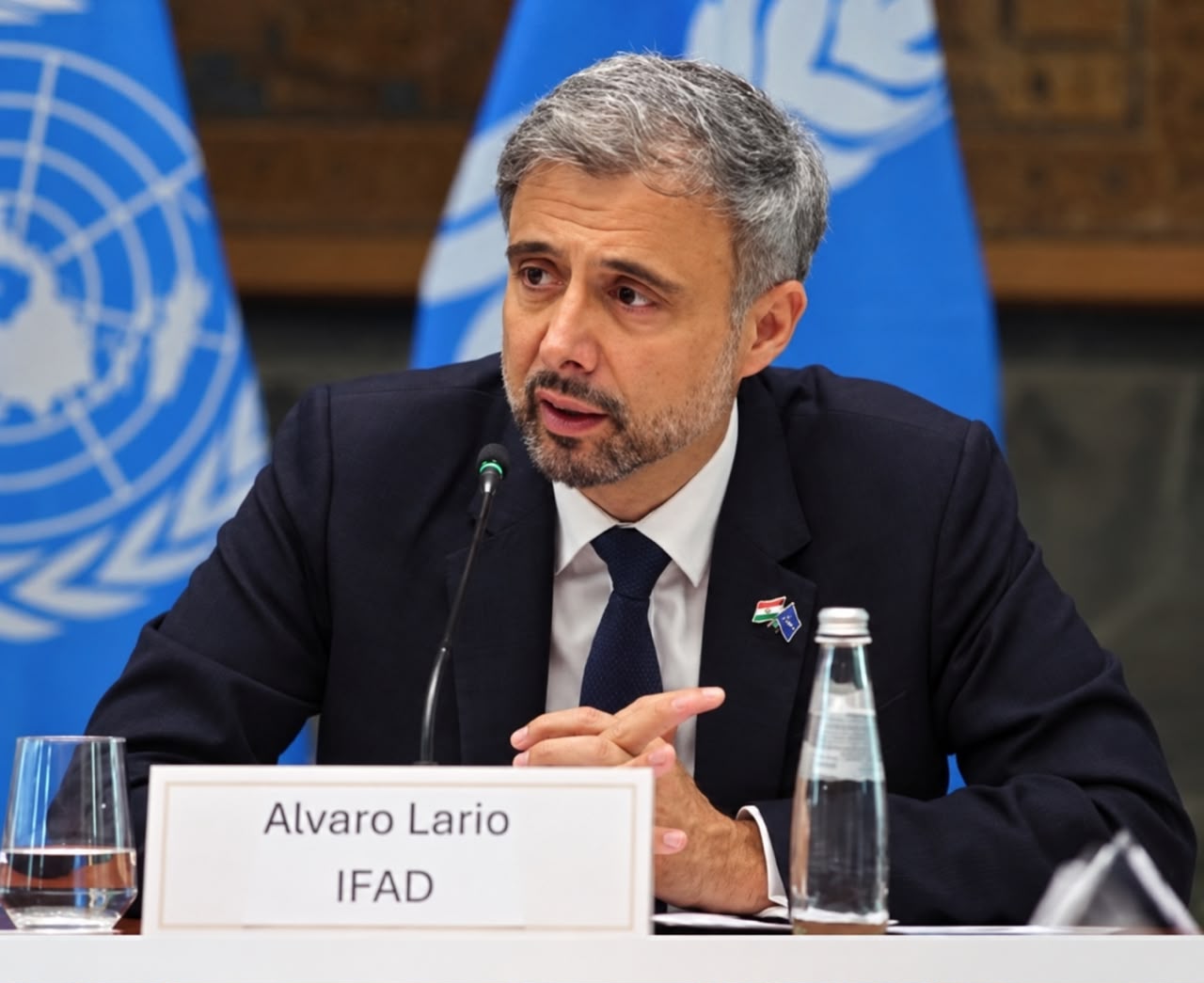
Disruptions to shipping through the Strait of Hormuz are beginning to affect agricultural harvests, raising fears of lower crop yields and higher food prices across vulnerable regions, according to the head of a United Nations rural development agency.
Alvaro Lario, president of the International Fund for Agricultural Development (IFAD), warned on Thursday that the effects of the disruption were already spreading through the agricultural sector, with farmers facing rising costs for fertilisers, fuel and transportation.
Speaking to Reuters in Bangkok, Lario said the consequences of the initial disruption to shipping through the strategic waterway were now becoming visible in agricultural production.
“The pass-through from the initial locking down of the Strait of Hormuz … is now starting to be seen,” he said.
The disruption has affected fertiliser shipments and increased fuel and transport expenses, adding pressure throughout the food supply chain. These challenges are being compounded by the effects of El Niño and disruptions to wheat supplies from the Black Sea region.
The Strait of Hormuz has become a major pressure point amid tensions between Iran and the United States. Iran has sought to tighten its control over the strategic passage to pressure Washington, which has also been enforcing a naval blockade of Iranian ports.
The waterway is a critical route for global energy and commodity shipments, making disruptions particularly concerning for countries that depend on imported agricultural inputs and food supplies.
According to Lario, existing stocks of fertiliser and fuel initially helped farmers absorb the impact of the crisis. However, prolonged uncertainty has made farmers more cautious about planting and reduced their use of fertilisers, raising concerns about future harvests.
Higher fuel prices are also increasing the cost of operating agricultural machinery, including equipment used for mechanised harvesting.
The pressure is already being reflected in agricultural commodity prices. Lario said prices rose by 13 per cent in the third quarter of the year, with further increases expected in the fourth quarter of 2026 and the first quarter of 2027.
Countries that rely heavily on imported fertilisers, fuel and food are particularly exposed to the disruption.
Lario highlighted Southeast Asia’s dependence on fuel imports and the Gulf region’s reliance on imported food as examples of how the crisis could affect different parts of the world.
Concerns are also growing that continued disruption could trigger a wider food security emergency in parts of Asia and Africa.
An official overseeing a proposed United Nations-backed arrangement for transporting fertilisers through the Strait of Hormuz warned on Wednesday that failure by the United States and Iran to reach an agreement within weeks could lead to a food security crisis in vulnerable regions.
The proposed arrangement is intended to facilitate the movement of fertilisers through the strategic waterway amid the ongoing tensions.
Lario also warned that prolonged uncertainty could force small-scale farmers to change what they grow. Rather than planting higher-value crops that take longer to mature and generate income, some farmers could switch to crops that provide quicker returns.
Such changes could affect agricultural earnings and the availability of certain food products, particularly if farmers reduce investment in production because of rising costs and uncertainty over supplies.
With fertiliser shipments disrupted, fuel costs increasing and agricultural commodity prices expected to rise further, the impact of the Strait of Hormuz crisis is extending beyond energy markets to farms and food supply chains.
The warning raises concerns that if the disruption continues, vulnerable countries could face increased food costs and greater pressure on food security in the coming months.