Pope Leo XIV has undergone surgery to remove a nodule from his lung at a hospital in Rome, with the Vatican confirming that the procedure was successfully completed on Tuesday.
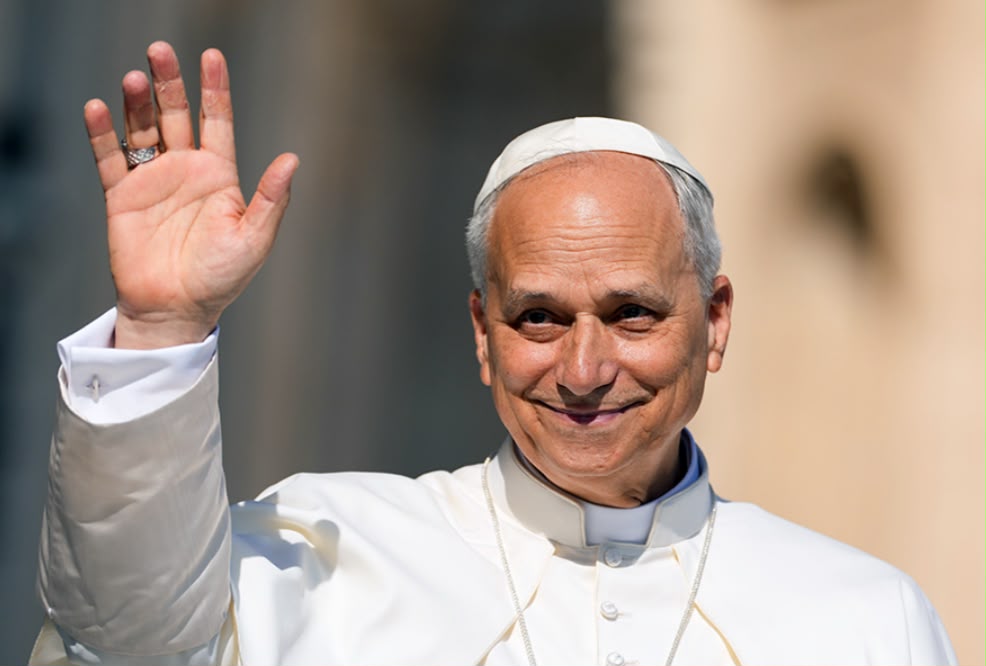
The 71-year-old pontiff entered the hospital earlier in the day, smiling and waving as he arrived for the operation to remove the growth, which was described as resembling a coin on the lung.
“The procedure was successfully completed, within the expected time and in the planned manner,” the Vatican said in a brief statement.
“The Holy Father has returned to his room,” the statement added, noting that further details would be provided later.
The operation marks Leo’s first hospitalisation since he became head of the Catholic Church on May 8, 2025. Vatican officials who saw him on Monday said he appeared relaxed about the planned hospital stay.
The discovery of the lung nodule was announced by the pope himself on Sunday following the Angelus prayers in St Peter’s Square. He told the crowds that doctors had detected the growth at a very early stage during routine medical checks.
“The doctors believe it would be right to intervene,” Leo said.
The Vatican has traditionally maintained considerable secrecy regarding the health of popes. However, it became more open about medical updates during the illness of Leo’s predecessor, Pope Francis, an Argentine who spoke publicly about his health problems.
News of Leo’s surgery prompted concern among people outside the hospital.
Giorgia Fei, a 57-year-old Italian, said she had been worried after learning about the pope’s condition but expressed confidence in the medical team treating him.
“However, the Holy Father is in very good hands here at the hospital because we have some outstanding doctors,” she said.
“I will pray a lot for him.”
Another well-wisher, 72-year-old Giuseppe Purpura, also expressed concern about the pontiff’s health.
“He’s still quite young and I really wasn’t expecting this. I thought he was in better health,” he said, adding that he was relieved the condition had been detected early.
Ahead of the operation, Cardinal Baldassare Reina, the Vicar General for the Diocese of Rome, led a rosary prayer for the pope inside the hospital chapel. The Vatican broadcast the prayer, which was attended by dozens of people.
Reina also called on parishes across Rome to join in praying for the pontiff’s recovery.
The Vatican had earlier estimated that Leo would need about a week to recover from the procedure. His scheduled audiences have been cancelled until October 20.
Cardinal Pietro Parolin, the Vatican secretary of state, told Italian news agency ANSA that the pope had remained calm about his condition when they met on Monday.
Routine Health Checks
Leo, who was born in Chicago and became the first American pope, is known to be sporty and is generally believed to enjoy good health.
He is scheduled to visit South America from November 6 to 17, with planned stops in Uruguay, Argentina and Peru.
It was not immediately clear what arrangements would be made if his recovery took longer than expected.
Under Church law, the Cardinal Camerlengo, also known as the chamberlain, assumes administrative responsibilities following a pope’s death. However, the Catholic Church has no equivalent deputy who automatically replaces a pope if he becomes incapacitated.
Marco Scarci, a thoracic surgery specialist in the United Kingdom, told AFP that the operation was not considered particularly risky and said he expected Leo to recover quickly.
Most lung nodules are benign, meaning they are not cancerous, although a small percentage can indicate early-stage lung cancer.
The Vatican told AFP that Leo’s nodule was discovered during routine medical examinations and that he had not experienced symptoms that prompted doctors to examine his lungs.
What Is a ‘Coin Lesion’?
A small lung nodule is sometimes referred to as a “coin lesion” because it appears round, like a coin, on an X-ray.
Professor Federico Venuta, head of thoracic surgery at Policlinico Umberto 1 hospital in Rome, explained to AFP that small nodules generally do not cause symptoms.
Larger growths, however, can lead to shortness of breath, chest pain and a persistent cough, which may sometimes produce blood.
Venuta said such nodules could have several possible causes, including benign inflammatory, infectious, autoimmune or congenital conditions. They could also be malignant.
The removal procedure can be performed under general anaesthesia, with the patient breathing through a tube during the operation.
Even if the nodule were found to be cancerous, Venuta said the pope’s outlook could remain favourable because the growth was detected at an early stage.
“For a generally healthy person, the prognosis for lung cancer caught at such an early stage — specifically a pulmonary nodule with no distant spread — is absolutely favourable,” he said.
The Vatican has confirmed that the operation was completed successfully, while the pontiff begins his recovery under medical supervision.
Source: AFP