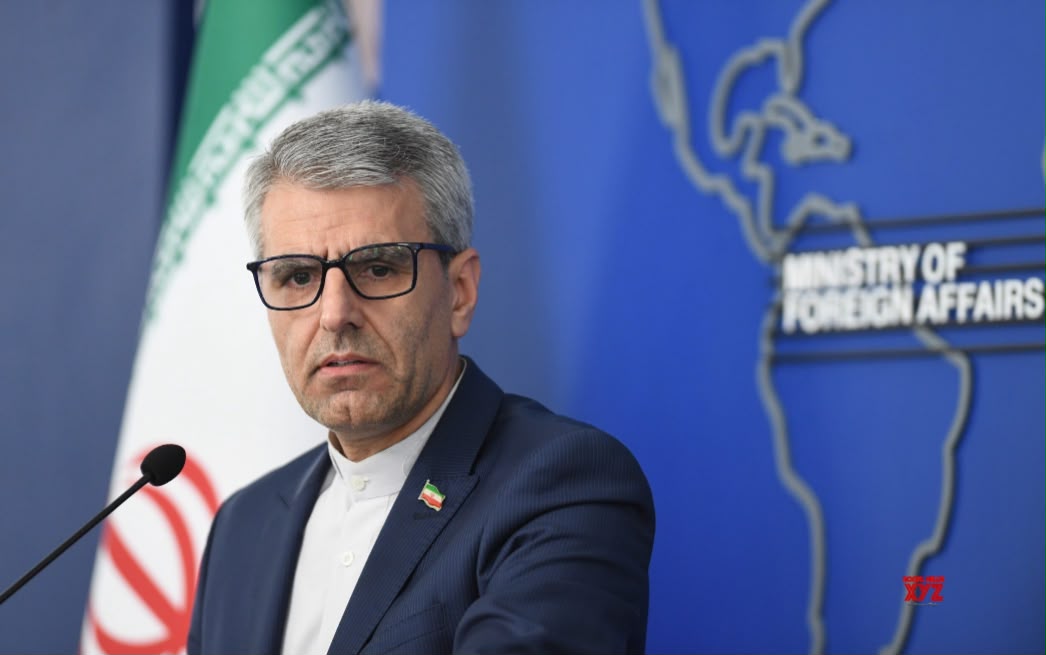
Iran is preparing a response to Washington’s latest position on reopening the Strait of Hormuz, but Tehran says it will communicate its decision only after completing an ongoing review of the US reply.
Iranian Foreign Ministry spokesperson Esmaeil Baghaei disclosed this on Monday, confirming that diplomatic messages between the two sides were still being exchanged through intermediaries as efforts to resolve the conflict remained uncertain.
Baghaei did not provide details of the latest communications but said Tehran would send its response through the mediators once its assessment was complete.
Qatar and Pakistan are among the countries helping facilitate discussions aimed at ending the war, which began on February 28 following US and Israeli strikes on Iran.
Disagreement Over Conditions for Reopening Hormuz
The diplomatic process has encountered difficulties since an interim ceasefire reached in June collapsed and intermittent strikes resumed.
Iran submitted its proposal concerning the Strait of Hormuz in mid-September and subsequently confirmed that it had received a response from the United States.
However, negotiations have made little progress. On Sunday, Iran’s security chief said Washington’s reply failed to adequately address Tehran’s seven conditions for reopening the strategic waterway and returning to negotiations.
One of the major sticking points is the timing of discussions about Iran’s nuclear programme.
Washington wants the nuclear issue addressed from the beginning of negotiations, while Tehran insists that the immediate priority should be reopening the Strait of Hormuz and restoring security along the route.
The disagreement has complicated efforts to reach an arrangement that could ease tensions and stabilise maritime traffic.
Why the Strait of Hormuz Matters
The Strait of Hormuz is one of the world’s most important energy shipping routes. Before the war, approximately one-fifth of global oil and liquefied natural gas (LNG) trade passed through the waterway.
Any disruption to shipping through the strait carries significant implications for international energy supplies and global markets.
Iran’s proposal to reopen the route has therefore become a key issue in diplomatic efforts to resolve the conflict, although the two sides remain divided over the conditions required to move forward.
Baghaei’s latest comments indicate that communication through intermediaries is continuing, but Iran has yet to announce whether it considers Washington’s response sufficient to advance negotiations.
Iran Offers to Support Dialogue Over Saudi-Houthi Conflict
Separately, Baghaei addressed escalating tensions between Saudi Arabia and Yemen’s Houthi movement, which is allied with Iran.
He reiterated Tehran’s willingness to support efforts to resolve the dispute through dialogue, arguing that a political solution should have been pursued under the United Nations roadmap.
“The issue of Yemen should have been resolved a long time ago with the (UN) roadmap and we had said we would support any agreement reached by Yemenis and Saudis … Our request is that this situation be resolved through dialogue,” Baghaei said.
Iran’s statement signals its continued support for negotiations between the parties as regional tensions persist alongside the wider conflict involving Tehran, Washington and Israel.
For now, Iran says it will communicate its position on the US response to the Hormuz proposal through intermediaries once its review is complete.