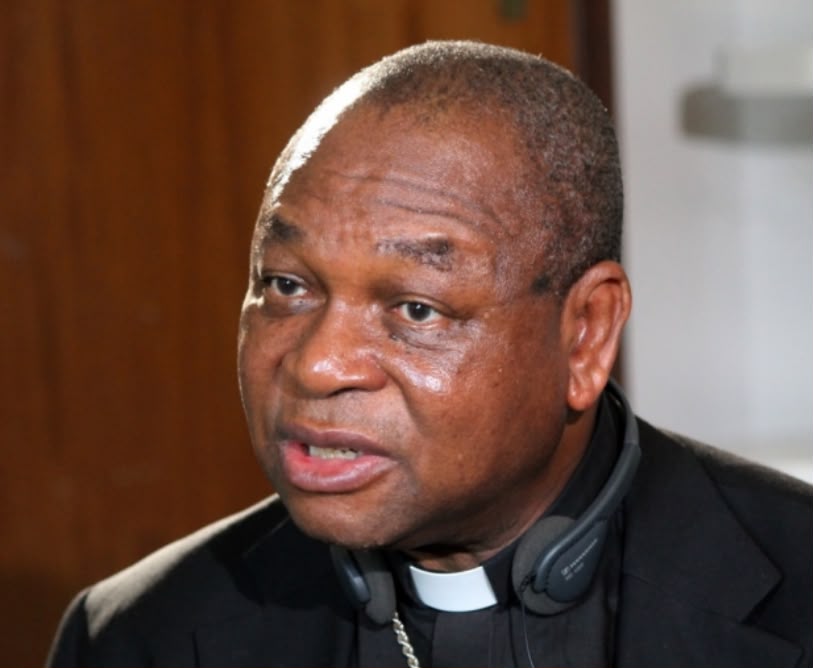
Former Catholic Archbishop of Abuja, Cardinal John Onaiyekan, has criticised opposition leaders seeking to challenge President Bola Tinubu in the 2027 presidential election, warning that their failure to unite behind a common candidate could hand victory to the ruling party.
Onaiyekan disclosed that he had a preferred candidate among the opposition figures, but expressed disappointment that those seeking to unseat Tinubu had yet to find a way to work together and present Nigerians with a credible alternative.
Speaking during an interview on the Naija Unfiltered Podcast, the cardinal urged opposition politicians to put aside personal ambitions and consider the consequences of splitting votes among multiple candidates.
He warned that even if several opposition leaders were dissatisfied with the current administration, their chances of defeating the ruling party would be weakened if they contested separately.
The cleric also called on Nigerians to take the 2027 elections seriously, describing voting as an opportunity for citizens to evaluate their leaders and demand accountability through democratic means.
“Once in four years during the election, the people have the opportunity to assess their leaders. Their leaders, who are supposed to be also their representatives, not their bosses,” he said.
Onaiyekan urged voters unhappy with the government’s performance to use their voter cards to seek a change in leadership rather than give up on the electoral process.
He also criticised Nigerians who had lost confidence in elections, arguing that the country was not prepared to return to military rule.
According to him, the biggest question ahead of the next general election is whether the opposition can offer voters a united and credible alternative to the current government.
“We all know who the government is, but we don’t know what the alternative is,” he said.
The cardinal argued that opposition politicians who each insist they are capable of defeating Tinubu must recognise that competing against one another could ultimately benefit the incumbent.
“Five people saying this government is not good, and each one says it’s me who will rule. They don’t know arithmetic,” Onaiyekan said.
Explaining his concern, he noted that distributing opposition votes among several candidates could allow the ruling party to retain power without securing overwhelming support.
“If five of you are opposing one man, and you are telling all of us to scatter our votes among you, don’t you know that by simple arithmetic, the status quo will simply win by default?” he asked.
When questioned about the possibility of an opposition coalition, Onaiyekan said political groups and individual aspirants needed to find common ground and agree on a candidate capable of mounting a serious challenge to the ruling party.
“Whatever you call the names, these scattered voices should find a way of coming together to give us a viable alternative that we can vote for,” he said.
Although the cardinal acknowledged having a preferred candidate among the opposition figures, he stressed that personal choices would mean little if the opposition remained divided at the polls.
“It’s not as if, among the so many of them, I don’t have my preference, but I’m not happy if I vote my preference. You vote your own, and they vote their own,” he said.
Onaiyekan maintained that opposition leaders needed to agree on more than their opposition to Tinubu’s administration. He said they also had to determine what alternative leadership and direction they would offer Nigerians if elected in 2027.