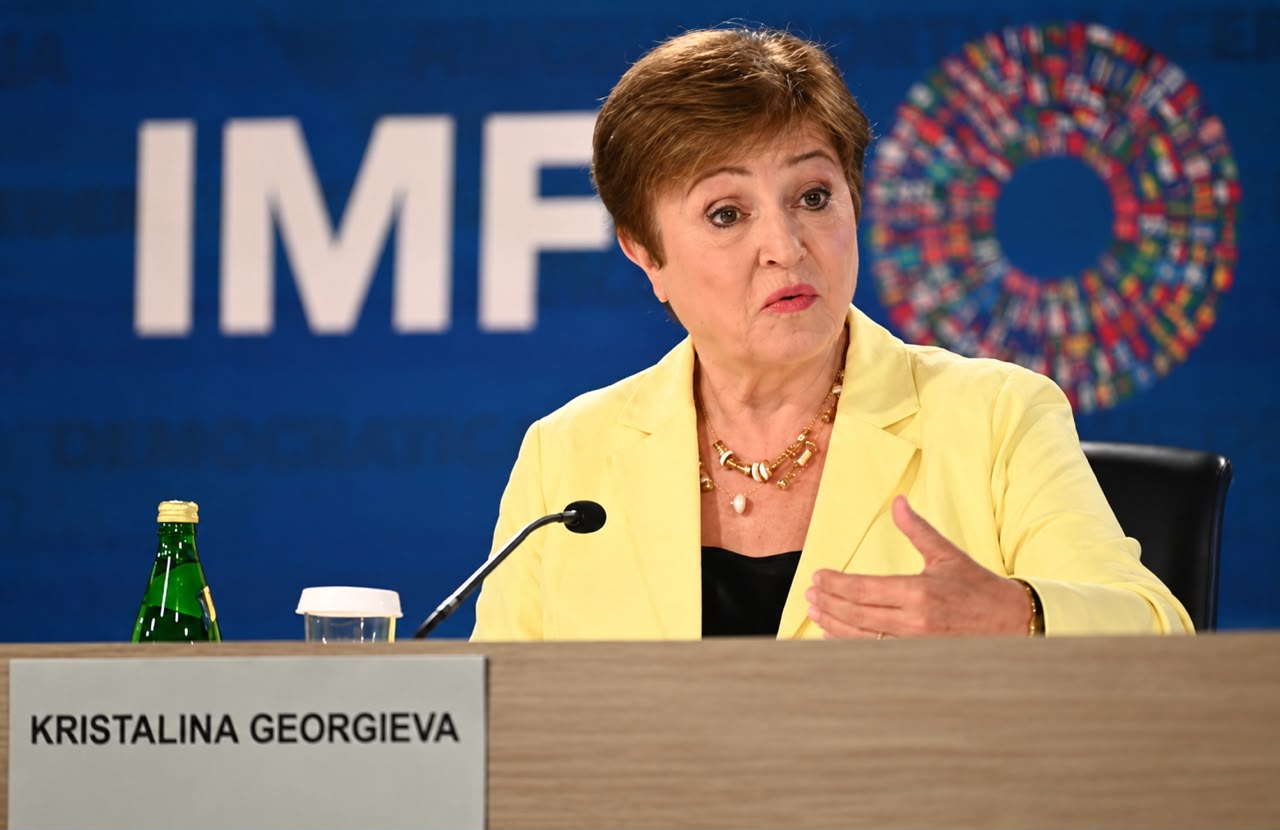
The rapid expansion of artificial intelligence is becoming a major force behind global economic growth, but it could also deepen inequality by leaving many countries behind, International Monetary Fund Managing Director Kristalina Georgieva has warned.
Speaking ahead of the IMF’s annual meetings, Georgieva said investment in AI infrastructure is growing at an extraordinary pace and could eventually surpass the levels previously seen in major infrastructure projects such as railways, electricity networks and telecommunications.
She said the United States, China and India are currently seeing much of the growth in AI-related trade and investment, particularly through spending on data centres and other infrastructure. Other countries are also benefiting through the production of semiconductors, robotics and related technologies.
“Love it, hate it, or fear it, AI is here, rapidly becoming a key driver of countries’ relative fortunes in the world economy,” Georgieva said.
However, she warned that the benefits of the AI boom are not being shared equally across the world.
“Yet as this drives forward today’s AI economies, it largely bypasses most others, increasing the risk of widening economic inequality across the globe,” she said.
Georgieva called for broader access to AI technology so that developing and poorer economies can participate in its potential benefits.
She said international cooperation would be essential, arguing that countries should work together not simply out of goodwill, but because their economies are increasingly interconnected.
AI Investment Creates Financial Risks
Georgieva’s warning comes as huge amounts of money continue to flow into the technology sector, raising questions over whether companies will eventually generate enough earnings to justify their soaring valuations.
The AI boom has helped push financial markets to record levels, with major technology companies continuing to attract investors. Nvidia, one of the leading chipmakers supporting the AI industry, recently reached a record market value of almost $5.7 trillion.
Georgieva warned that a sharp disappointment in AI earnings could have consequences beyond individual technology companies.
She said high levels of borrowing by major technology firms, combined with large global holdings of US equities, could turn a market setback into a much wider financial shock.
IMF Chief Raises Concern Over Rising Debt
The IMF chief also warned that governments in heavily indebted advanced economies are failing to take sufficiently strong action to address their worsening public finances.
Higher interest rates and borrowing costs are increasing governments’ debt-servicing expenses at a time when countries are already facing competing demands, including higher defence spending.
Georgieva said companies are also issuing large amounts of debt to finance their AI investments, adding further pressure to financial markets.
“Elevated yields are inflating the interest bill at a time of tight budget constraints and competing spending priorities, including defence,” she said.
She called for credible medium-term plans to put public finances on a more sustainable path, including immediate fiscal measures where necessary.
High Energy Prices Remain a Threat
Georgieva also addressed the impact of the Middle East conflict on global inflation and energy markets.
Although she said the energy shock has been partly contained by measures such as the use of stockpiles, improved energy efficiency and contingency planning, oil prices remain above $100 per barrel.
Diesel prices have also reached record levels, while disruptions to natural gas supplies from the Gulf continue to affect economies in Asia and Europe.
Even if the conflict ends quickly, Georgieva warned that energy prices could remain elevated for some time.
“Even with a swift end to the Iran war, the problem of high energy prices will likely persist for some time,” she said.
She also backed efforts by central banks to control inflation through interest rates, saying a cautious but firm approach could be appropriate in several countries.
“Very Tough Political Choices”
Georgieva warned that emerging markets are facing higher borrowing costs and more volatile capital flows, while poorer countries could be forced to reduce spending on critical development programmes.
She urged policymakers to stop delaying difficult economic decisions and make use of the tools available to them.
“My message to the world’s economic policymakers next week will be this: we cannot keep delaying necessary policy action — you have the tools, now have the wisdom to use them,” she said.
She acknowledged that restoring public finances would require difficult political decisions, but said governments should clearly explain the need for reforms to their citizens.
“Some very tough political choices stare us in the face,” Georgieva said.
She urged governments to reduce the immediate burden on vulnerable groups, protect future economic growth and introduce structural reforms that can strengthen their economies over the long term.
Source: AFP.