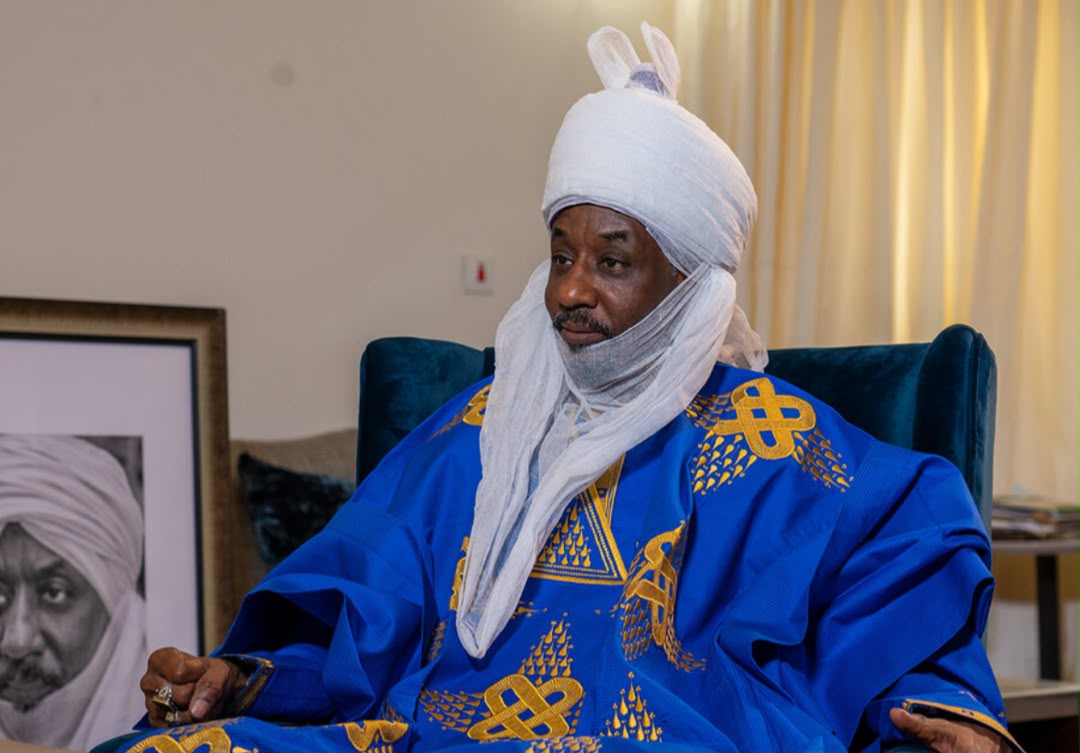
The Emir of Kano, Muhammadu Sanusi II, has questioned the consistency of Nigeria’s anti-corruption efforts, particularly the way some corruption cases are investigated and prosecuted.
Sanusi raised the issue while discussing the prolonged detention and ongoing legal proceedings involving former Kaduna State Governor, Nasir El-Rufai.
The Emir spoke in Lagos during an interview on the sidelines of the presentation of The Unexplained Wealth Trilogy, a three-volume work by Senior Advocate of Nigeria, Wahab Shittu.
Sanusi said having laws designed to tackle corruption was not enough, arguing that the institutions responsible for enforcing those laws must also apply them effectively and consistently.
“The laws are one thing. Even the existing laws we have need to be implemented better. You have institutions that are supposed to identify corrupt people and prosecute them. You have courts that are supposed to do it,” he said.
He alleged that political influence could sometimes affect the outcome of corruption cases, claiming that some suspects had seen charges dropped because of their political connections.
“We have seen in this country people who are facing corruption charges who basically just get those charges dropped because they belong to the right political environment or have the right political support,” Sanusi said.
The Emir said such situations could create doubts about whether anti-corruption proceedings were being pursued consistently or whether political considerations were influencing some cases.
He specifically referred to El-Rufai’s case, questioning the length of his detention without a conviction.
“An example is my brother, Nasir El-Rufai, who’s been denied bail. He’s been in detention for seven months, not having been convicted for anything, using the courts,” Sanusi said.
El-Rufai has been facing ongoing legal proceedings over allegations including financial impropriety and other offences. He has denied wrongdoing, while the relevant authorities have maintained that the proceedings are being conducted under the law.
Sanusi said the circumstances surrounding the former governor’s case could cause members of the public to question the motive behind the prosecution.
“So people begin to wonder, is this really a fight against corruption or is it a political battle?” he asked.
The Emir stressed that politicians, public officials and judicial institutions must ensure that laws are applied for the purposes for which they were established.
“Now until the politicians and those who control political office and the judiciary decide that they are going to use these laws for the purpose for which they are set up, we’re not going to get anywhere,” he said.
Sanusi also supported efforts to review Nigeria’s anti-corruption laws but said legal reforms alone would not solve the problem unless the institutions responsible for enforcing them were strengthened.
He argued that greater attention should therefore be paid to the effectiveness, independence and implementation of the institutions involved in investigating and prosecuting corruption cases.
“Otherwise anyone knows that you can get away with anything if you have the right political connections,” Sanusi said.
His comments come as El-Rufai’s legal battles continue, with proceedings in separate cases involving the former governor still before the courts.