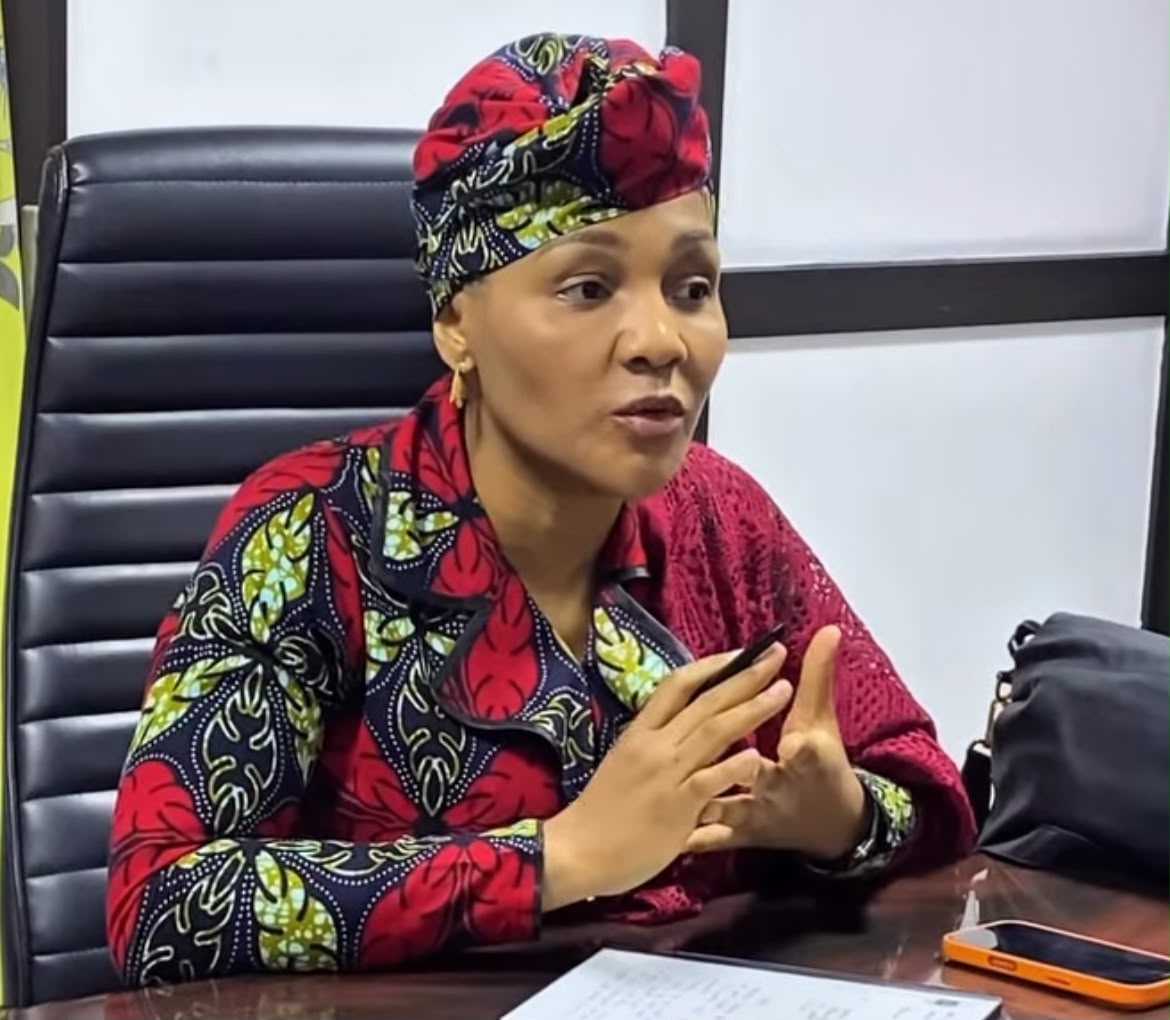
Director-General of the Presidential Enabling Business Environment Council (PEBEC), Princess Zahrah Mustapha Audu, has described President Bola Ahmed Tinubu as Nigeria’s greatest-ever leader, saying his administration is tackling long-standing structural challenges and laying the groundwork for a stronger economy.
Audu, who also serves as the national publicity secretary of the City Boy Movement, made the assertion in a statement issued yesterday in Abuja.
She argued that leadership should not be assessed by how much comfort it preserves, but by the institutions it creates, difficult problems it addresses and the future it leaves behind.
According to her, the true impact of consequential leadership is often better understood with time, noting that Nigerians are currently experiencing major reforms whose full effects may only become clear in the future.
“Greatness, of course, is not perfection,” she said, stressing that effective leadership requires recognising structural weaknesses, confronting long-delayed challenges and establishing institutions capable of supporting sustainable development.
Audu said Tinubu’s political relevance existed long before he became president in 2023. She referenced his time as a senator during the Third Republic, his participation in the struggle for democratic restoration, his period in exile and his eventual emergence as Lagos State governor in 1999.
She noted that after leaving office as Lagos governor in 2007, Tinubu continued to wield significant influence in national politics and contributed to the development of opposition politics that eventually led to the formation of the All Progressives Congress (APC).
She also pointed to the 2015 presidential election, which resulted in the first democratic transfer of power from one political party to another at the federal level, as evidence of Tinubu’s ability to build political alliances and institutions beyond formal government positions.
According to Audu, Tinubu’s experience in Lagos influenced his approach to governance, particularly his belief in building a capable state that can generate revenue, develop policies, implement decisions and create conditions that allow businesses to grow.
She identified the removal of the petrol subsidy as one of the most significant economic decisions taken by Tinubu since assuming office, saying the policy represented a departure from the previous approach.
Audu admitted that the subsidy removal had created hardship for Nigerians but argued that the former arrangement was not sustainable in the long term.
“Leadership sometimes requires choosing not between difficulty and comfort, but between the difficulty of adjustment today and the greater danger of structural failure tomorrow,” she said.
The PEBEC Director-General also pointed to measures aimed at improving Nigeria’s business environment, stressing that efficient government institutions were essential to the country’s economic competitiveness.
She said processes including business registration, permits, customs procedures and regulatory approvals, as well as the performance of government agencies, have a direct impact on the cost of doing business and the ability of entrepreneurs to create jobs and expand.
Audu maintained that Tinubu had shown a willingness to spend political capital on difficult decisions rather than focus solely on maintaining popularity.
She expressed confidence that the President would ultimately receive favourable historical judgement.
“President Tinubu’s work is unfinished. History’s final verdict cannot yet be written. But his place in Nigerian history is already impossible to ignore,” Audu said.
She added that only a few Nigerian political figures had remained influential across several political eras while also shaping institutions and retaining national relevance for such an extended period.
“That is why, in my considered view, President Bola Ahmed Tinubu is Nigeria’s greatest-ever leader to date,” she said.
Source: Princess Zahrah Mustapha Audu