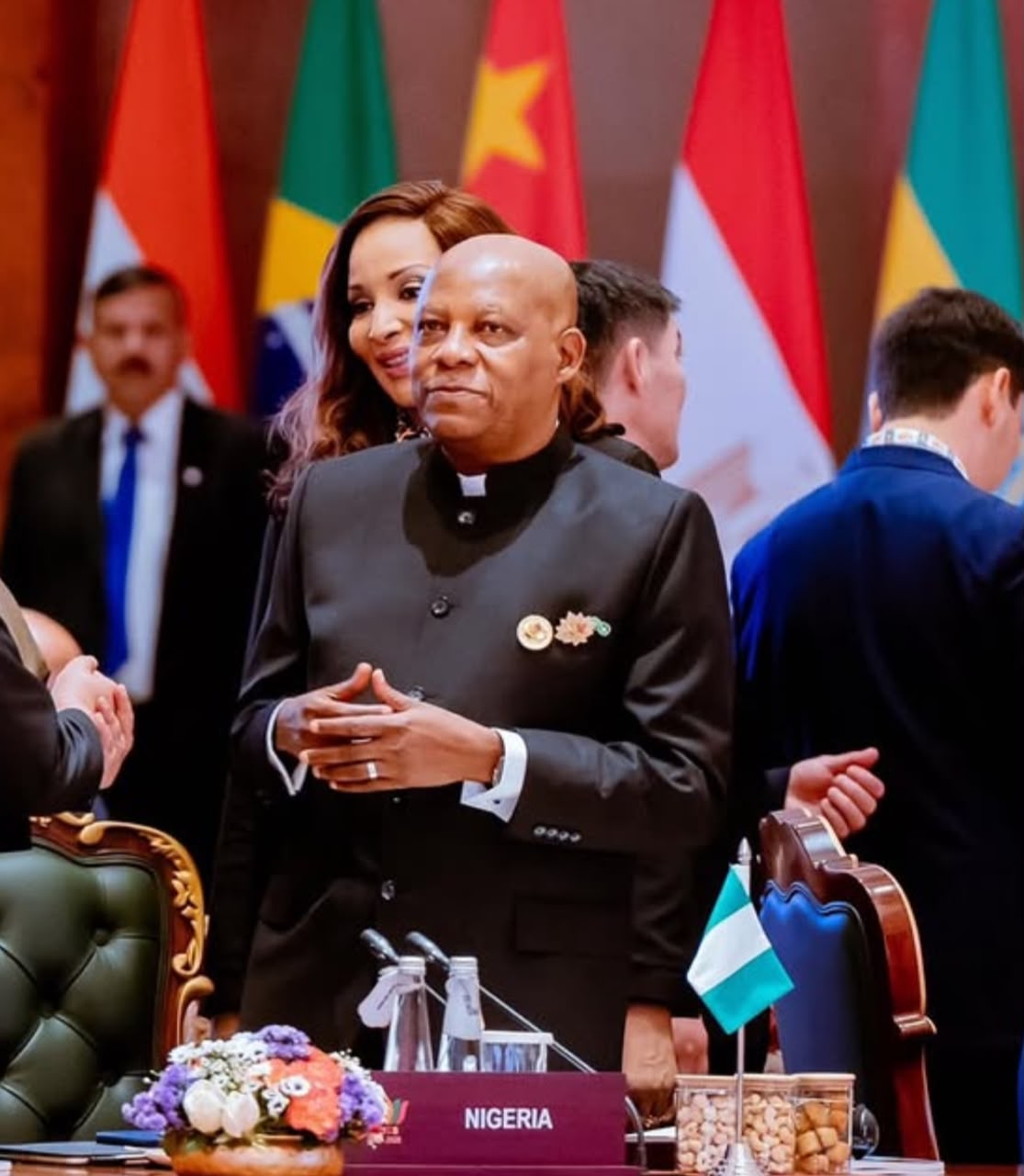
Nigeria has called for an urgent reform of global governance structures and international financial institutions to make them more representative of today’s economic and demographic realities.
Vice President Kashim Shettima made the call on behalf of President Bola Tinubu on Sunday at the 2026 BRICS Summit, where he urged the bloc to support a more equitable and responsive international system.
Shettima said Nigeria supports reforms that would give greater consideration to the changing economic and demographic influence of countries across the world, including reforms to the United Nations Security Council and the international financial system.
“Nigeria supports a more representative, equitable and responsive global governance architecture, including reform of the United Nations Security Council and the international financial system.
BRICS amplifies the voice of the Global South and advances a more inclusive international order, consistent with Nigeria’s call for institutions that reflect contemporary economic and demographic realities,” he stated.
The Nigerian government also called for BRICS cooperation to move beyond discussions and commitments towards practical projects capable of producing measurable development outcomes.
Nigeria made a case for “a BRICS partnership that moves from dialogue to delivery, from commitments to implementation, and from cooperation to measurable development outcomes.”
Shettima urged BRICS countries to regard Nigeria as an important entry point into Africa’s growing market under the African Continental Free Trade Area.
“We welcome BRICS cooperation in trade, agriculture, food security, energy, infrastructure, manufacturing, healthcare and critical minerals, especially partnerships that advance technology transfer, local value addition, industrial capacity and employment,” he added.
The Vice President described Nigeria’s young and dynamic population as one of the country’s major strengths, noting that the creativity and enterprise of young Nigerians are contributing to the nation’s innovation drive.
He identified digital skills, entrepreneurship, research, artificial intelligence and technology-driven businesses as key areas requiring greater investment. He cited initiatives including 3MTT, Project BRIDGE and national artificial intelligence programmes as part of Nigeria’s efforts in these areas.
“We welcome deeper BRICS cooperation in artificial intelligence, digital public infrastructure, fintech, telecommunications, cybersecurity, biotechnology and advanced manufacturing, because developing countries must produce technology, create knowledge and own intellectual property. A nation that owns no technology risks renting its future.
“Nigeria sees cooperation with BRICS as a practical opportunity for trade, investment, technology transfer, and human-capital development. We support partnerships in infrastructure, connectivity, energy, agriculture, healthcare, education, and industrialisation, backed by development finance.
“As Project BRIDGE expands broadband, fibre and digital public services, we seek an open, secure, and inclusive digital ecosystem that advances innovation, digital trade, responsible artificial intelligence, and cybersecurity,” he said
Shettima further stressed that BRICS partnerships should translate into jobs, increased trade, technology transfer and stronger productive capacity across member and partner countries.
“Our partnerships must create jobs, expand trade, transfer technology, and strengthen our nations’ productive capacity. We must build a future in which Africa moves from the margins of global development to the frontiers of global growth and innovation,” he maintained.
Earlier, Indian Prime Minister Narendra Modi, while opening the 18th BRICS Leaders’ Summit, said confidence in BRICS among countries of the Global South had increased because their concerns were receiving greater attention and their experiences were being respected.
Modi said BRICS’ strength was rooted in the diversity of its members and their willingness to cooperate, adding that the bloc’s activities were expanding beyond governments to include entrepreneurs, farmers, researchers, women and young people.
“We may be rooted in different realities, but together, we rise through cooperation and blossom for humanity,” he said.
He also highlighted initiatives such as BRICS CONNECT, the BRICS MSME Cooperation Portal and the BRICS Urban Mobility Hub, saying they were aimed at supporting skills development, employment, enterprise growth and knowledge-sharing among member and partner countries.
The Indian Prime Minister further emphasised the importance of combining economic development with environmental responsibility, stressing that sustainability should remain at the centre of BRICS cooperation while protecting the interests of future generations.
Source: Presidency