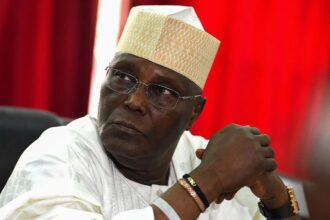
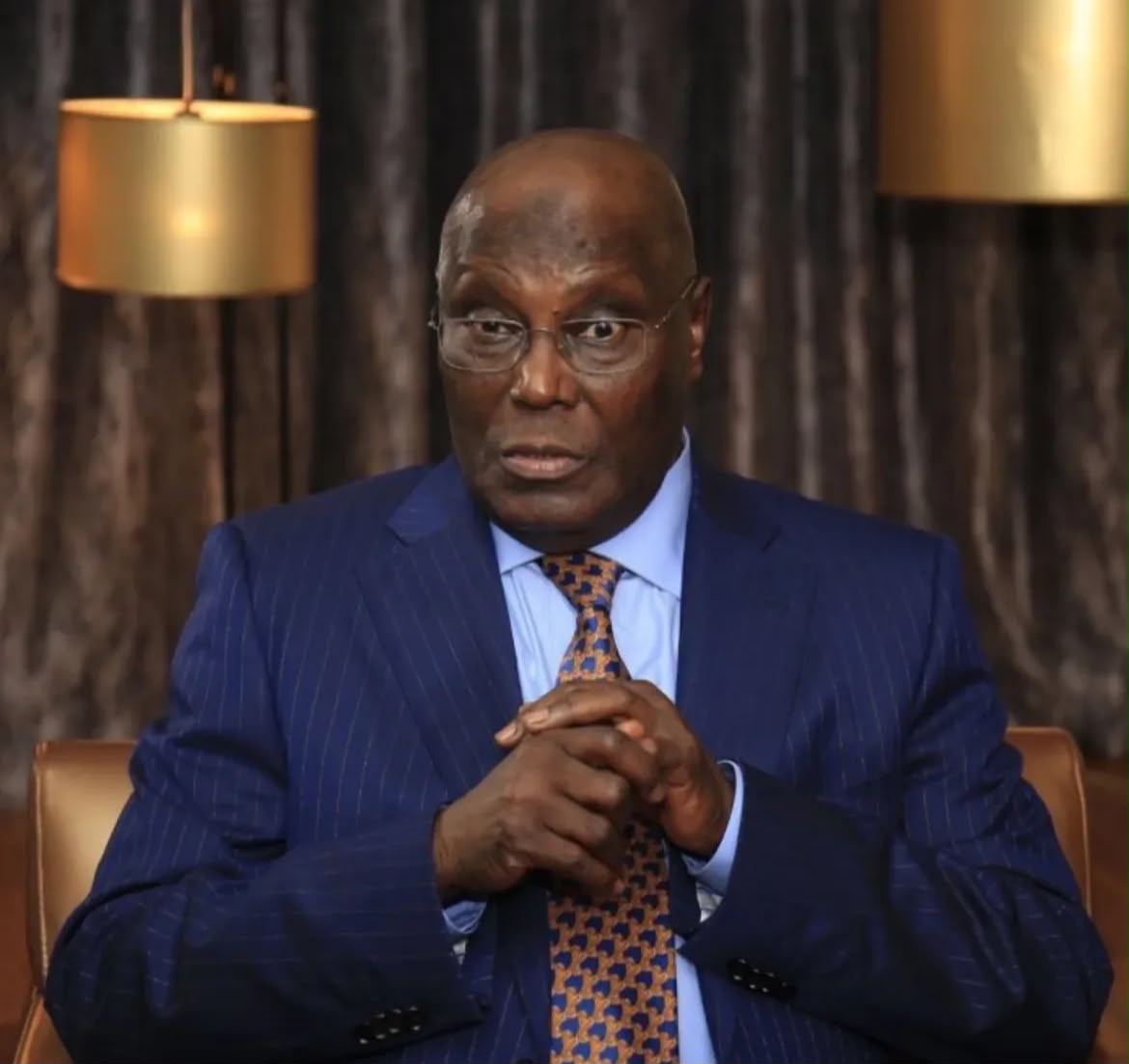
The Independent National Electoral Commission (INEC) has asked the Federal High Court in Abuja to dismiss a suit filed by former Vice-President Atiku Abubakar challenging President Bola Ahmed Tinubu’s eligibility to contest the 2027 presidential election.
INEC described the suit as an abuse of court process, arguing that the case failed to disclose a reasonable cause of action and that Atiku lacked the legal standing to institute the matter.
The electoral body made the position in its objection and counter-affidavit to the suit filed by Atiku and the African Democratic Congress (ADC), through their counsel, Dr Alex Izinyon, SAN.
INEC also described the case as hypothetical and academic, insisting that the commission does not nominate candidates for political parties and does not manufacture or obtain the personal certificates and credentials submitted by candidates or their sponsoring parties.
In a counter-affidavit deposed to by Ayuba Mohammed, an Administrative Officer in INEC’s Litigation and Prosecution Department, the commission said documents submitted by candidates are received in the course of carrying out its constitutional and statutory responsibilities.
It said such documents are handled in accordance with the Constitution, the Electoral Act 2026 and applicable regulations and guidelines.
The electoral body further argued that simply receiving or keeping a document submitted in relation to a candidate does not amount to a determination by INEC that every statement or credential contained in the document is authentic.
The counter-affidavit stated, “That in answer to paragraphs 4 and 5 of the Plaintiffs’ Affidavit, section 137(1)(j) of the Constitution speaks for itself and applies in accordance with its terms to a person who is proved, in accordance with law, to have presented a forged certificate to the 3rd Defendant.
“That the 3rd Defendant denies any suggestion that a mere allegation that a forged certificate was presented, without proof of the fact of presentation and of the alleged forgery, automatically activates the constitutional disqualification prescribed by section 137(1)(j) of the Constitution.
“That in respect of the 2027 Presidential Election, the 2nd Defendant submitted the name and particulars of the 1st Defendant to the 3rd Defendant as its nominated Presidential Candidate in accordance with the prescribed nomination process.”
Atiku had sued Tinubu, the All Progressives Congress (APC) and INEC, asking the court to disqualify Tinubu from participating in the 2027 presidential election on several eligibility grounds.
Atiku also filed an affidavit in support of the suit, asking the court to determine whether Tinubu meets the constitutional requirements to contest the election.
He urged the court to consider Sections 137(1)(j), 139(1)(a)(i) and 285(14)(c) of the 1999 Constitution, as amended, alongside relevant provisions of the Electoral Act 2026.
One of the central issues raised by Atiku concerns an NYSC discharge certificate allegedly submitted to INEC in connection with the 2023 and 2027 presidential elections.
Atiku claimed that the certificate carries the name “Tinubu Bola Adekunle”, which he said differs from the name Bola Ahmed Tinubu.
He further alleged that the same certificate was submitted in relation to the 2027 election and claimed that the document was not obtained by Tinubu.
Atiku also placed INEC on notice to produce Tinubu’s Form CF001 submitted for the 2023 and 2027 presidential elections.
“If the certificate belongs to Bola Ahmed Tinubu, let that be established before the court. If ‘Tinubu Bola Adekunle’ and ‘Bola Ahmed Tinubu’ are one and the same person for the purpose of that certificate, let the evidence establish it. These are questions that deserve answers, not political insults or presidential silence,” he added.
Atiku and the ADC are also challenging provisions of the Electoral Act 2026 which they argue restrict who can challenge a candidate’s qualification at the pre-election stage.
They are further contesting the removal of qualification as a ground for challenging an election under Section 139(a)(i) of the Constitution, which empowers the National Assembly to make laws providing for questions concerning whether a person elected president was qualified to contest.
Atiku and the ADC argued that legislation cannot be used to prevent enforcement of an express constitutional provision, maintaining that where an Act of the National Assembly conflicts with the Constitution, the Constitution should prevail.
Through their originating summons, the plaintiffs are asking the Federal High Court to determine whether the statutory restrictions they challenged can prevent them from relying on Section 137(1)(j) of the Constitution.
They are also seeking a determination of whether Tinubu and the APC should be disqualified from participating in the 2027 presidential election if the allegations in their case are established.
The main relief sought by the plaintiffs is an order disqualifying Tinubu and the APC from participating in the 2027 election on the grounds contained in the suit.
Counsel representing Atiku and the ADC are Edwin Inegedu, SAN, and Joseph Onu Silas.
Source: Federal High Court proceedings