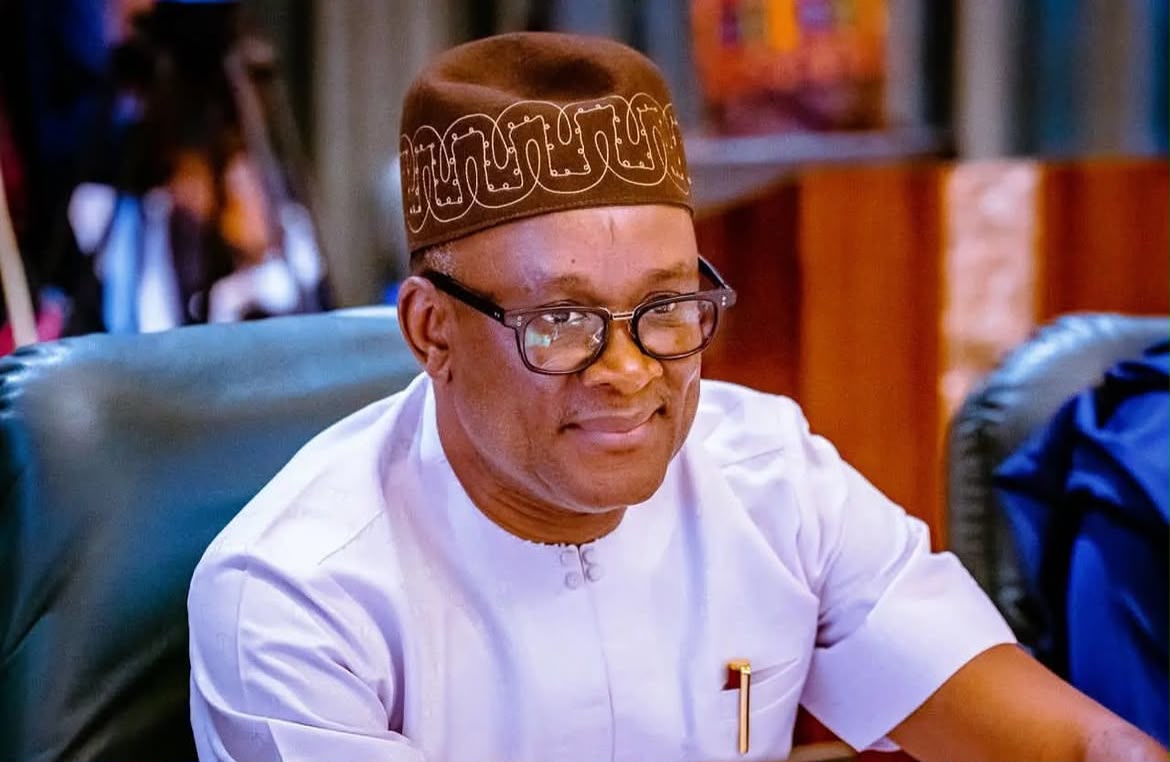
Nigeria’s industrialisation drive will remain difficult unless manufacturers can access financing at affordable rates, the Minister of State for Industry, John Enoh, has said.
Enoh made the remark on Thursday during the second technical session of the Industrial Revolution Work Group (IRWG), where he highlighted high borrowing costs, energy challenges, infrastructure deficits and regulatory burdens as major obstacles to industrial growth.
According to the minister, Nigerian manufacturers currently access loans at interest rates above 30 per cent, significantly higher than the rates available to manufacturers in some neighbouring African countries.
He said manufacturers in Benin Republic and Cameroon can access financing at about eight per cent, creating a major disadvantage for Nigerian businesses competing within the region.
“That arithmetic is not a market outcome; it is a policy failure with a compound interest schedule, and no exhortation of mine will repeal it. Instruments will,” the minister said.
Enoh said the finance and incentives table of the IRWG must develop practical financing instruments that would allow manufacturers to obtain affordable credit with sustainable repayment periods and interest rates.
Beyond financing, the minister identified energy and infrastructure as other major barriers to industrialisation, stressing that Nigerian manufacturers could not build a competitive industrial sector while depending heavily on generators for electricity.
He called for the expansion of the Idu pilot initiative through programmes that would connect gas supplies to industrial clusters and enable factories to access electricity at predictable prices.
On regulatory reforms, Enoh urged the government to identify overlapping responsibilities among agencies, merge unnecessary licences and eliminate levies that place additional pressure on manufacturers.
“Our factories do not lack regulators; they lack relief. Where two agencies perform one function, recommend which one stands down. Name the licences to be merged, the levies to be abolished, and the dates,” he said.
The minister also addressed the competitiveness of locally manufactured products, saying appeals to patriotism alone would not persuade Nigerians to buy domestic goods if such products remained unaffordable.
He called for stronger enforcement of product standards, tougher action against counterfeit goods and increased patronage of locally produced items in federal government procurement.
Enoh further identified skills development and innovation as essential components of Nigeria’s industrial transformation, noting that modern manufacturing would increasingly require expertise in areas such as mechatronics, industrial software and advanced production technologies.
FG TO ADDRESS INDUSTRIAL CHALLENGES
To tackle the challenges facing the sector, Enoh directed the five tables of the Industrial Revolution Work Group to develop an actionable matrix outlining specific interventions, responsible institutions, deadlines and measurable performance indicators.
He also announced plans to bring additional private-sector organisations into the industrialisation initiative, including RussellSmith Nigeria and FATE institutions.
“We will hear from RussellSmith Nigeria, whose work will help our MSMEs become what indigenous advanced manufacturing already looks like on Nigerian soil,” Enoh said.
“And we will welcome the FATE institutions, whose work is credit-ready.”
The minister said the second ministerial roundtable would bring together the Minister of Finance, the President of the Manufacturers Association of Nigeria (MAN), leaders of commercial banks, development finance institutions and institutional investors.
According to Enoh, the meeting would focus on addressing the major constraints affecting Nigerian industries and developing a national industrial compact.
He said the proposed compact would contain specific financing instruments, responsible institutions and 30-, 60- and 90-day implementation timelines.
Source: John Enoh / Industrial Revolution Work Group