The Independent National Electoral Commission (INEC) has reaffirmed that it has the exclusive statutory responsibility to collate and announce election results in Nigeria, following plans by opposition political forces to independently track and collate results ahead of the 2027 general elections.
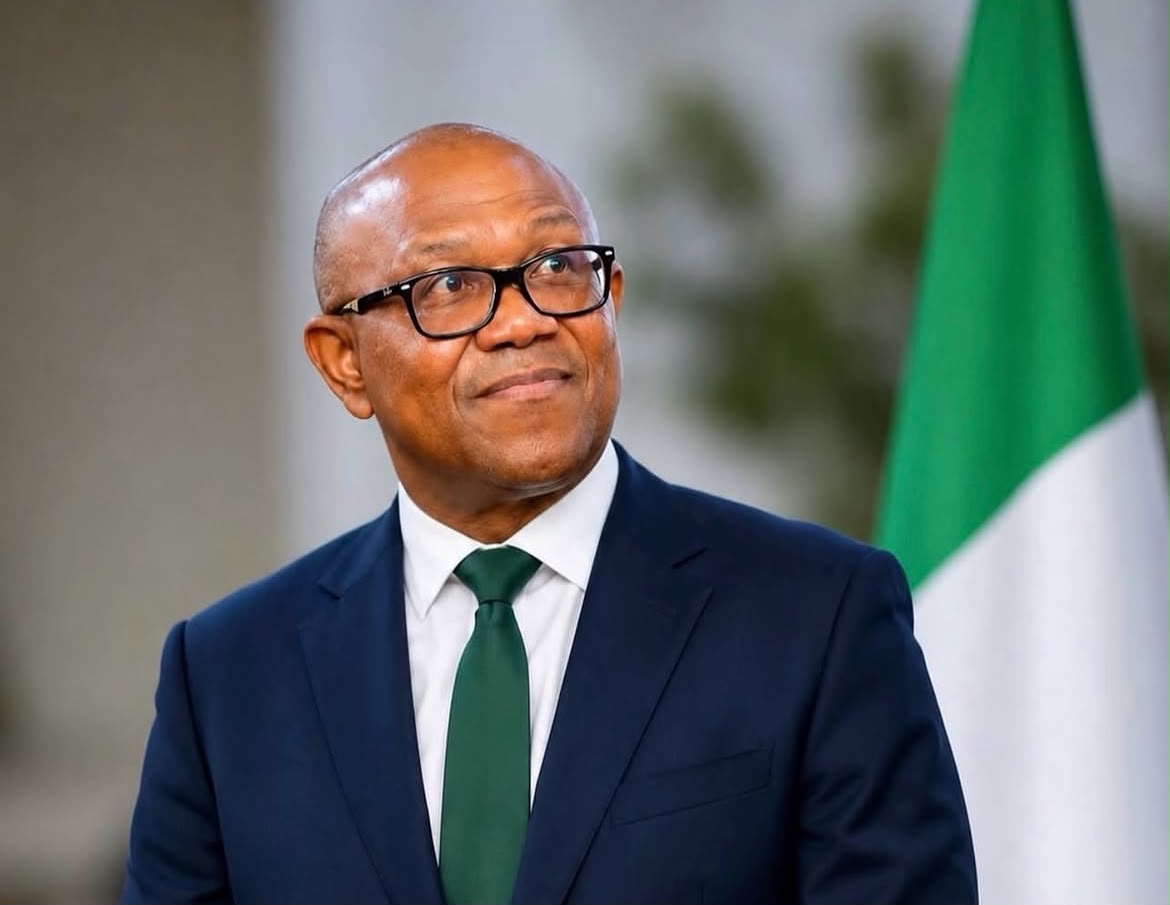
The development followed a proposal by the presidential candidate of the Nigeria Democratic Congress (NDC), Peter Obi, to establish an independent system that would allow his campaign organisation to receive results directly from polling units while the official results are simultaneously transmitted to INEC.
Obi, speaking in an interview with Arise TV on Thursday, said his team planned to deploy a system capable of receiving and monitoring results as they were recorded at polling units during the 2027 elections.
He explained that the system would operate alongside INEC’s official transmission platform, with the aim of ensuring that results eventually declared could be traced back to what was recorded at the polling-unit level.
“We must make sure that at every polling unit, the votes are counted, the votes are recorded properly, the votes are transmitted properly,” Obi said.
The former Anambra State governor said his team would operate what he described as a “dual transmission” system, through which results would be sent to the designated INEC portal as well as to the campaign’s own situation room.
Obi argued that the arrangement should not be interpreted as an attempt to create a parallel official results system, but rather as an additional mechanism for monitoring the integrity of results from polling units.
His proposal has also received backing from the African Democratic Congress (ADC), which said it was developing its own capacity to independently collate results rather than depending entirely on INEC.
The national publicity secretary of the party, Bolaji Abdullahi, confirmed the position when asked whether the party would independently collate its results.
“Absolutely. We are also saying that we will not trust the collation of results to INEC. We are also building the capacity to collate our results.”
The growing push for independent monitoring comes amid opposition parties’ continued concerns over the transparency and credibility of Nigeria’s electoral process, particularly following controversies surrounding the 2023 presidential election.
During the 2023 election, INEC’s results viewing portal, IReV, experienced a glitch that affected the uploading of presidential election results. Obi, Atiku Abubakar and President Bola Ahmed Tinubu all claimed victory, while INEC eventually declared Tinubu the winner. The courts later affirmed the result, although Obi and his supporters have continued to maintain that he won the election.
Technology and electoral experts, however, said political parties could technically establish independent platforms capable of collecting, transmitting, aggregating and analysing polling-unit results in near real time.
Senior systems analyst Esther Folorunso said a political party could develop a secure platform through which accredited agents would capture and electronically transmit copies of polling-unit result sheets to a central situation room.
According to her, agents could use a secure mobile application to upload photographs of result sheets together with details such as the polling-unit code, location and time of submission.
The information could then be sent to a central database where results would be aggregated and monitored as they arrive.
Folorunso, however, stressed that such a system would not replace INEC’s official results-management and collation process, but could instead serve as an independent verification and audit mechanism.
“If properly designed and implemented, an independent result-tracking system could provide an additional layer of transparency and accountability. But its credibility would depend heavily on the integrity of the data collected at the polling-unit level.”
She identified nationwide deployment as one of the biggest challenges, noting that the initiative would require trained agents, strong cybersecurity measures, reliable authentication systems, safeguards against duplicate or manipulated submissions and offline capabilities for areas with poor internet connectivity.
Data scientist and visualisation expert, Engr. Aniekpong D. Effiong, also described Obi’s proposal as technically feasible but noted that the concept itself was not completely new to Nigeria’s electoral system.
He pointed out that polling agents are entitled to receive signed copies of polling-unit results, including Form EC8A, and witness the display of the results at polling units.
According to him, political parties can photograph such documents and send them to their situation rooms, while civil society organisations such as Yiaga Africa have previously carried out parallel vote tabulation exercises using selected polling units.
Effiong said what would make Obi’s proposal different was the attempt to operate the system on a much larger scale.
“However, that scale is the real challenge as Nigeria has 176,846 polling units, making nationwide coverage a major logistical and technological undertaking,” Effiong averred.
He warned that an independent system could face many of the same connectivity difficulties experienced by INEC, especially in locations where telecommunications infrastructure is unreliable.
He also raised concerns that a parallel tally could become a competing source of election figures between the close of voting and INEC’s final declaration.
According to him, fake screenshots, fabricated figures and unverified claims could spread quickly across social media, while rival political interests could challenge figures produced by a platform controlled by a campaign organisation.
Information systems and risk analyst, Olufemi Esan, also described the proposal as technically achievable, but said its usefulness would depend on whether it could establish a reliable chain of evidence from each polling unit to the central database.
Esan said the system would require thousands of trained field agents equipped with authenticated mobile applications to capture polling-unit result sheets after votes had been counted.
He argued that agents should not simply enter figures into an application but should capture completed result sheets, verify the figures, confirm the polling-unit identity and transmit the evidence through an authenticated channel.
He added that the system should separately preserve the original image of each result sheet, the numerical data extracted from it and information identifying the person who submitted it.
“This creates something much more useful than a spreadsheet. It creates an audit trail,” Esan said.
According to him, such an audit trail could allow a political party to compare results recorded at polling units with figures that later emerge during the official collation process and identify where discrepancies occurred.
On internet connectivity, Esan said any nationwide platform would need to work effectively even when internet access was unavailable.
He recommended that the application be capable of securely storing evidence offline and transmitting it once connectivity was restored, while alternative communication channels and recovery procedures could also be incorporated.
Esan further highlighted the possible use of data analytics and anomaly detection to identify issues such as duplicate submissions, missing polling units, unexplained gaps, results exceeding accredited voters and inconsistencies in datasets.
He stressed, however, that such systems would not by themselves establish electoral fraud, but could identify areas that require further investigation.
The experts’ views come amid previous calls for multiple and independent channels of election-result verification.
Convener of the Big Tent Coalition, Prof. Pat Utomi, had earlier advocated for polling-unit results to be transmitted and monitored through multiple channels.
Clarifying an earlier widely publicised statement that NDC polling-unit results would be transmitted live and monitored globally by international media organisations, Utomi said the proposal originated from the Big Tent about two months earlier and formed part of a broader operational plan.
“The idea is not for just that body that I was speaking for to do it, but to encourage complex redundancy of the process,” Utomi explained.
He said church groups, diaspora networks and civil society organisations were also being mobilised to photograph and simultaneously upload result sheets immediately after they were signed at polling units.
The push for independent tracking has therefore renewed debate over whether multiple channels for recording election results could improve transparency without creating competing electoral authorities.
While INEC remains responsible for conducting elections, managing the official results process and declaring the final outcome, political parties cannot assume those statutory responsibilities through their own technology.
However, parties can maintain independently collected records of what their agents witnessed and documented at polling units.
Some legal practitioners have also questioned the legal basis for plans to establish independent collation systems during the 2027 elections.
A Senior Advocate of Nigeria (SAN), Abdul Balogun, said candidates and political parties were free to monitor election results in whatever manner they considered appropriate, but such independently collated figures could not bind INEC.
“Each party or candidate is free to have the results of the elections monitored the way it feels, but such collation cannot be binding on INEC.”
For his part, a professor of law, Ajida S. Bello, described the proposal as potentially useful if permitted, saying it could help curb electoral malpractice and put INEC under greater scrutiny.
He, however, warned that politicians could also abuse the system and urged them to operate within the rules.
“It is a good proposition, at least, each candidate will know how he is performing in the election, but at the same time, we have to be careful because politicians will subvert the process.
“If it is allowed to run smoothly and if politicians will be sincere with themselves, it can fast-track collation of results. Also, it will give credibility to the process. But unfortunately, politicians will always find a way to subvert the process,” he said.
Barrister Imeh Ukpong, however, argued that allowing such plans at this stage could disrupt the electoral process.
Source: Arise News