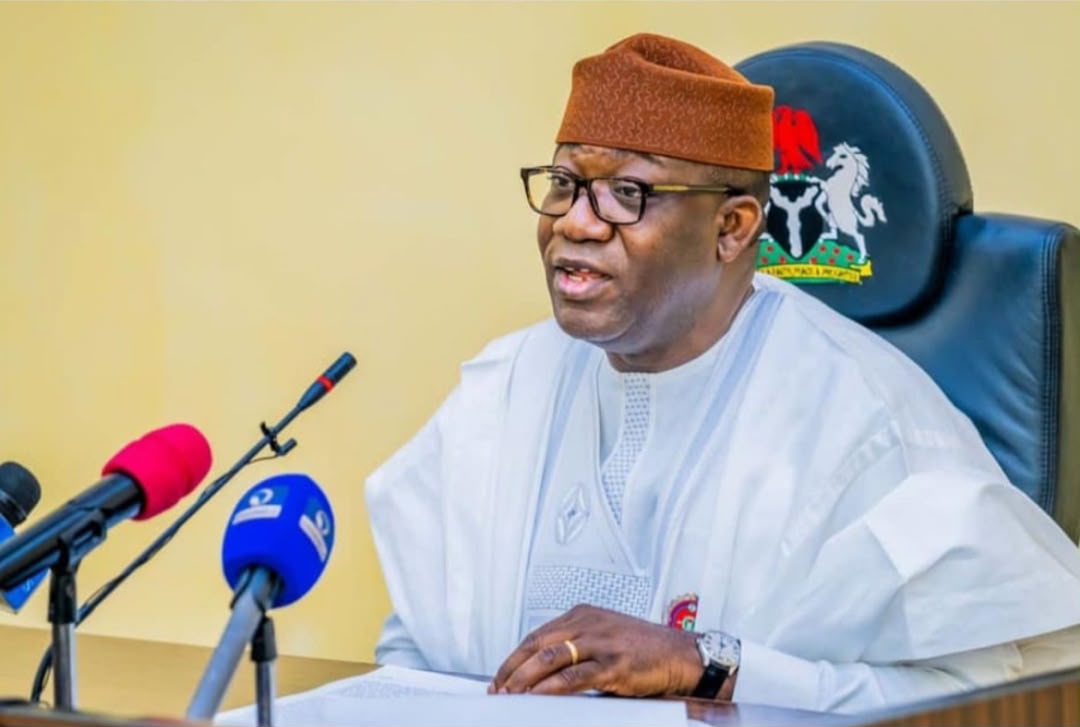
Former Ekiti State Governor Kayode Fayemi has recalled how political opponents attempted to undermine his credentials by portraying him as a “Tokunbo” or “Atohunrinwa” politician during his first governorship campaign in 2010.
Fayemi shared the account in a book titled “How To Win Elections in Nigeria”, written by Seun Oloketuyi, a media entrepreneur and convener of the Best of Nollywood (BON) awards.
Fayemi served two non-consecutive terms as governor of Ekiti State between 2010 and 2022, with former Governor Ayodele Fayose serving between his two terms.
Understanding Ekiti Politics
The former governor said there is no universal formula for winning elections because political dynamics differ from one state to another.
He explained that candidates must understand the peculiarities of their states and build relationships with existing political leaders, particularly governors, elected officials, political appointees, ministers and party executives.
Fayemi recalled that he was invited to contest the Ekiti governorship election by Niyi Adebayo, a former governor who was influential within the party and controlled a significant portion of its political structure at the time.
Despite receiving Adebayo’s support, Fayemi said he did not rely solely on the existing political structure. Instead, he and his team visited all 177 wards in the state at least three times while meeting important political figures individually.
According to him, the obstacles he encountered during the first campaign were considerably easier than those he faced when he returned to contest for a second term.
Fayemi said candidates must be familiar with the political history of the state they seek to govern, noting that Ekiti had some peculiar advantages because it is largely monolingual and its people generally share similar values and orientations.
Building His Political Identity
“At the point I entered politics, state politics had assumed a violent edge and become toxic,” Fayemi recalled.
“Having lost the 2003 election to a rabble-rousing, populist politician whose party controlled the centre, the progressives were not only in search of a competing candidate, but also a bold one who could confront a sitting administration that was terrorising everyone (Dr. Ayo Daramola, an aspirant, had been killed).”
Fayemi said his campaign subsequently highlighted his academic and professional background, including his PhD in War Studies, as well as his involvement in international affairs, civil society and the democratic struggle through NADECO and Radio Kudirat.
He added that his credentials were further strengthened by prominent coverage in The New York Times and The Economist of London.
The former governor said gaining the support of Ekiti’s intellectual elite helped broaden his appeal among the aspirants because of the state’s reputation as Nigeria’s intellectual capital.
“Even though my opponents tried to dismiss me as a ‘Tokunbo’ or ‘Atohunrinwa’ (an outsider politician), having bold conviction and strong external networks carried the day,” he said.
“Combined with a relentless grassroots campaign and a welfarist Eight-point Agenda mirroring the UPN’s historic four cardinal points, the strategy proved decisive.”
Fayemi acknowledged that the strategy ultimately worked for him, but stressed that the same approach might not produce similar results in another state.
Changing Strategy in 2018
When he returned in 2018 to seek another term as governor, Fayemi said he adopted a different political approach.
“I emphasised my proximity to the centre and governance track record during my first four years in office, especially in light of the excruciating suffering of the citizens during the period my successor was in charge,” he said.
YOU MUST OWN YOUR NARRATIVE
Fayemi also discussed the growing importance of political communication in an era of 24-hour news and social media.
He said politicians can no longer assume that their achievements will automatically speak for them, stressing the need to deliberately communicate with different sections of the electorate.
“In my experience, you must own your narrative,” he said.
“In politics, your work does not speak for you, no matter how well you have performed. You have to constantly communicate with your various audiences: the intellectual elite, social media spaces, and traditional grassroots publics.”
Five “Election Gods”
The former governor further identified five groups or forces he described as the “election gods” that political aspirants must satisfy, regardless of how popular they may be with voters.
According to him, they include the Independent National Electoral Commission (INEC), state security institutions, the judiciary, non-state security actors and the financial resources required to coordinate and manage interactions with all of them.
“Of course, you must also ‘own’ other political parties, the small ones mushrooming all over the place for their nuisance value, ‘adopt’ their party agents to assist your own main agents at the polling units,” he added.
“You must also maintain friendly, independent observer missions in the event of post-election controversy. These are non-negotiable.”
Source: How To Win Elections in Nigeria by Seun Oloketuyi