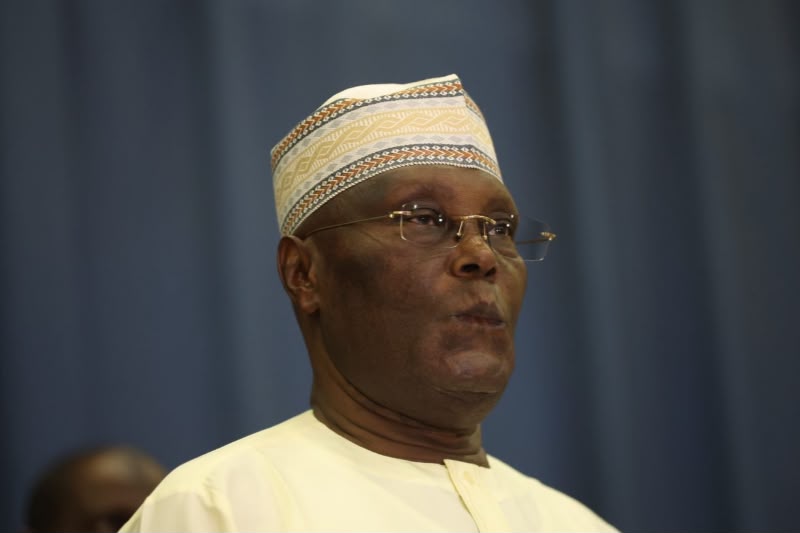
Former Vice President Atiku Abubakar has defended his proposed petroleum-sector intervention, accusing President Bola Tinubu of “economic arson” and worsening the hardship faced by Nigerians.
In a statement issued by his Senior Special Assistant on Public Communication, Phrank Shaibu, on Friday, Atiku said the Tinubu administration had increased government revenues while Nigerians’ purchasing power continued to decline.
He criticised the President for describing his proposed subsidy model as economically ignorant, arguing that the economic conditions facing Nigerians have changed significantly since the removal of petrol subsidy.
“That is not reform. It is economic arson followed by propaganda about the ashes.”
Atiku said the removal of subsidy, combined with foreign exchange reforms, had contributed to higher petrol prices, transportation costs, food prices and production expenses, while the naira also depreciated.
Atiku Defends New Subsidy Proposal
The ADC presidential candidate clarified that his proposal was not a return to the old subsidy system.
He described it as a targeted, capped, budgeted, time-bound and independently audited production-support mechanism tied to domestic production and protected against arbitrage.
“Tinubu pronounced first and searched for a plan afterwards. Atiku studied the consequences and produced a solution.”
Atiku argued that economic policies must respond to prevailing conditions, saying the circumstances that existed when the subsidy was removed are different from those Nigerians face today.
‘FAAC Allocations Are Not Enough’
Atiku also criticised the Federal Government’s argument that higher Federation Account Allocation Committee (FAAC) disbursements to states are one of the benefits of subsidy removal.
He said increased allocations should not come at the expense of ordinary Nigerians who are struggling with higher living costs.
“You do not build a federation by impoverishing citizens so that Abuja can send bigger cheques to governors.”
He argued that states should instead develop productive economies, attract investment, broaden their tax bases and create wealth rather than becoming increasingly dependent on federal allocations.
Atiku described the current situation as “fiscal sedation and rascality”, arguing that the government had transferred financial pressure from government accounts to Nigerian households.
Atiku Demands Answers on Public Finances
The former vice president also renewed his demand for the Federal Government to explain approximately ₦30 trillion in Federation Account revenues, deductions, savings and transfers.
He further questioned the ₦12.8 trillion Service-Wide Vote contained in the 2026 budget, demanding greater transparency over government spending.
“If Tinubu can mobilise an army of propagandists to attack Atiku within hours, surely he can find one accountant to explain his books.”
Atiku maintained that the government should focus on policies that reduce hardship and strengthen domestic production, rather than celebrating higher government revenues while Nigerians face declining purchasing power.