Despite spending an estimated ₦10 trillion on Nigeria’s electricity sector over the past 13 years, power supply has remained largely stagnant, with generation still far below the country’s growing demand.
However, the Federal Government says it is now embarking on a fresh round of reforms aimed at fixing long-standing structural problems and restoring confidence in the power sector.
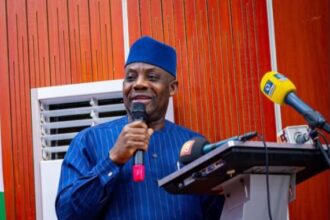
Speaking on the government’s new direction, Minister of Power, Joseph Tegbe, said the administration is addressing decades of systemic challenges that have prevented Nigeria’s electricity industry from reaching its full potential.
“Our objective is clear—to make electricity more available, make the grid more reliable, make the market financially sustainable and restore investor confidence. Ultimately, we want to ensure that electricity becomes a catalyst for national productivity rather than a constraint to economic growth,” Tegbe said.
₦10 Trillion Spent, But Power Supply Remains Weak
Investigations show that since the privatisation of the power sector in 2013, successive governments have injected trillions of naira into electricity through intervention funds, loans, subsidies, payment guarantees and infrastructure projects.
Some of the major interventions include:
- ₦213 billion Nigerian Electricity Market Stabilisation Facility
- ₦701 billion Payment Assurance Guarantee for power generation companies (GenCos)
- ₦200 billion+ National Mass Metering Programme
- ₦700 billion Presidential Metering Initiative
- €2.3 billion Siemens Presidential Power Initiative
- Over $2.4 billion in World Bank and African Development Bank-supported projects
- ₦4 trillion Presidential Power Sector Debt Reduction Programme
Despite these investments, electricity generation has remained around 4,500 megawatts, significantly below the government’s target of 20,000MW and the estimated 30,000MW required to meet Nigeria’s electricity needs.
According to the Nigerian Electricity Regulatory Commission (NERC), average available generation capacity in the first quarter of 2026 stood at 4,457.96MW, while actual generation averaged 4,112.72MW.
Power Sector Still Faces Huge Debt
The liquidity crisis in the electricity market also remains a major concern.
The Association of Power Generation Companies (APGC) claimed government owes electricity producers about ₦6.2 trillion, although the Federal Government said verified liabilities currently stand at about ₦3.3 trillion after reconciliation.
Reacting to the government’s position, APGC Executive Director, Dr. Joy Ogaji, questioned the figures.
“We have asked them to publish how they arrived at the ₦3.3 trillion. If ₦3.3 trillion is not even enough to pay the gas suppliers, how will GenCos cover operating costs?” she asked.
Data from the Nigerian Bulk Electricity Trading (NBET) also showed that between April 2025 and April 2026, the Federal Government received subsidy invoices worth ₦1.859 trillion but paid only about ₦76.95 billion, leaving outstanding obligations of roughly ₦1.78 trillion.
FG Rolls Out Fresh Reform Agenda
To revive the struggling industry, Tegbe said the ministry has launched a comprehensive transformation agenda.
The plan includes:
- Technical audit of the national transmission network
- Harmonisation of federal and state electricity regulations
- Grid stabilisation projects
- Measures to improve sector liquidity
- Strategic asset optimisation
- Expansion of Nigeria’s Super Grid programme
- Accelerated nationwide metering through the Presidential Metering Initiative
The minister also revealed that government recently launched the Power Force Initiative, which will engage 5,000 Nigerian youths in electricity meter installation across the country.
According to him, electricity generation has already shown slight improvement.
“Over the course of the last two weeks, we have consistently generated 5,000MW. Although much work remains, enhanced operational coordination and improved plant availability are beginning to produce measurable improvement,” Tegbe said.
He acknowledged that Nigeria’s electricity challenges extend beyond power generation alone.
“Generation alone does not solve Nigeria’s electricity problem. Electricity must be generated, transmitted, distributed and paid for. All these components must function simultaneously,” he added.
Experts Call for Structural Reforms
Industry stakeholders say more fundamental reforms are needed to achieve lasting improvements.
President of the Nigeria Consumer Protection Network, Kunle Olubiyo, argued that continued government intervention has encouraged inefficiency and revenue leakages within the sector.
“Because government bears the burden, a lot of claims thrown into the electricity pool are virtually non-existent or have been orchestrated,” he said.
He urged the government to complete the privatisation of the electricity industry and focus mainly on regulation.
Similarly, President of the Chartered Institute of Power Engineers of Nigeria (CIPEN), Engr. Israel Abraham, blamed the sector’s poor performance on the appointment of non-technical professionals to manage critical institutions.
“The electricity industry is highly technical. Until competent professionals are put in charge, the industry will continue to struggle,” he said.
The Federal Government believes the latest reforms will strengthen the national grid, improve electricity access, restore investor confidence and place the sector on a more sustainable path over the next few years.