
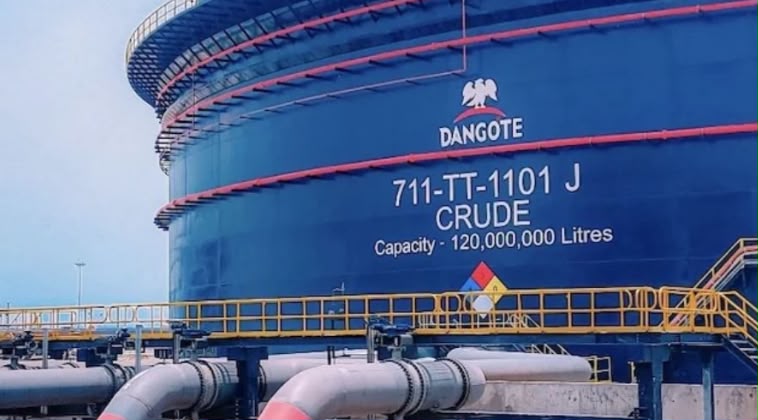
Nigeria’s downstream petroleum sector is set for another major shift after Dangote Petroleum Refinery officially replaced its naira-based pricing for petrol, diesel and aviation fuel with a dollar-denominated pricing system.
The new pricing framework, announced to marketers and customers on July 13, 2026, means petroleum products sold directly from the refinery will now be priced in US dollars, exposing local fuel prices to fluctuations in the foreign exchange market.
Under the revised template, the refinery fixed the ex-depot price of Premium Motor Spirit (PMS) at $0.779 per litre, while diesel will sell for $1.087 per litre and aviation fuel (Jet A1) at $0.942 per litre.
Dangote Refinery also pegged the price of coastal petrol deliveries at $1,044.62 per metric tonne, while Liquefied Petroleum Gas (LPG) remains excluded from the new arrangement.
The company also announced that all previously issued naira-denominated Proforma Invoices (PFIs) and deal recaps for gantry and coastal transactions have been cancelled.
With the latest change, petroleum marketers will now be required to source US dollars before purchasing products from the refinery, a move analysts say could increase demand for foreign exchange and expose fuel prices to exchange-rate volatility.
At the current official exchange rate, the new petrol benchmark is equivalent to about ₦1,075.61 per litre, but the actual naira price will now rise or fall depending on movements in the foreign exchange market.
The decision effectively replaces the fixed naira pricing introduced under the Federal Government’s crude-for-naira policy, which began in October 2024 to reduce pressure on foreign exchange and stabilise domestic fuel prices.
Industry analysts warn that the new pricing model could create fresh challenges for smaller petroleum marketers with limited access to foreign currency while making pump prices more sensitive to changes in the value of the naira.
Despite the shift, Dangote Refinery has maintained that it continues to buy crude oil at international market prices and remains exposed to global costs, including freight, insurance and financing.
The latest development is expected to have significant implications for Nigeria’s fuel market, with consumers and marketers closely watching how exchange-rate movements affect petrol prices in the coming weeks.