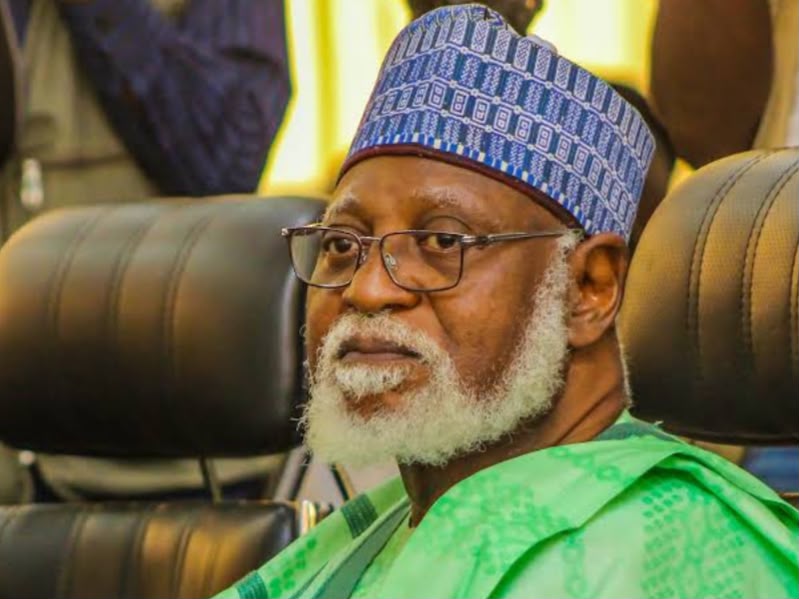
Former Head of State, General Abdulsalami Abubakar (retd.), has dismissed long-standing claims that late businessman and June 12 election winner, Chief Moshood Kashimawo Olawale (MKO) Abiola, was poisoned before his death in 1998.
In his newly released autobiography, Call of Duty, Abubakar stated that an autopsy conducted by pathologists from Nigeria, the United States, Britain, and Canada concluded that Abiola died from natural causes, not poisoning.
According to the former military leader, Abiola had a history of health challenges, including hypertension and heart-related complications, years before his death. Medical reports cited in the book reportedly showed that he had an enlarged heart linked to hypertensive cardiac disease.
What Happened On The Day Abiola Died?
Abubakar recounted that Abiola collapsed during a meeting with a visiting American delegation that included former U.S. officials Tom Pickering and Susan Rice.
According to accounts referenced in the book, Abiola began coughing during the meeting, complained of feeling hot, and later showed signs of severe distress. Medical personnel were summoned and reportedly diagnosed a heart attack before he was rushed for treatment.
Despite efforts by doctors to save him, Abiola was later pronounced dead.
The former Head of State said he received the shocking news from his Chief Security Officer and immediately informed Abiola’s family.
Abubakar Rejects Poisoning Claims
Addressing decades of speculation surrounding the incident, Abubakar insisted there was no evidence that Abiola was poisoned.
He argued that allowing an international delegation to meet Abiola before his death helped ensure transparency, noting that different allegations might have emerged if he had died without independent witnesses present.
Denies Receiving $500 Million
Abubakar also used the book to deny allegations that he received $500 million following the death of former military ruler General Sani Abacha.
He described the claim as false and unrealistic, questioning how such a large amount of money could allegedly change hands without evidence or public knowledge.
A Defining Moment In Nigeria’s History
Abiola, widely regarded as the presumed winner of the annulled June 12, 1993 presidential election, had been detained since 1994 after declaring himself president.
His death on July 7, 1998, just weeks after Abacha’s death, sparked widespread speculation and conspiracy theories that have continued for decades.
Abubakar eventually succeeded Abacha and oversaw Nigeria’s transition from military rule to democracy, handing over power to former President Olusegun Obasanjo in May 1999.
Source: Adapted from General Abdulsalami Abubakar’s autobiography Call of Duty.