
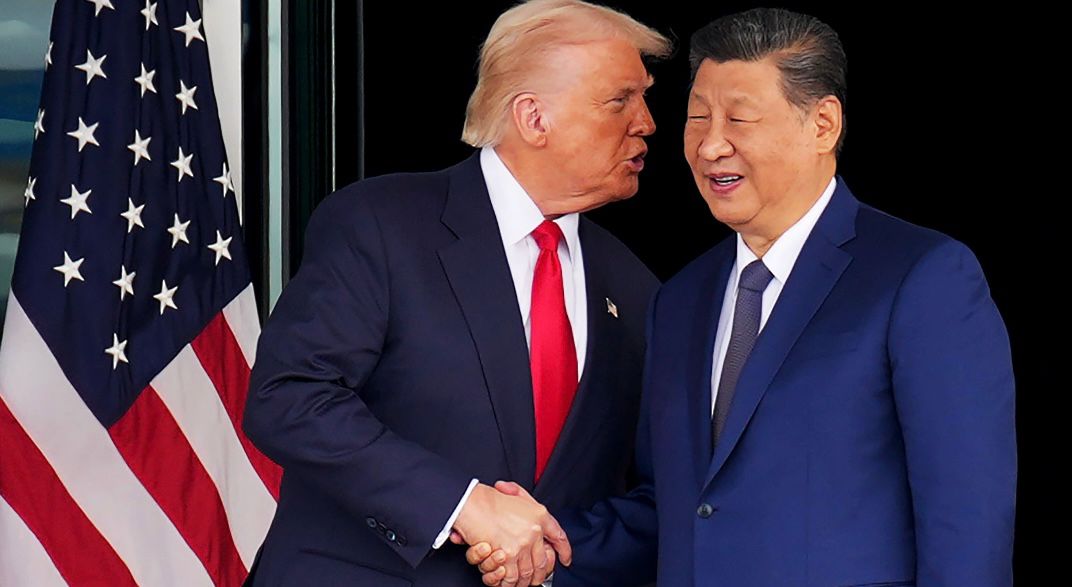
United States President Donald Trump has declared that his latest summit with Chinese President Xi Jinping produced “fantastic trade deals” and major diplomatic breakthroughs, following high-level discussions in Beijing focused on trade, artificial intelligence, global security, and tensions in the Middle East.
Trump, who travelled to China in a bid to strengthen economic ties and reduce friction between the world’s two largest economies, described the visit as highly productive after concluding talks with Xi at Zhongnanhai, the Chinese leadership compound located beside Beijing’s historic Forbidden City.
Speaking after a private stroll with Xi through the gardens of the leadership complex, Trump praised the Chinese leader and suggested the summit delivered outcomes many had considered impossible.
According to the US president, both countries succeeded in resolving several longstanding disagreements and made substantial progress on critical economic and geopolitical issues. Although he did not provide full details of the agreements reached, Trump insisted the deals would significantly benefit both nations and improve bilateral relations moving forward.
He also spoke warmly about Xi, describing him as a respected global leader and someone with whom he maintains a strong personal relationship.
Xi, however, adopted a more measured tone while addressing the outcome of the summit. The Chinese president described Trump’s visit as historic and significant, stating that both countries had succeeded in building what he called a more constructive and strategically stable relationship.
Xi added that China and the United States must continue working together carefully to preserve global stability and avoid confrontations capable of destabilising international peace and economic growth.
As part of the lighter moments during the summit, Xi reportedly promised to send flower seeds to help beautify the White House Rose Garden, a symbolic gesture highlighting the softer diplomatic side of the visit.
One of the most sensitive issues discussed during the summit was the escalating crisis involving Iran and the closure of the Strait of Hormuz, a vital global oil shipping route.
In an interview with Fox News after the first day of meetings, Trump revealed that Xi assured him China would not provide military support or weapons assistance to Iran amid the ongoing tensions in the Middle East.
Trump explained that Xi strongly indicated China preferred de-escalation and wanted the Strait of Hormuz reopened as quickly as possible to restore stability to global shipping and energy markets.
According to Trump, the Chinese president even expressed willingness to assist diplomatically if necessary to ease tensions surrounding the crisis.
The Chinese Foreign Ministry later issued a statement calling for an immediate and lasting ceasefire while urging all parties to restore free movement along international shipping lanes in response to growing concerns from the global community.
Despite the positive atmosphere surrounding trade and diplomacy, the summit also exposed continuing tensions over Taiwan, one of the most delicate issues in China-US relations.
Chinese state media reported that Xi warned Trump during the talks that any mistakes or provocative actions concerning Taiwan could push both countries toward direct conflict.
While Trump avoided publicly commenting on Taiwan during the visit, senior US officials later clarified that Washington’s official position on the self-governing island remains unchanged.
US Secretary of State Marco Rubio stated that although China raised the Taiwan issue during discussions, the United States maintained its longstanding policy and continued to support stability in the region.
Taiwanese authorities also reacted by expressing appreciation to Washington for repeatedly reaffirming its support despite mounting pressure from Beijing.
On the economic front, Trump disclosed that China agreed to purchase approximately 200 Boeing aircraft as part of a major business arrangement reached during the summit.
The US president also claimed Beijing signalled interest in increasing purchases of American oil and soybeans, sectors badly affected by previous trade tensions and tariffs imposed between both countries.
However, financial markets reacted cautiously to Trump’s announcement, with Boeing shares reportedly falling after investors expected an even larger aircraft deal.
China’s Foreign Ministry neither confirmed nor denied the claims relating to the aircraft purchases or increased agricultural imports.
Artificial intelligence also featured prominently during discussions, particularly regarding advanced semiconductor technology and restrictions affecting Chinese access to high-end Nvidia AI chips under existing US export controls.
Although no major announcement was made regarding AI cooperation, US Treasury Secretary Scott Bessent disclosed that both nations discussed establishing “guardrails” to manage the growing influence of artificial intelligence and reduce technological tensions between the two global powers.
Bessent stressed that as the world’s leading AI competitors, both countries must eventually create frameworks for cooperation and responsible development.
The summit concluded with another private lunch between both leaders before Trump departed Beijing aboard Air Force One.
As he boarded the presidential aircraft, Trump raised his fist twice toward waiting reporters and supporters, appearing confident that the visit had strengthened both his diplomatic standing and America’s economic relationship with China.
AFP




